
Mars Apparition 2009-2010.
The 2009-10 apparition of Mars is again well placed for northern observers. The declination is again favourable reaching +23º in the constellation Cancer, while the disk diameter reaches 14.1 arc seconds at opposition time on January 28th and remaining well placed throughout the post opposition period into the Summer. The northern hemisphere of Mars is also favourably tilted toward Earth.
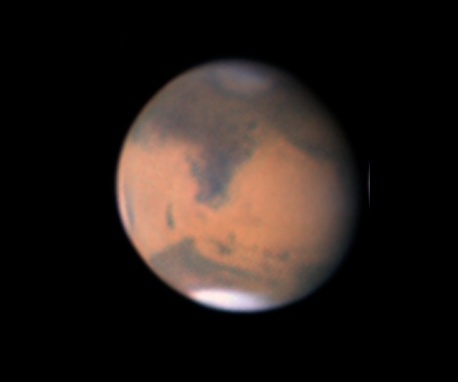
Mars in 2010 - The Movie.
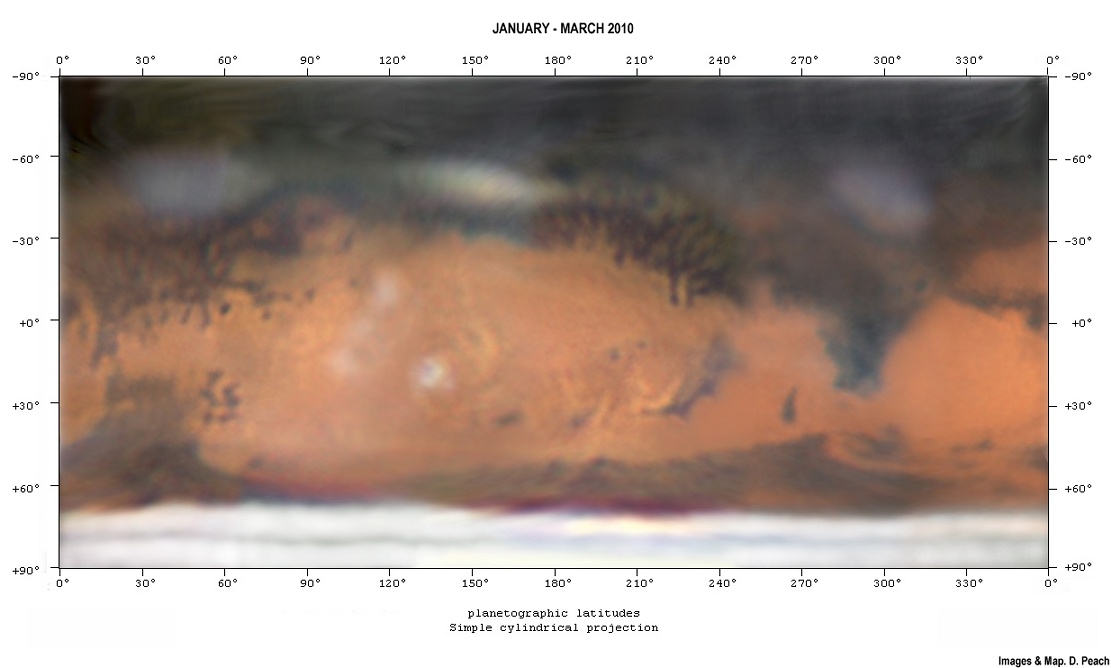
The entire face of Mars in 2010.
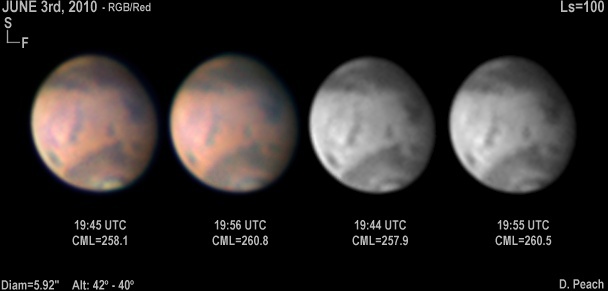
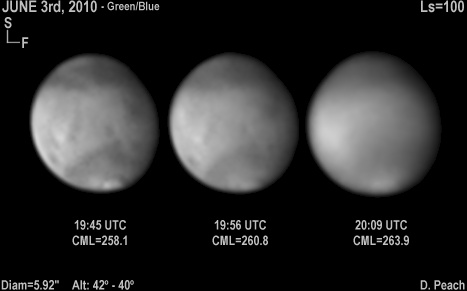
Mars on June 3rd, 2010. Diam=5.92". Syrtis Major prominent. Bright clouds over Elysium. NPC distinct. Thes are the final images of the 2009-10 apparition.
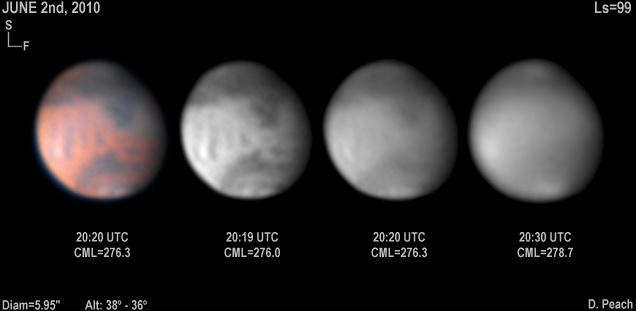
Mars on June 2nd, 2010. Diam=5.95". Syrtis Major prominent. Hellas bright with clouds. Weak clouds over Elysium.
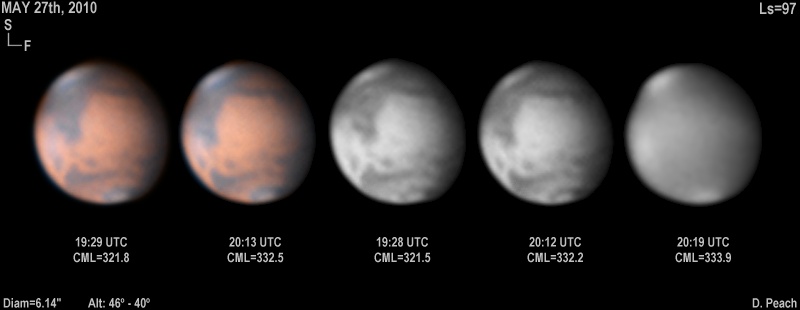
Mars on May 27th, 2010. Diam=6.14". Syrtis Major prominent. Hellas bright with clouds. Weak clouds over Isidis Regio.
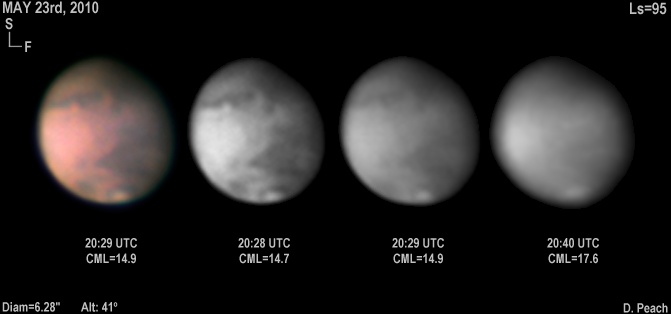
Mars on May 23rd, 2010. Diam=6.28". Bright clouds over Chryse and Aeria. NPC is again well defined.
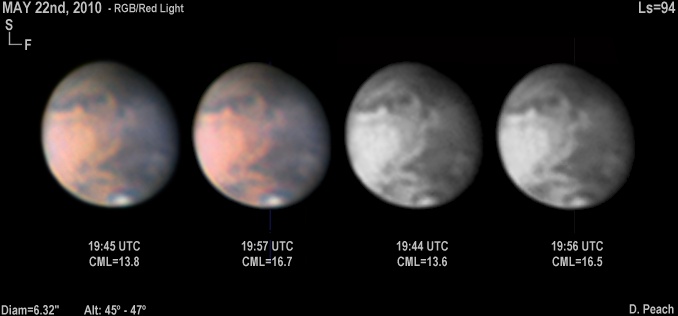
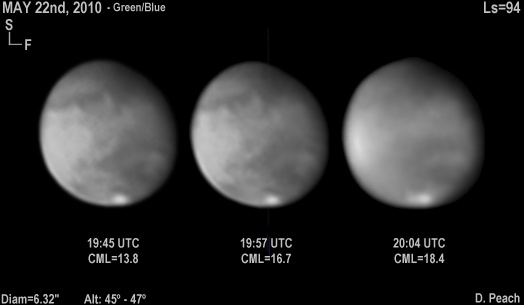
Mars on May 22nd, 2010. Diam=6.32". Bright clouds over Chryse and Mare Acidalium. NPC is again well defined.
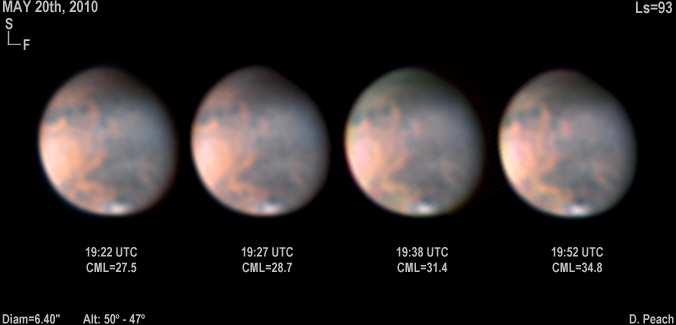
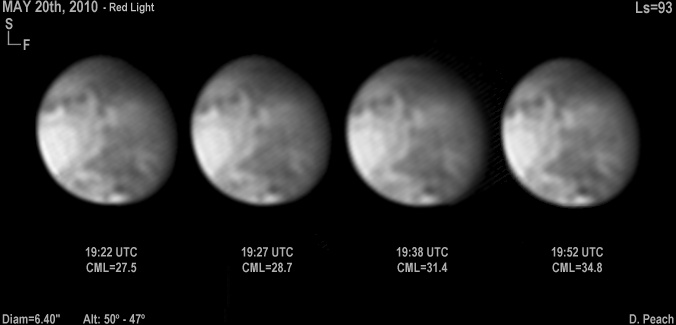
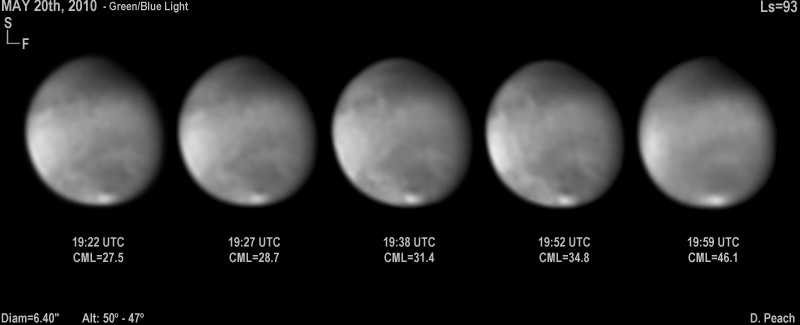
Mars on May 20th, 2010. Diam=6.40". Bright clouds over Chryse and over the bright limb. NPC is well defined and prominent.
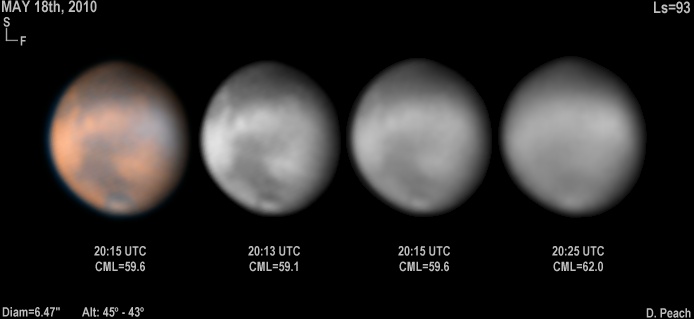
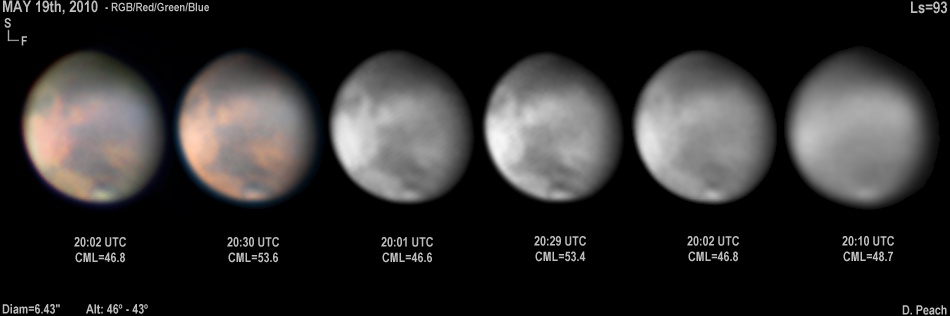
Mars on May 18th & May 19th, 2010. Diam=6.47 - 6.43". Brilliant clouds over Tharsis. A weak ECB across the disk through Chryse. NPC ground collar is very prominent.
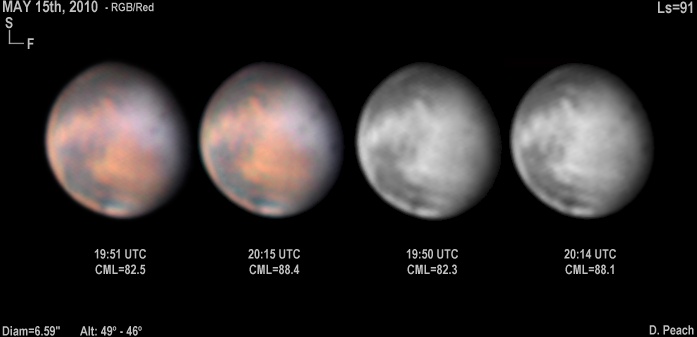
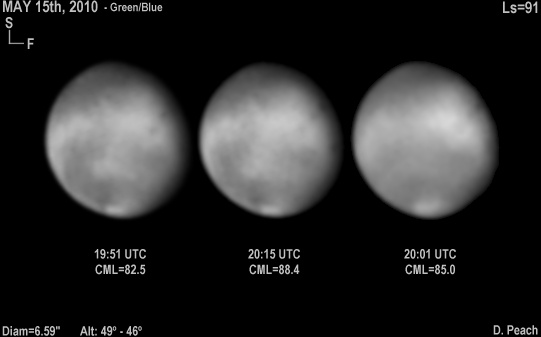
Mars on May 15th, 2010. Diam=6.59". Extensive and brilliant clouds over Tharsis. Tithonius Lacus/Coprates dark.
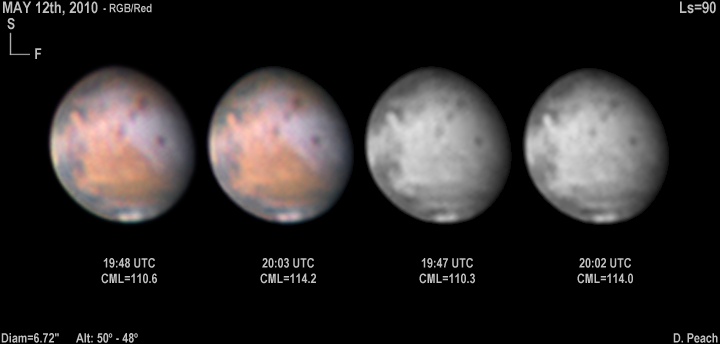
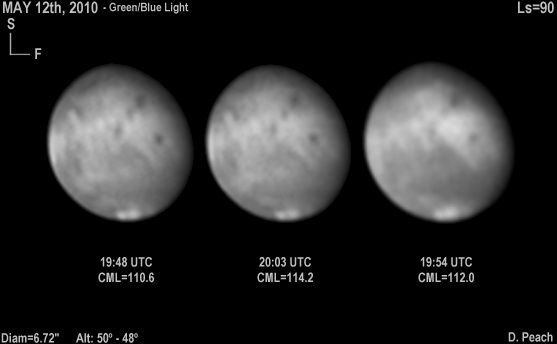
Mars on May 12th, 2010. Diam=6.72". Extensive and brilliant clouds over Tharsis. Note the rift in the NPC and the tharsis volcanoes seen as dark spots.
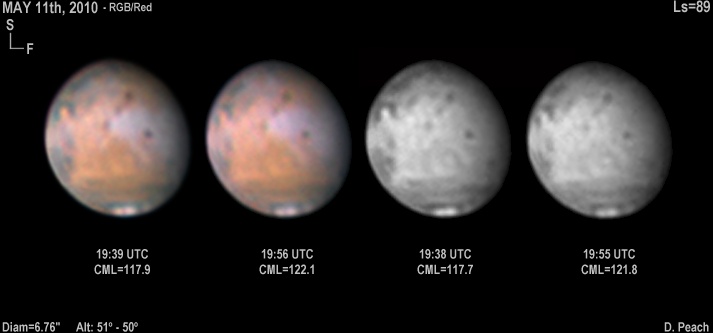
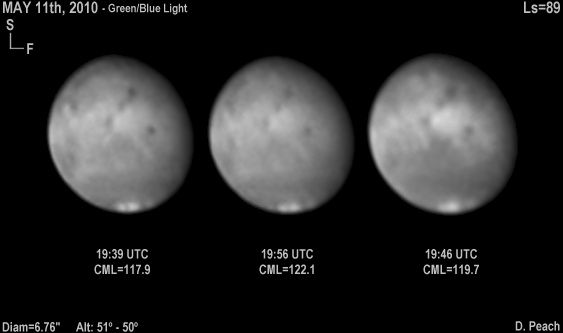
Mars on May 11th, 2010. Diam=6.76". Extensive and brilliant clouds over Tharsis. Note the rift in the NPC and the tharsis volcanoes seen as dark spots.
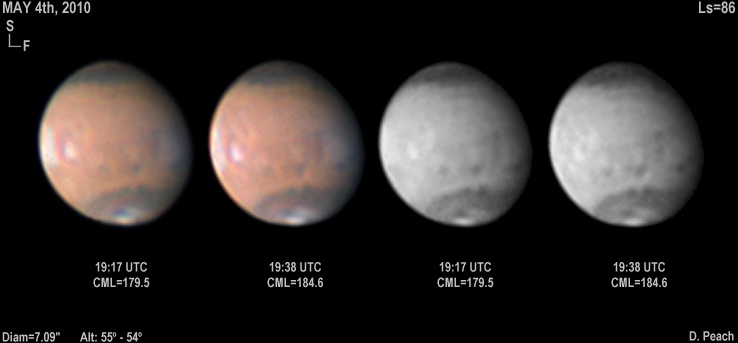
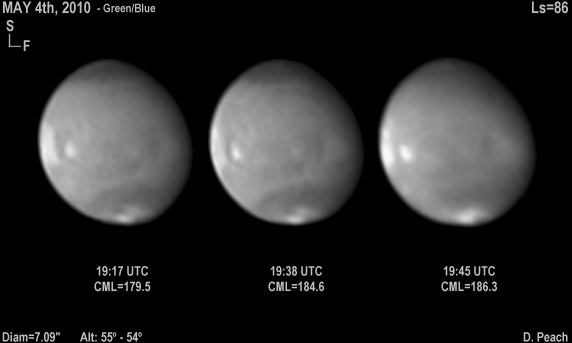
Mars on May 4th, 2010. Diam=7.09". Brilliant clouds over Tharsis and Olympus Mons. Weak hazes over Elysium. NPC is small and bright with outlier Olympia prominent.
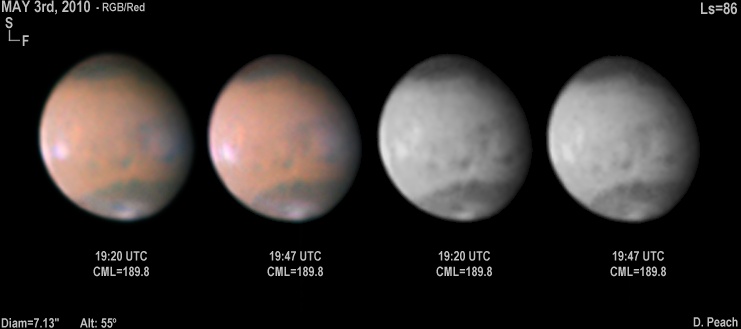

Mars on May 3rd, 2010. Diam=7.13". Brilliant clouds over Olympus Mons. Weak hazes over Elysium. NPC is small and bright with outlier Olympia prominent.
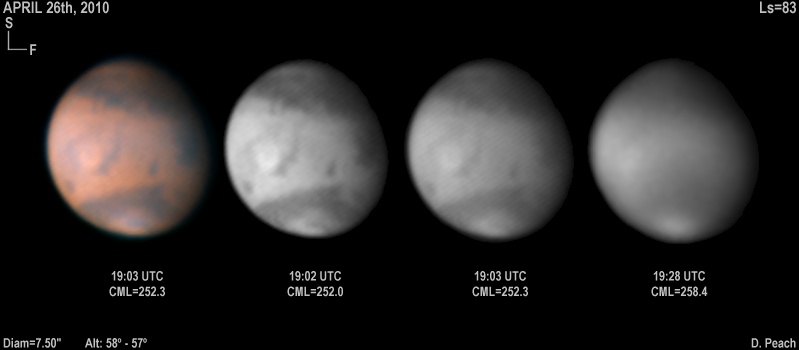
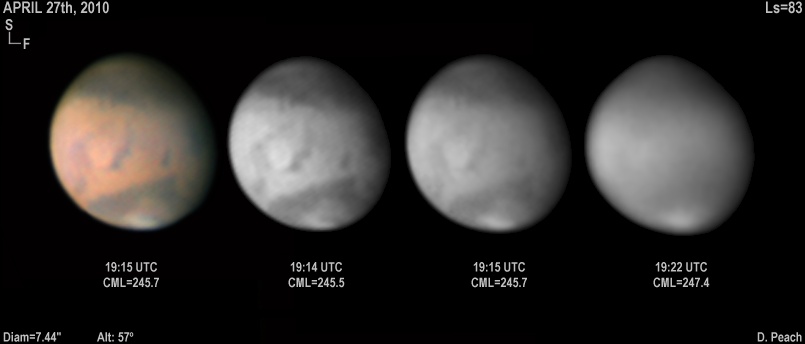
Mars on April 26 & 27th, 2010. Diam=7.5". Both these nights under poor seeing. Elysium appears moderately bright. NPC outlier Olympia is clearly seen beside the NPC. Weak Blue Syrtis Cloud.
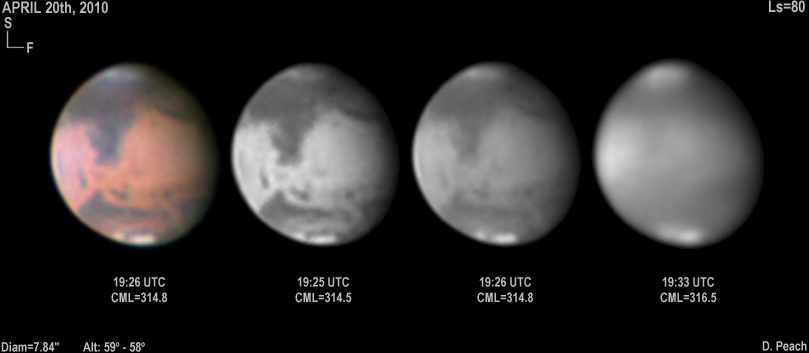
Mars on April 20th, 2010. Diam=7.84". The bright NPC outlier Olympia is nicely visible alongside the NPC. Syrtis Major prominent and Hellas is bright with cloud.
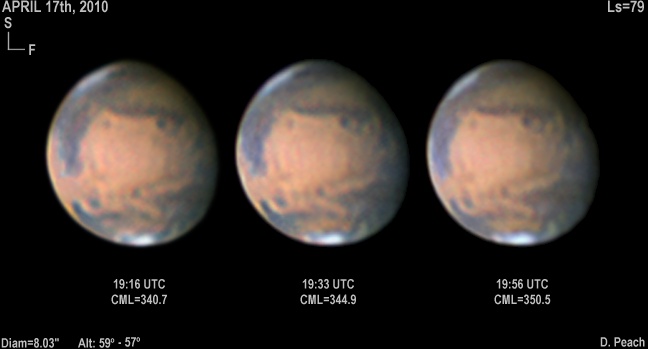
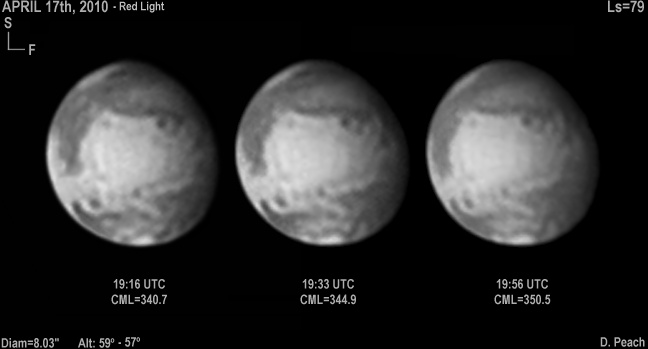
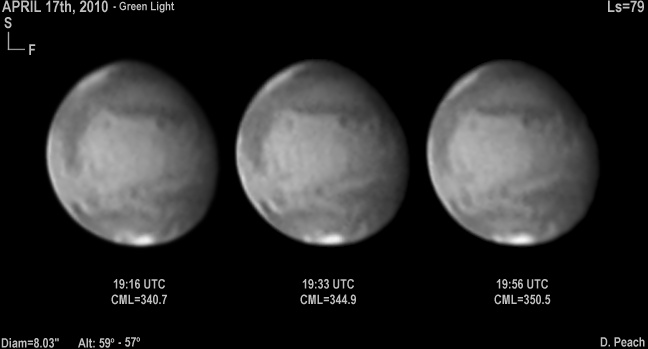
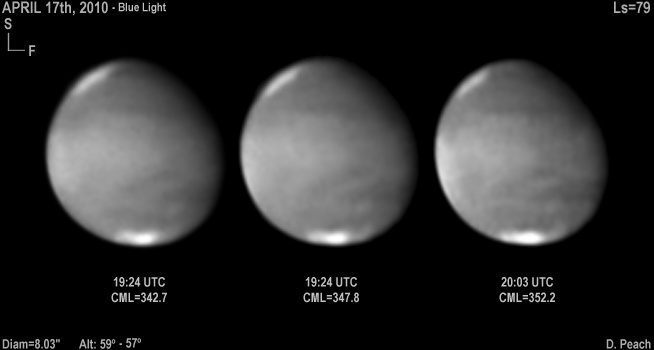
Mars on April 17th, 2010. Diam=8.03". The bright NPC outlier Olympia is visible alongside the NPC. Syrtis Major prominent, with the Syrtis Blue Cloud nicely seen in the final image.
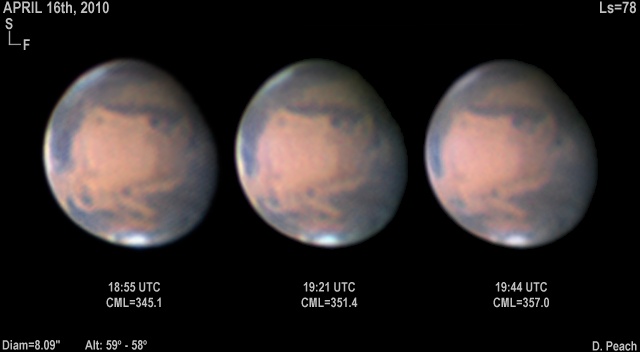
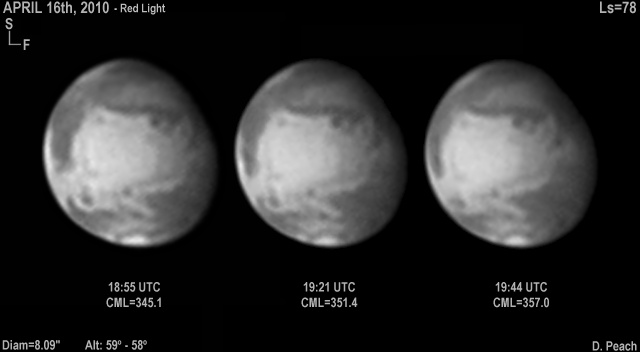
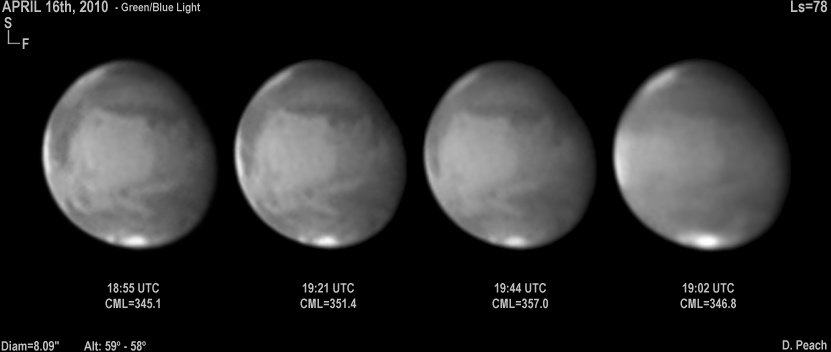
Mars on April 16th, 2010. Diam=8.09". The bright NPC outlier Olympia is visible alongside the NPC. Syrtis Major prominent, with the Syrtis Blue Cloud nicely seen in the final image.
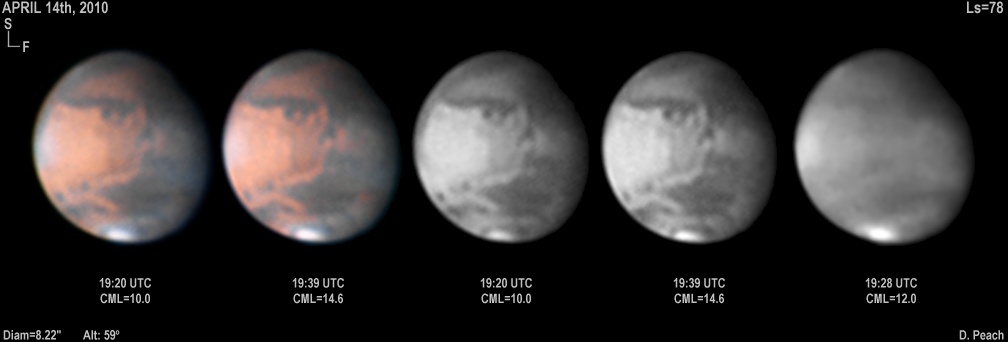
Mars on April 14th, 2010. Diam=8.22". The dark colar surrounding the small NPC is clearly visible. Weak clouds and hazes are also present across the disk.
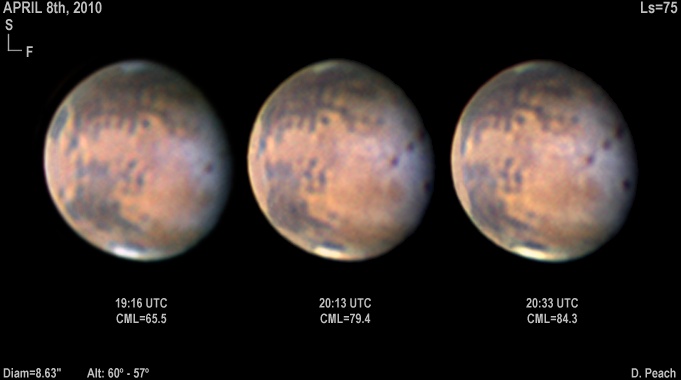
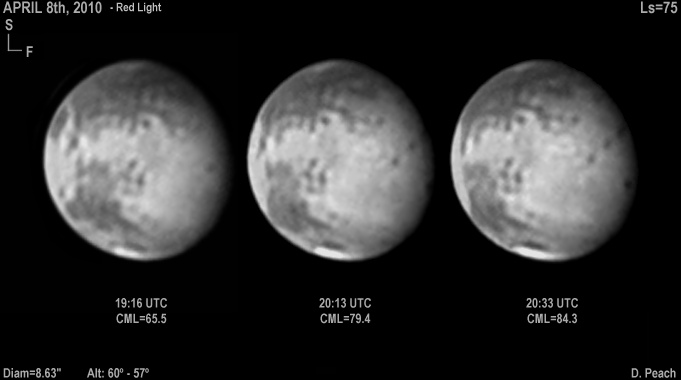
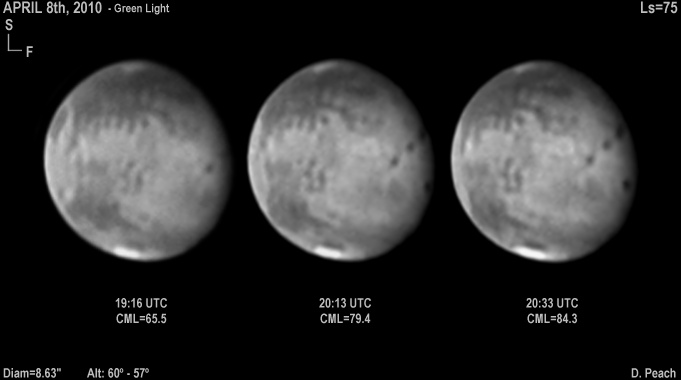
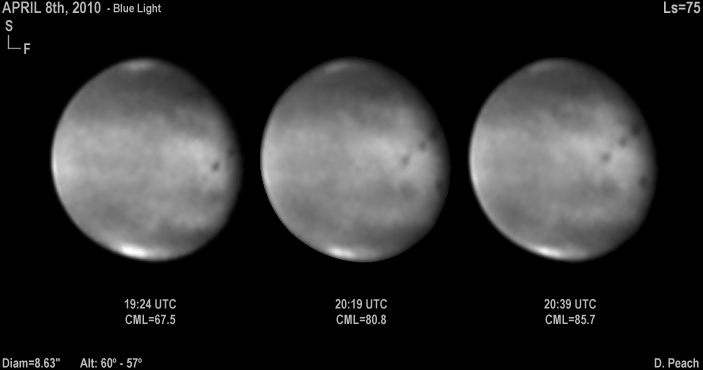
Mars on April 8th, 2010. Diam=8.63". Extensive clouds over Tharsis. The volcanoes are clearly visible as distinct dark spots.
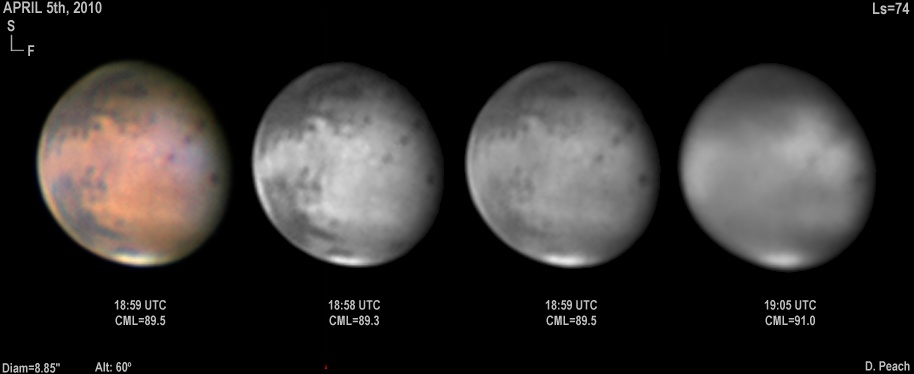
Mars on April 5th, 2010. Diam=8.85". Extensive clouds over the disk, especially Tharsis. The volcanoes are again clearly visible as distinct dark spots.
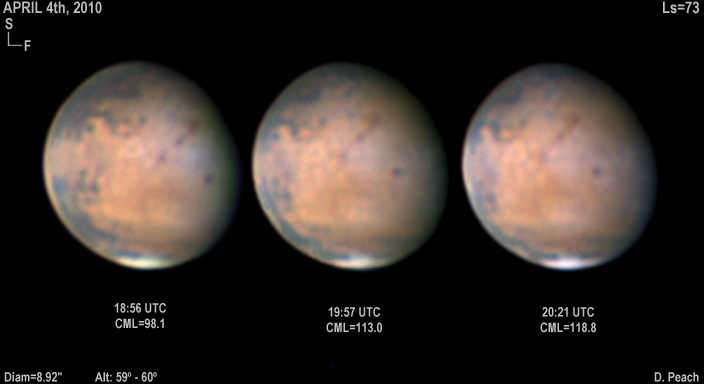
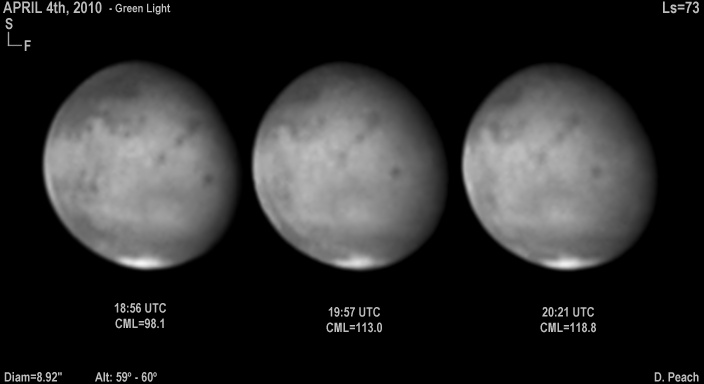
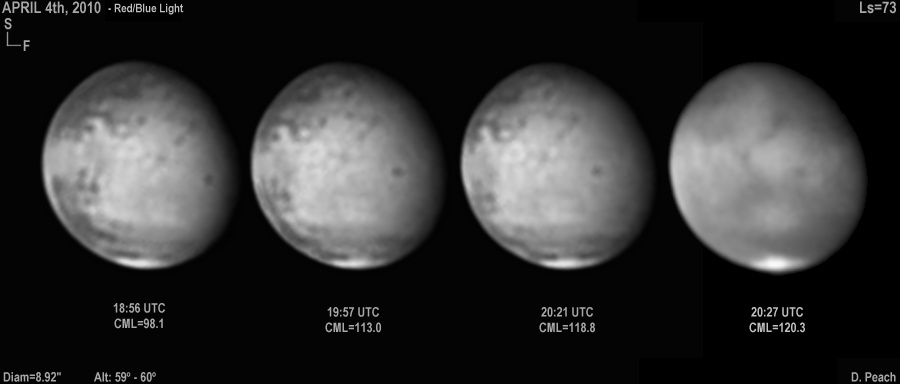
Mars on April 4th, 2010. Diam=8.92". Extensive clouds over the disk, especially Tharsis. The volcanoes are again clearly visible as distinct dark spots.
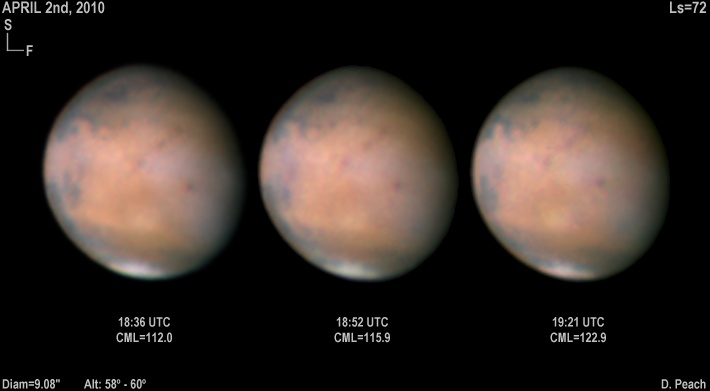
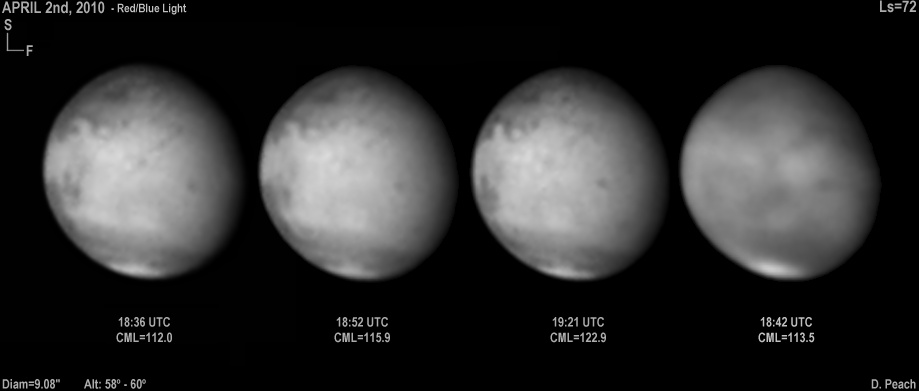
Mars on April 2nd, 2010. Diam=9.08". Extensive clouds over the disk, especially Tharsis. The volcanoes are again clearly visible as distinct dark spots.
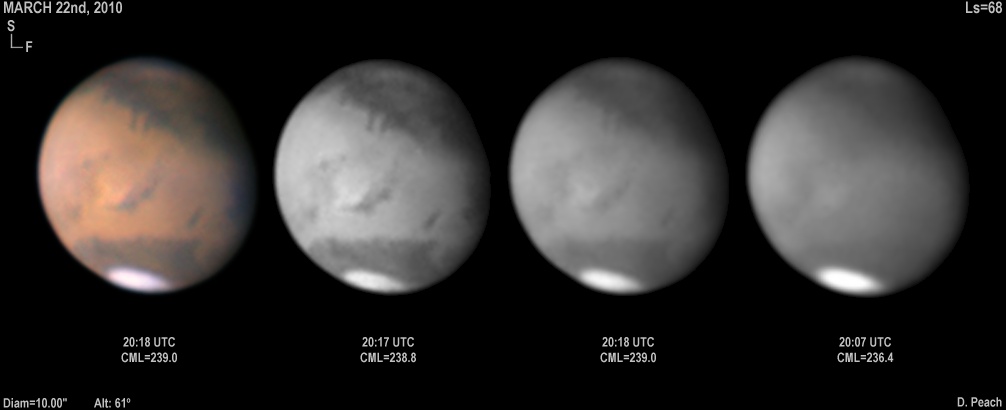
Mars on March 22nd, 2010. Diam=10.00". The apparent diameter has finally reduced to ten arc seconds. Weak clouds again visible over Elysium.
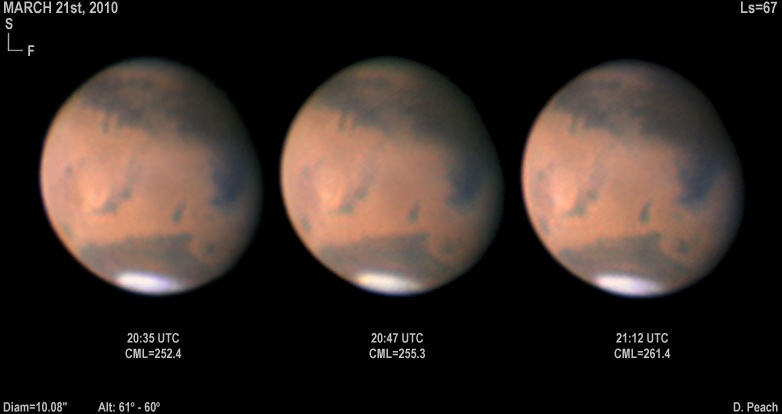
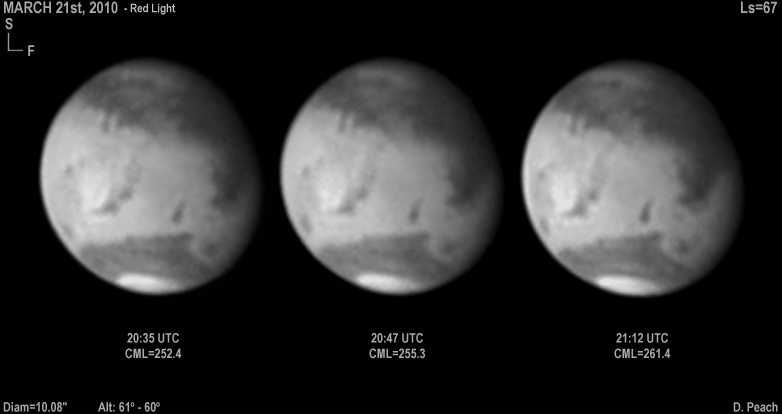
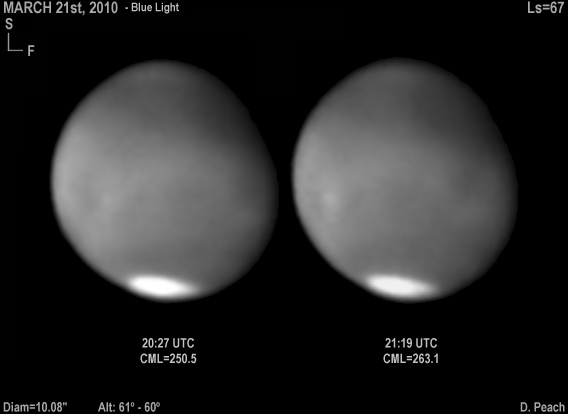

Mars on March 21st, 2010. Diam=10.08". Fair seeing. Syrtis Major is prominent with the blue syrtis cloud apparent Some weak clouds over Elysium that intensify with rotation.
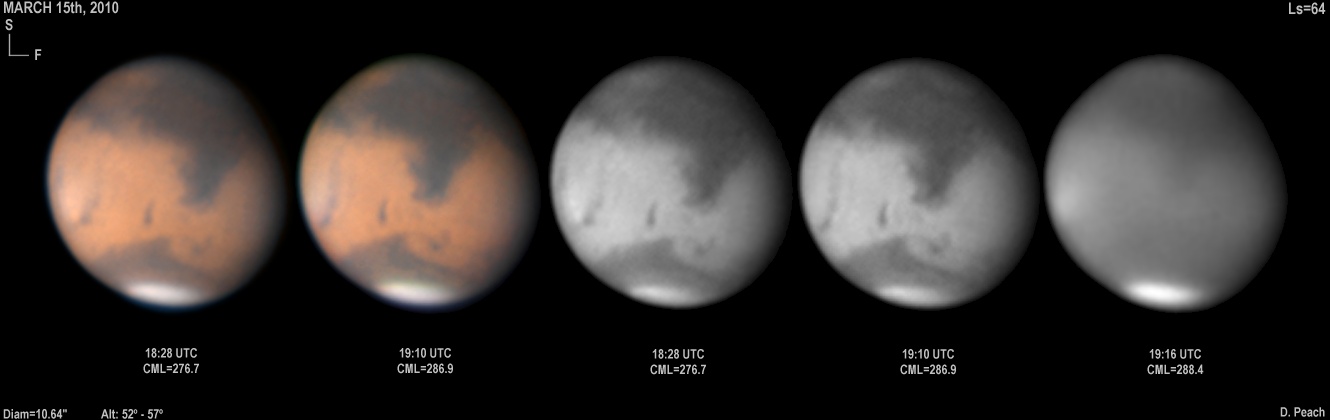
Mars on March 15th, 2010. Diam=10.64". Poor seeing. Syrtis Major is prominent with a cloudy Hellas to the south. Some weak clouds over Isidis Regio. Note the appearance of Syrtis major differs notably in Blue Light.
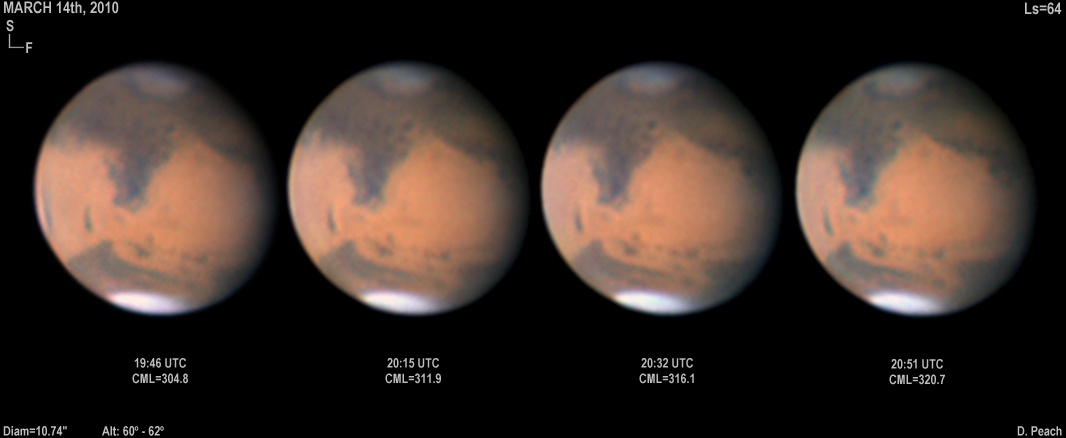
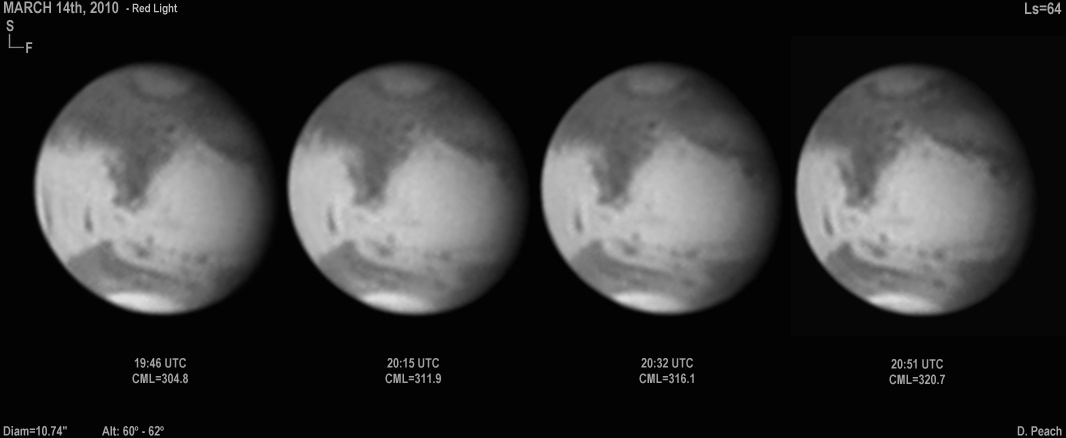
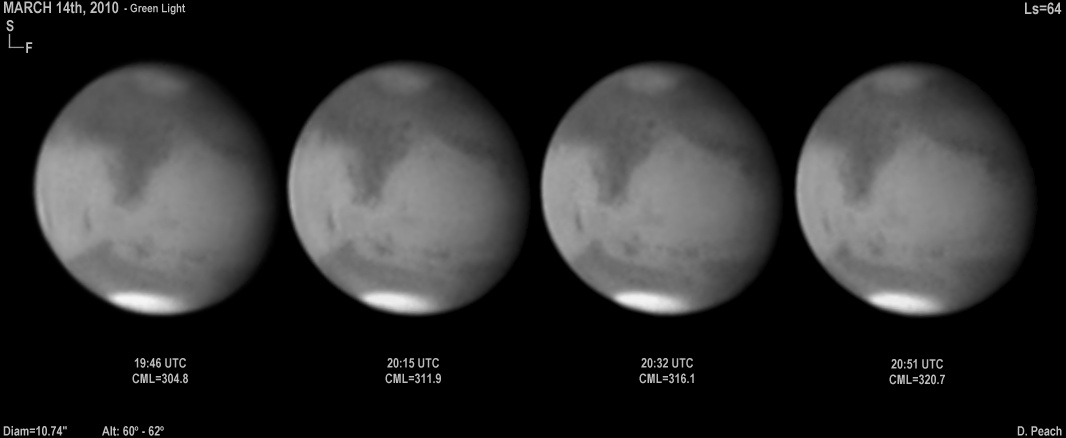
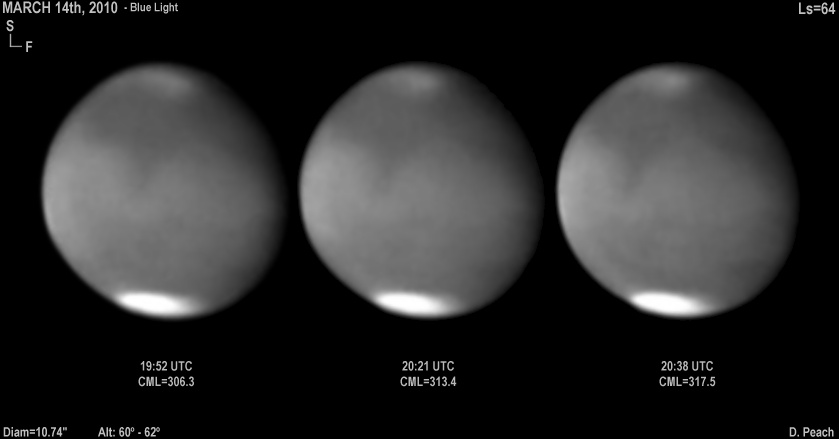
Mars on March 14th, 2010. Diam=10.74". Syrtis Major is prominent with a cloudy Hellas to the south. Some weak clouds over Isidis Regio. Note the appearance of Syrtis major differs notably in Blue Light.
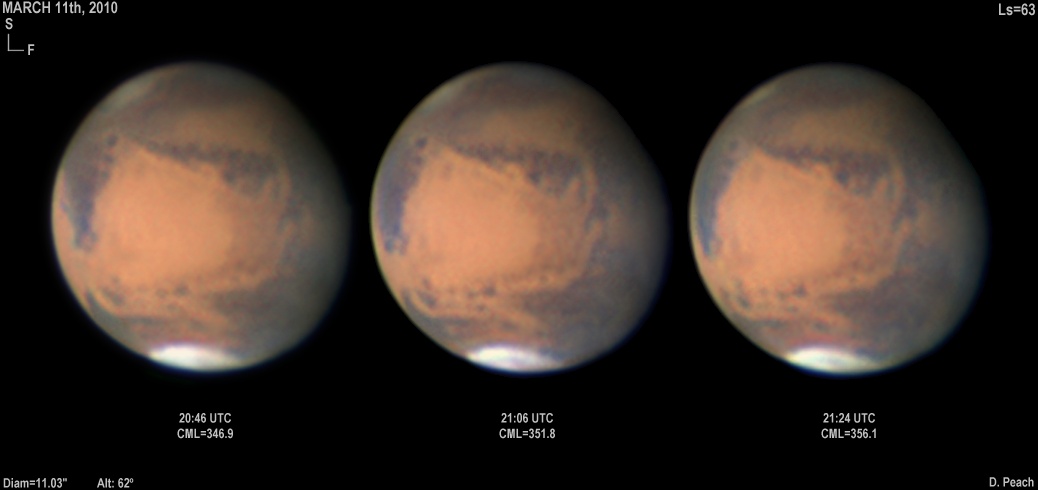
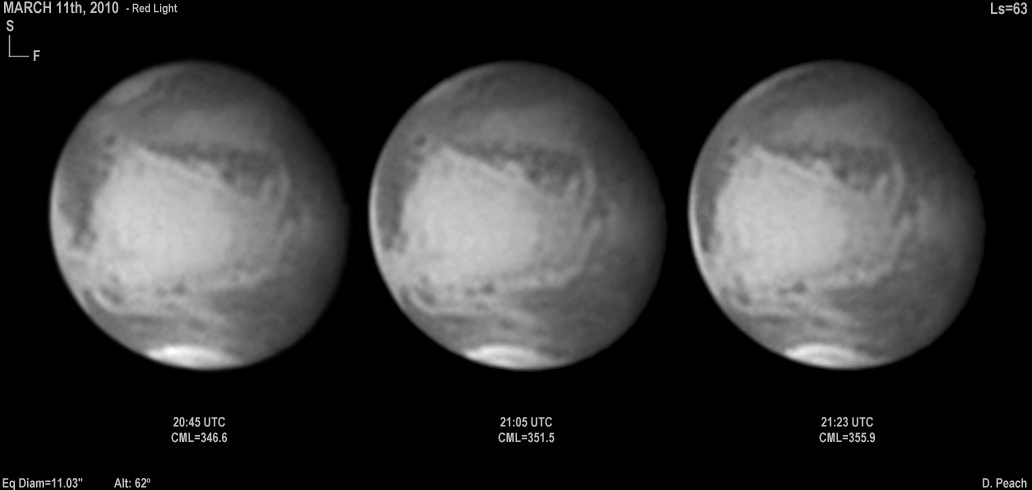
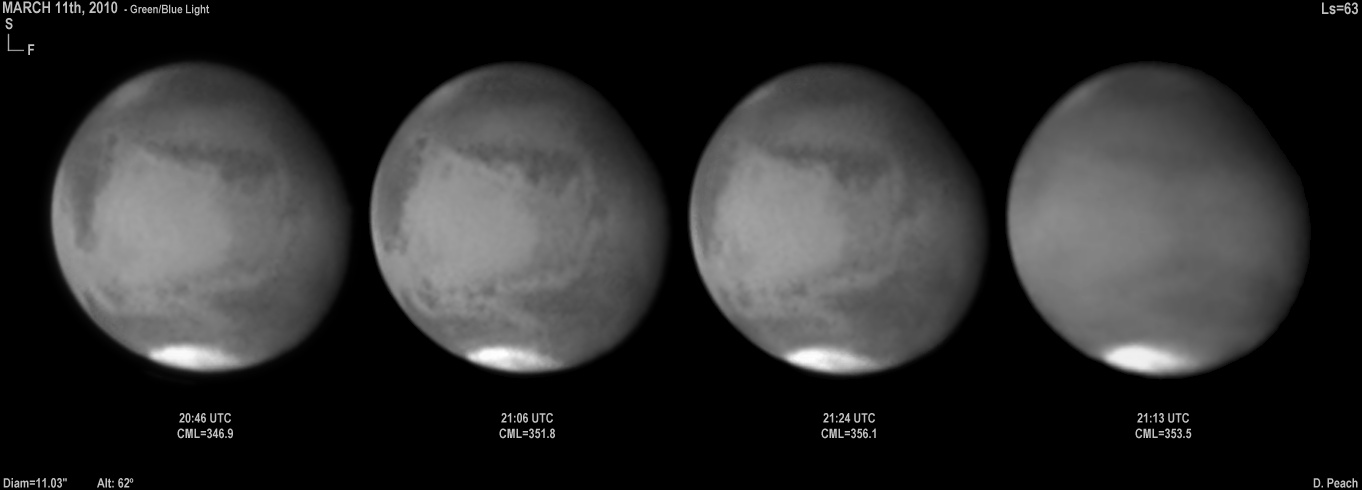
Mars on March 11th, 2010. Diam=11.03". Excellent seeing conditions. Sinus Meridiani is prominent on the meridian with many finer details visible across the Moab/Eden desert area. Ismenius Lacus is prominent to the North. The albedo ground collar of the summer NPC is visible showing through the NPC itself.
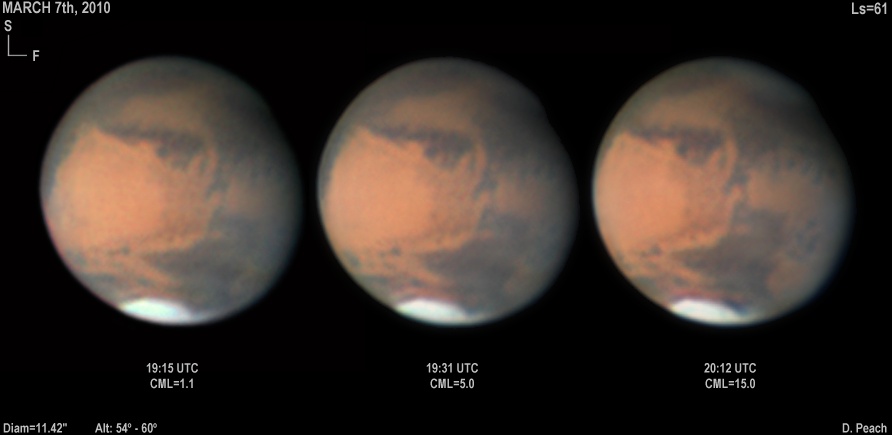
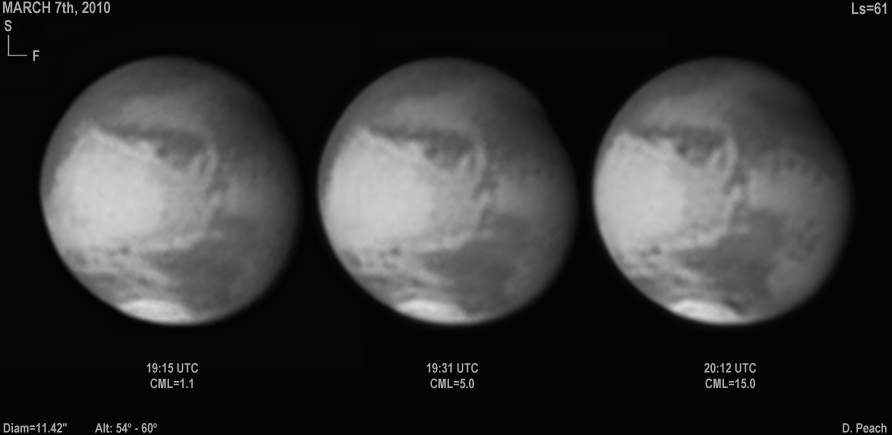
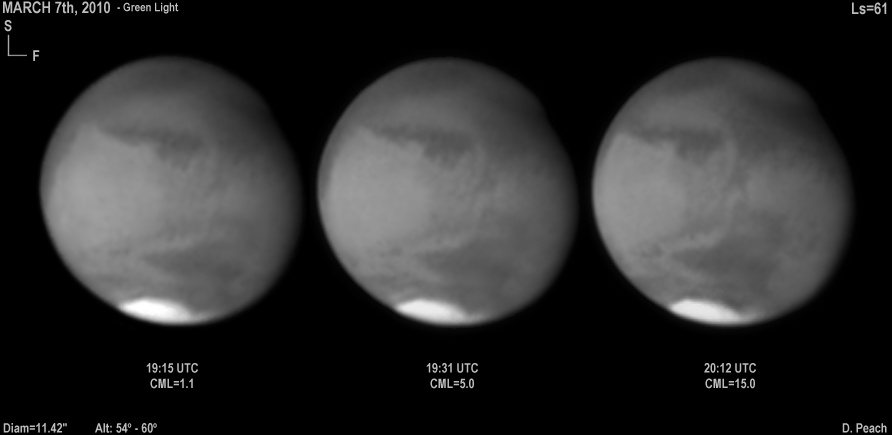
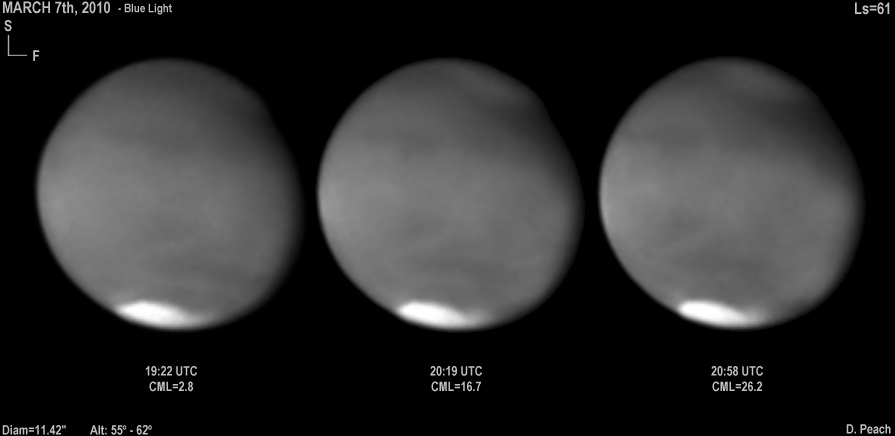
Mars on March 7th, 2010. Diam=11.42". Sinus Meridiani is on the central meridian, with Mare Acidalium to the north. Morning clouds over Tharsis are also present, with bright haze over the Argyre basin.
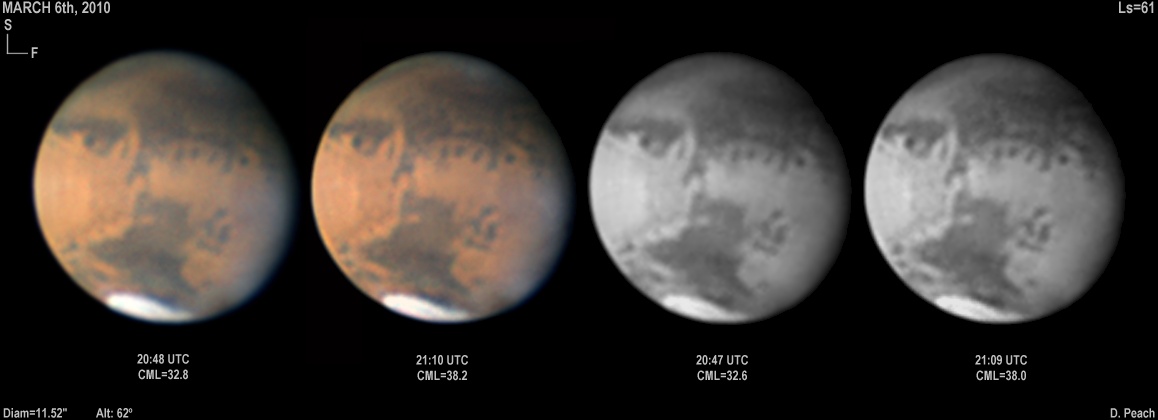
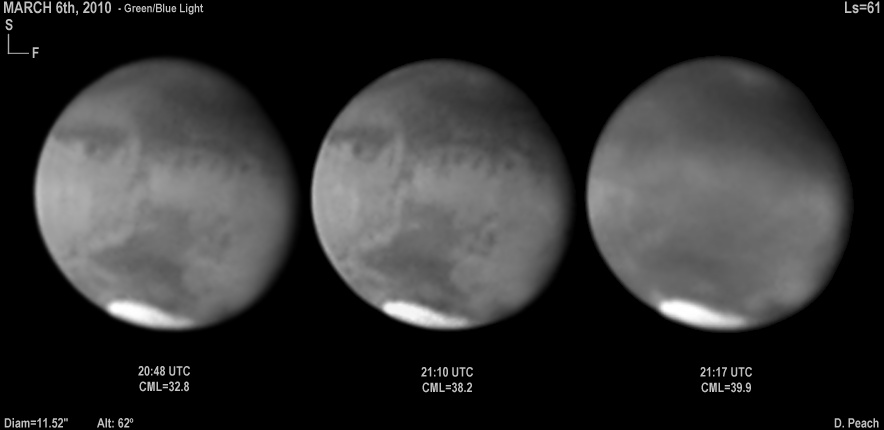
Mars on March 6th, 2010. Diam=11.52". Sinus Meridiani is coming to the central meridian, with Mare Acidalium to the north. Morning clouds over Tharsis are prominent.
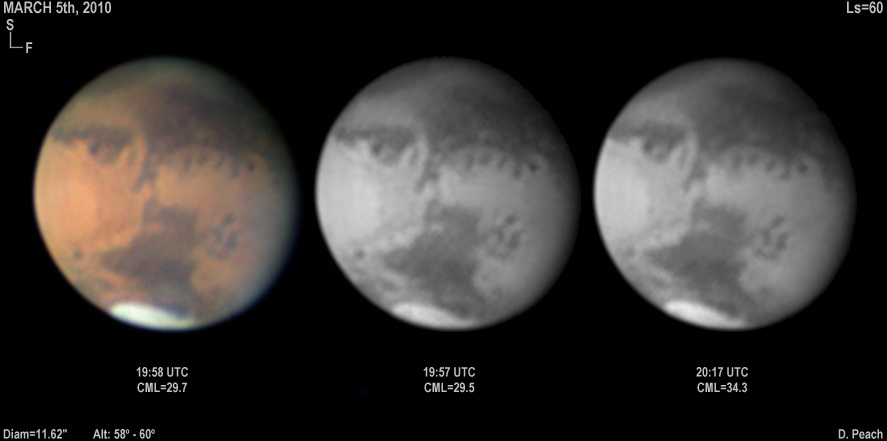
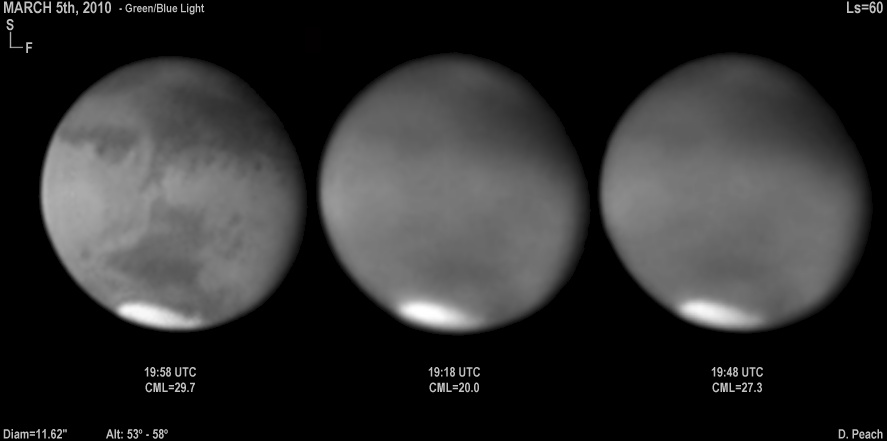
Mars on March 5th, 2010. Diam=11.62". Sinus Meridiani is coming to the central meridian, with Mare Acidalium to the north. Cloudiness is less prevalent across this hemisphere.
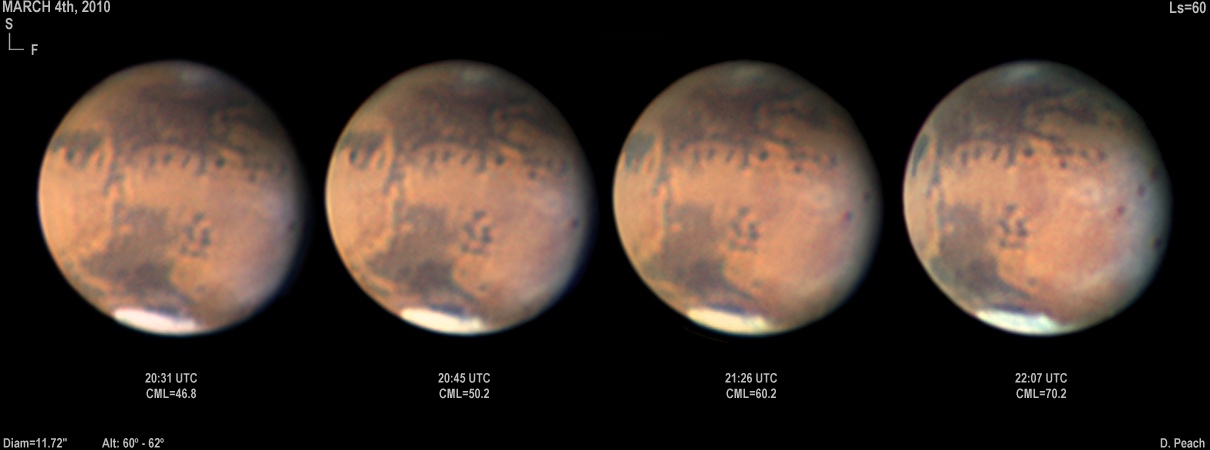
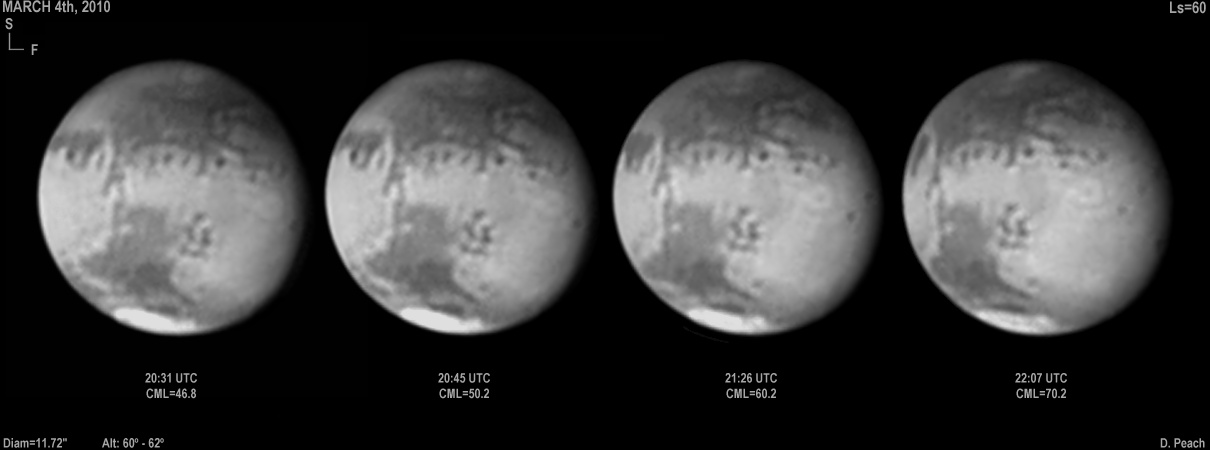
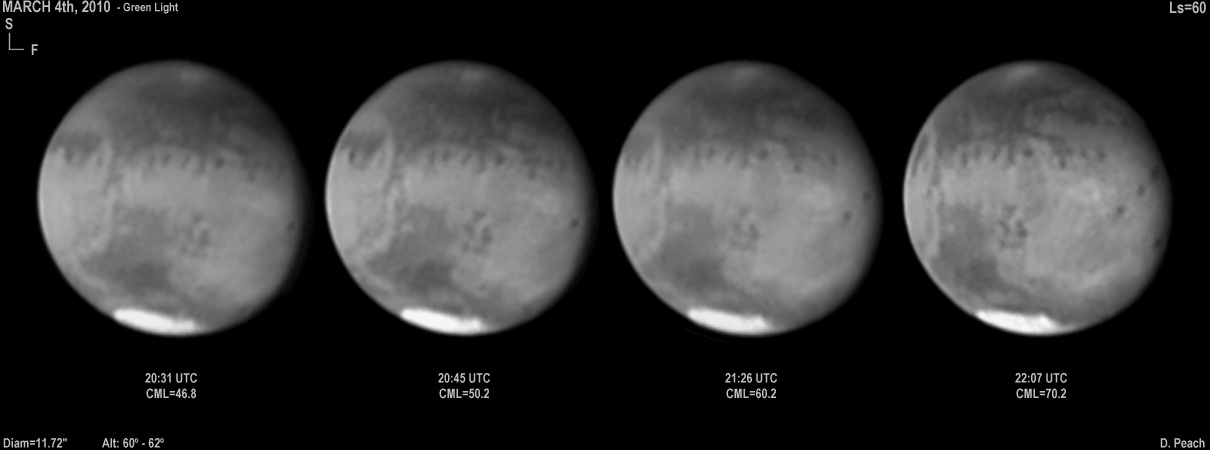
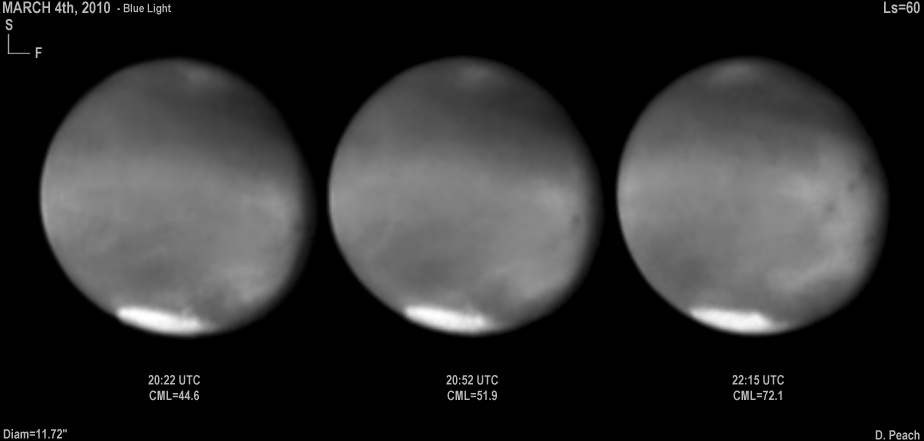
Mars on March 4th, 2010. Diam=11.72". Tharsis is prominent with the very dark spots of the giant volcanoes clearly visible against the extensive clouds in the Tharsis region.
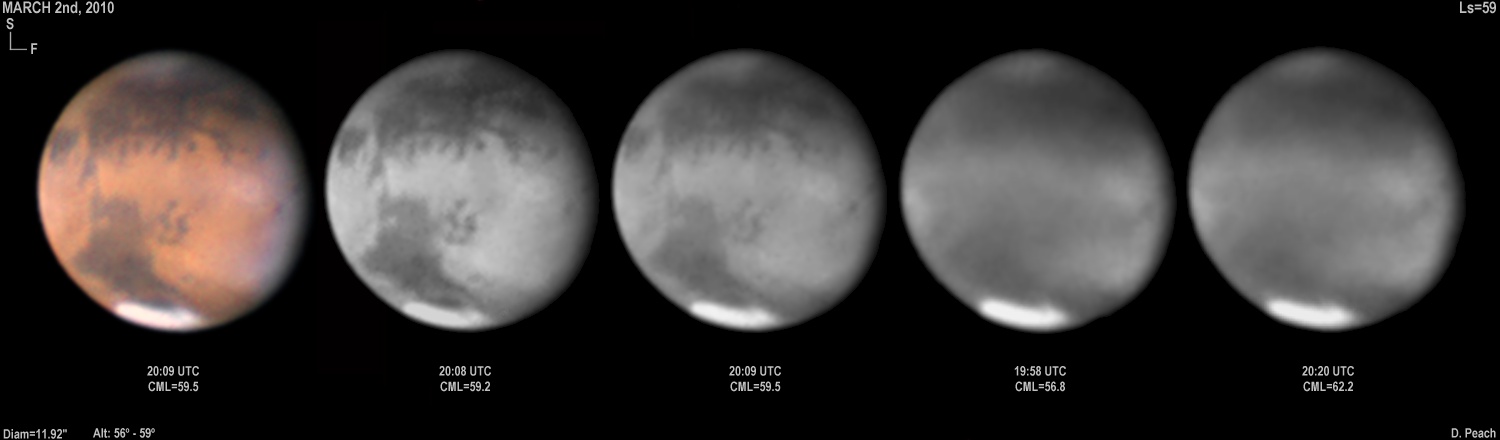
Mars on March 2nd, 2010. Diam=11.92". Tharsis is prominent with the dark spots of the giant volcanoes clearly visible against the extensive clouds in the Tharsis region.
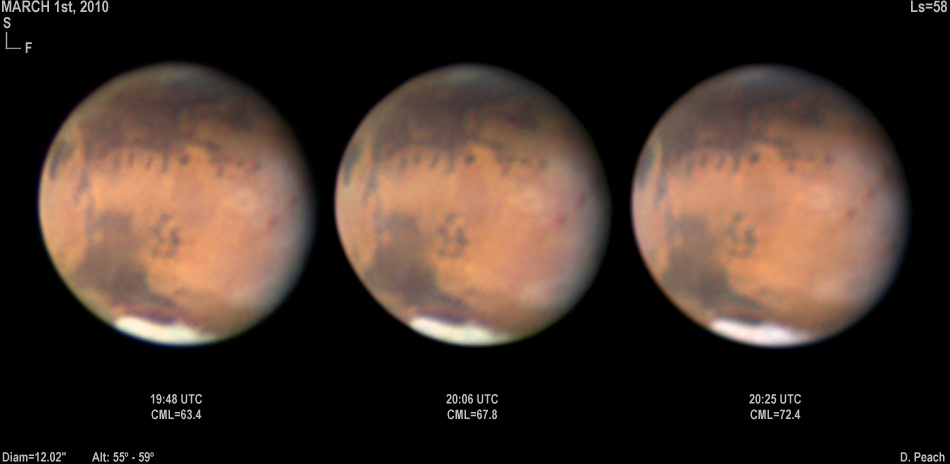
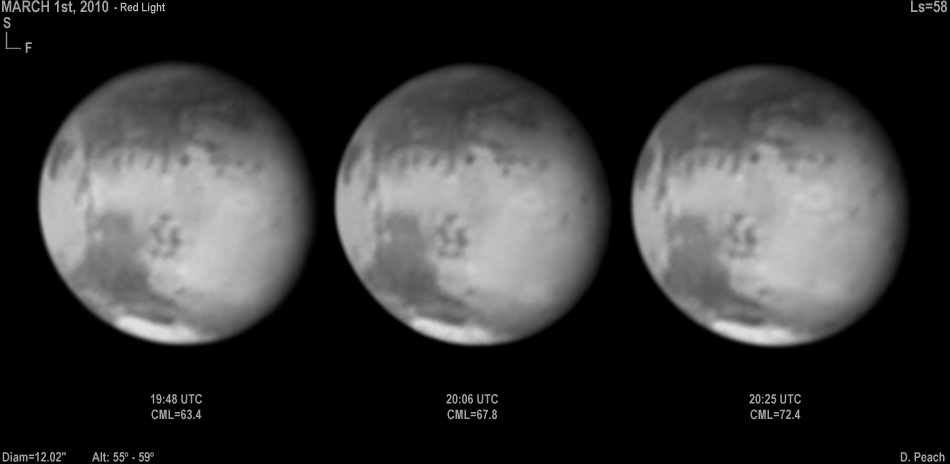
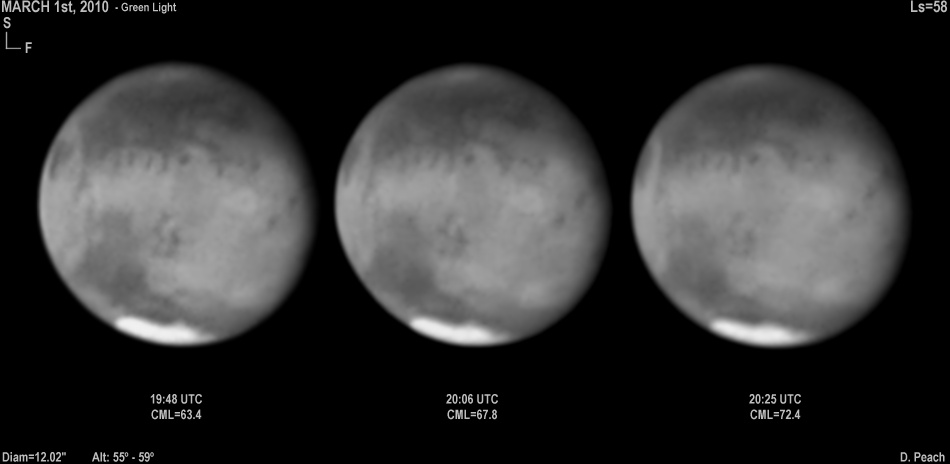
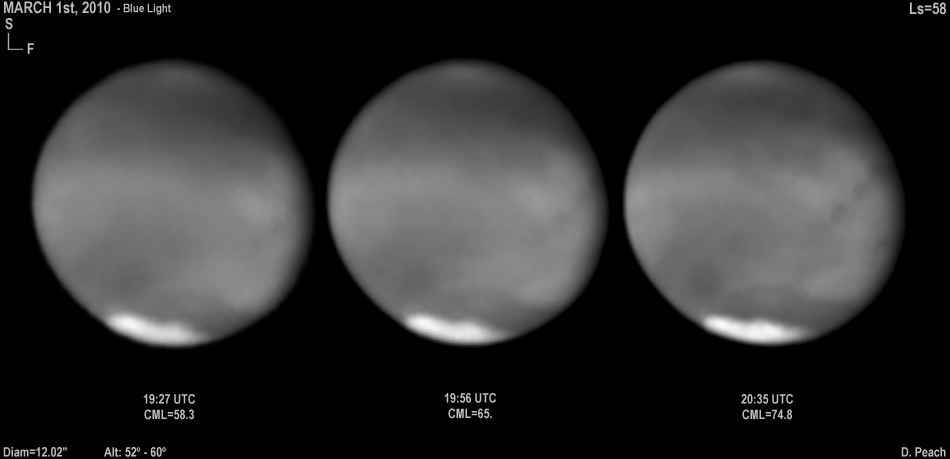
Mars on March 1st, 2010. Diam=12.02". Tharsis is prominent with the dark spots of the giant volcanoes clearly visible against the extensive clouds in the Tharsis region.
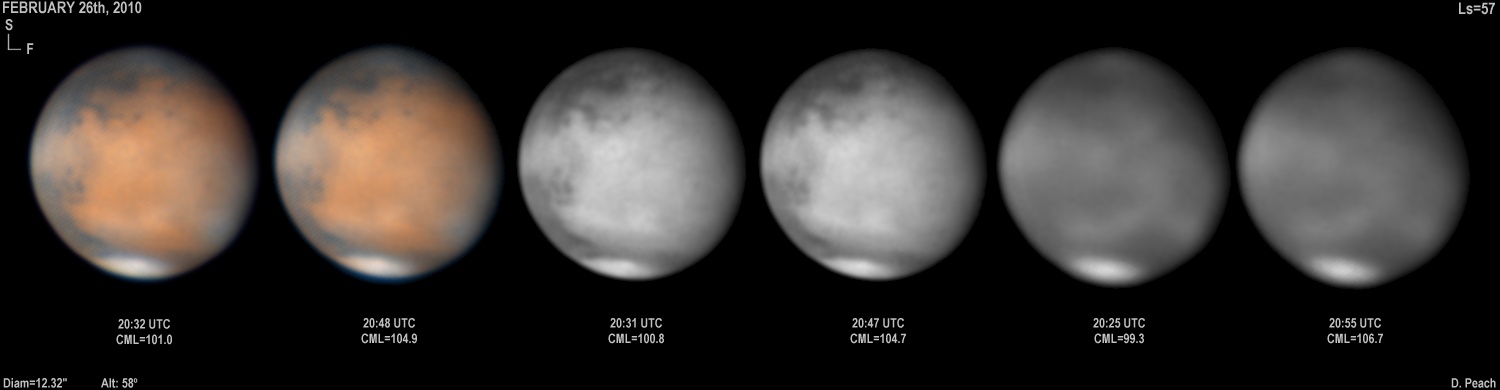
Mars on February 26th, 2010. Diam=12.32". Solis Lacus is central. Extensive clouds across the Martian disk.
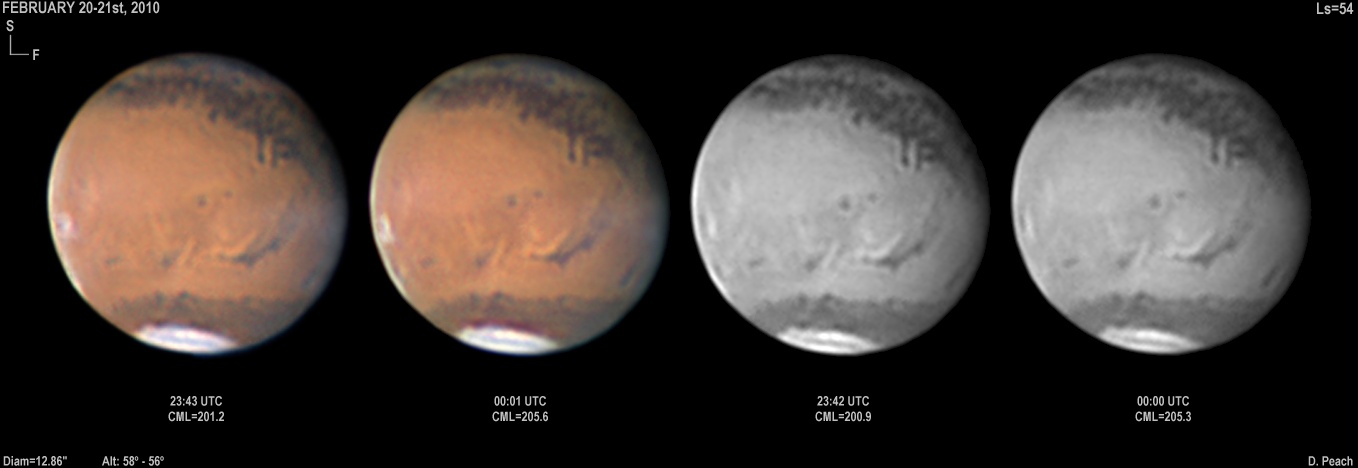
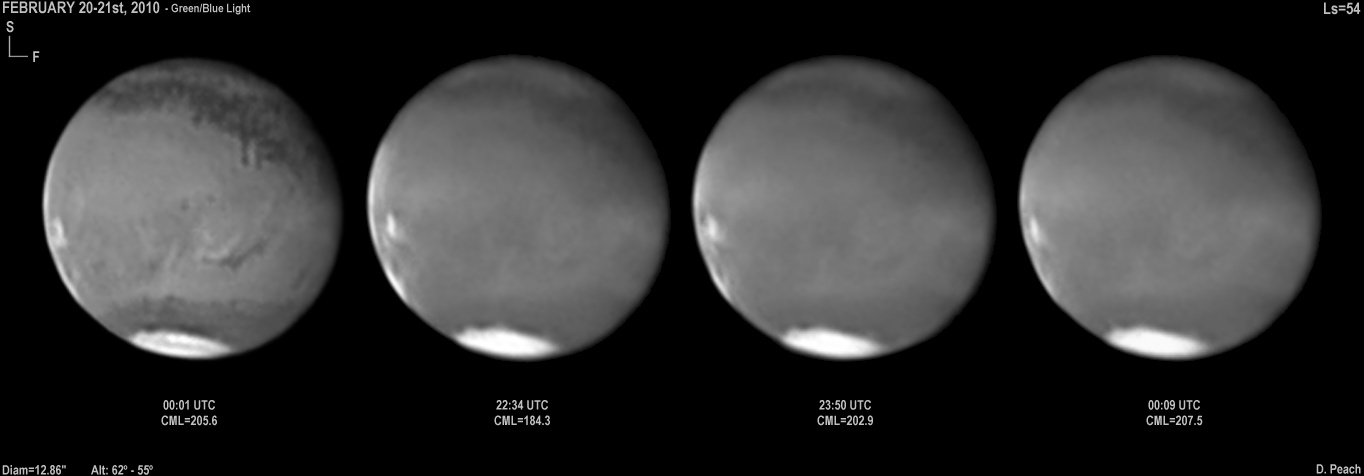
Mars on February 20-21st, 2010. Diam=12.86". Very good seeing. The Elysium region is prominent in this view. Also note the brilliant orographic cloud over Olympus Mons over on the left side of the disk.
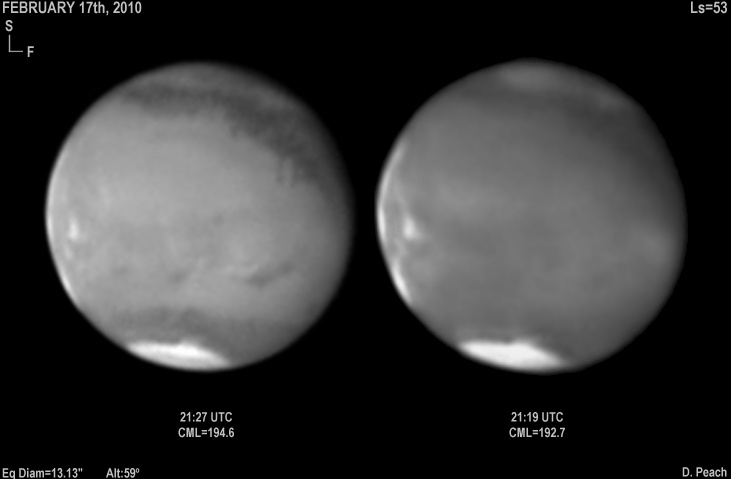
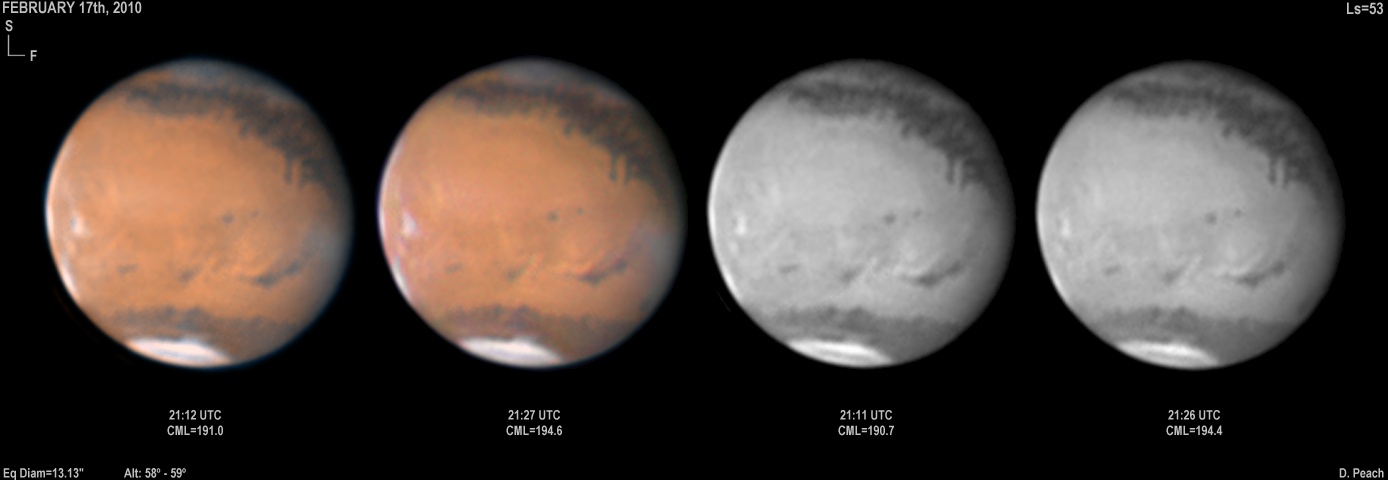
Mars on February 17th, 2010. Diam=13.13". The Elysium region is prominent in this view. Also note the brilliant orographic cloud over Olympus Mons over on the left side of the disk.
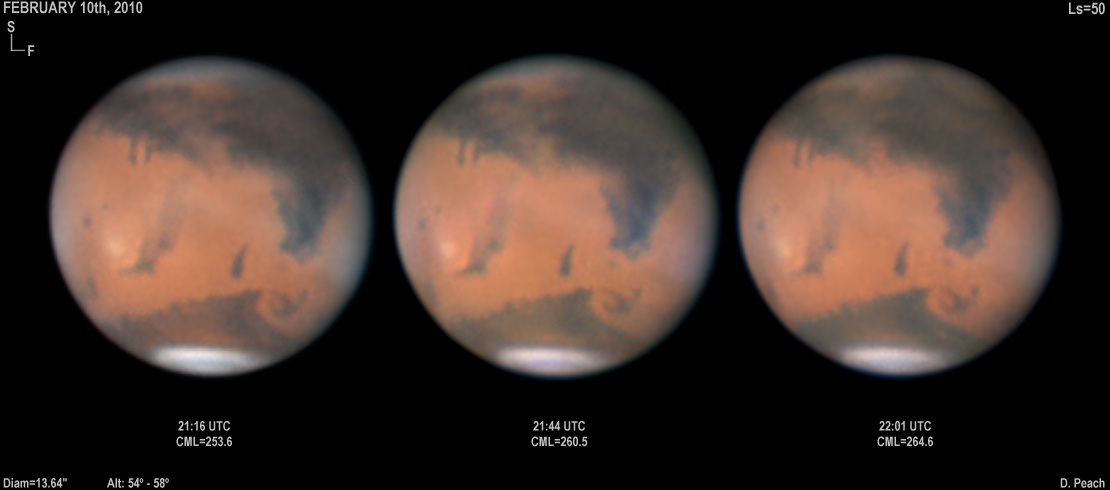
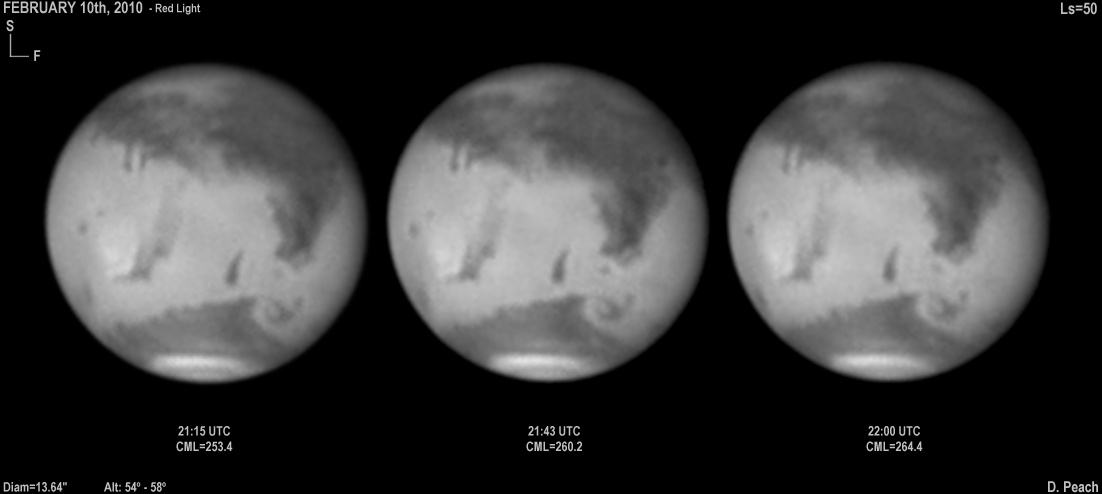
Mars on February 10th, 2010. Diam=13.64". Syrtis Major is prominent, with the "tuning fork" projection at Sinus Gomer nice visible. Bright orographic clouds over the Elysium region.
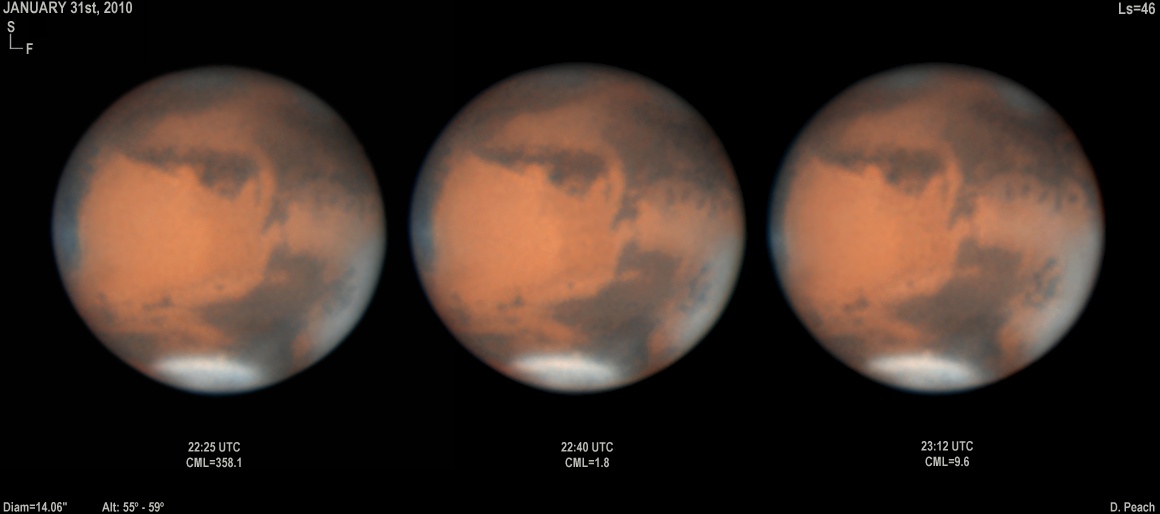
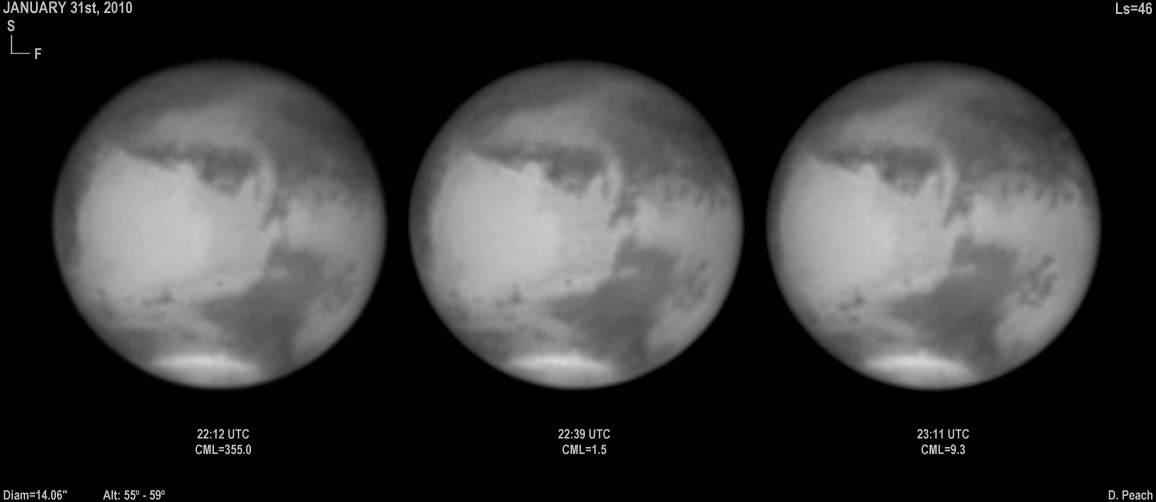
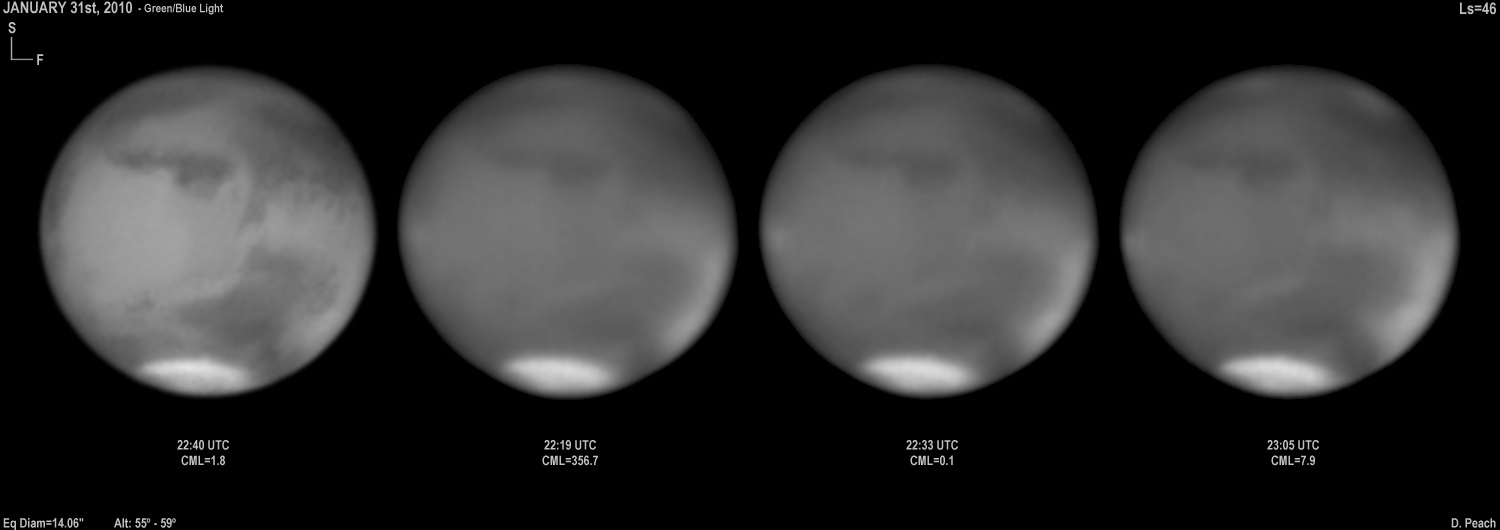
Mars on January 31st, 2010. Diam=14.06". The blue Syrtis cloud is very prominent in these images. Note the bright spot on the edge of the NPC - this is the frosted crater Lomonosov.
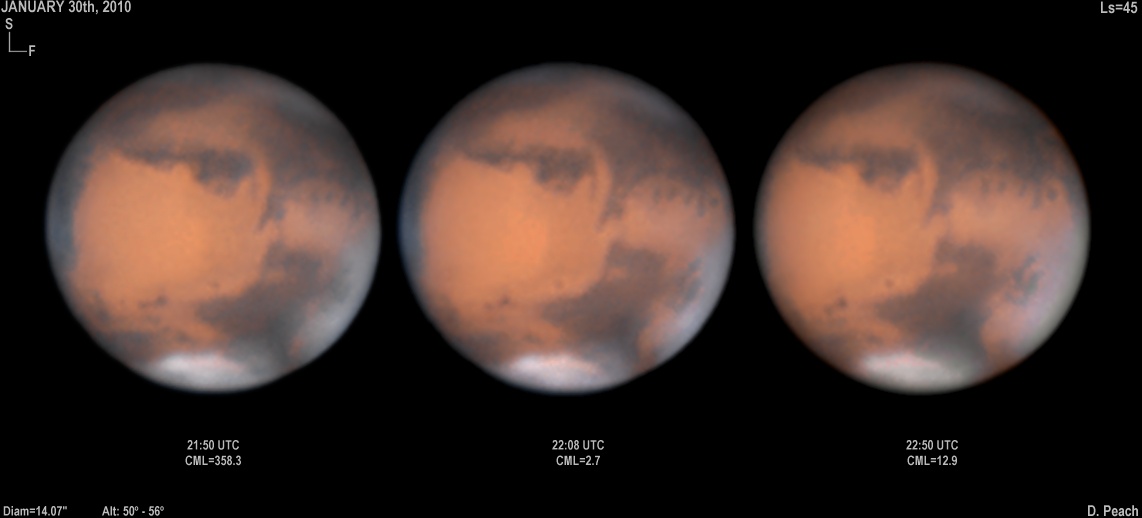
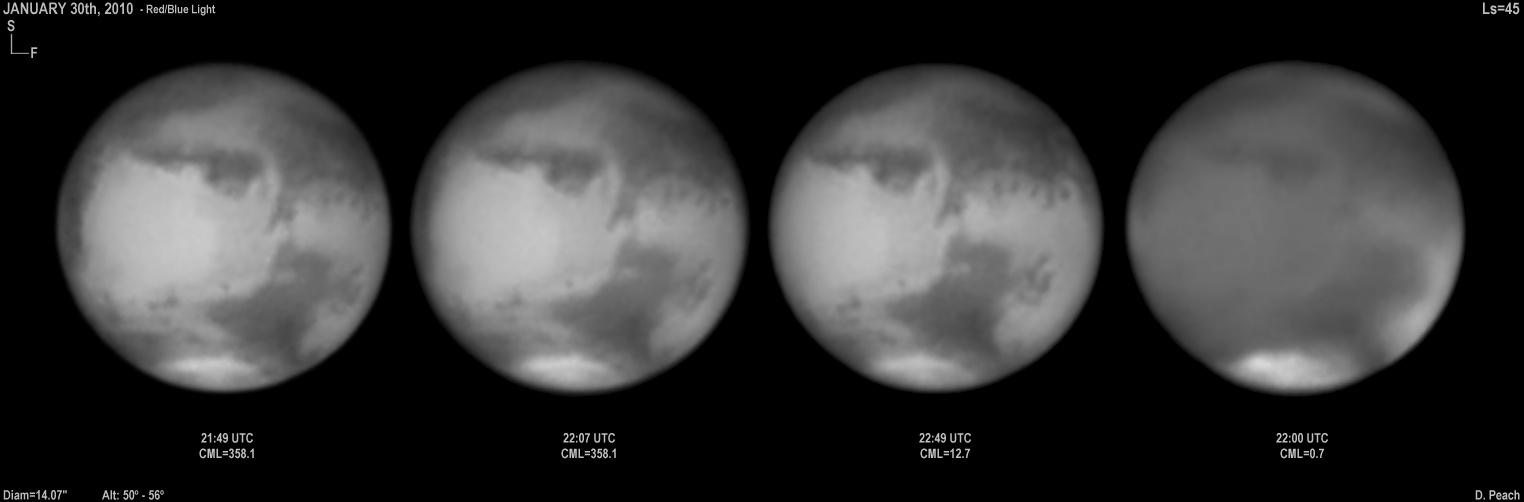
Mars on January 30th, 2010. Diam=14.07". Syrtis Major is appearing at left, while Sinus Meridiani is centreal. Bright clouds over Tharsis/Tempe extending into Chryse. Note the blue Syrtis cloud over the tip of Syrtis Major.
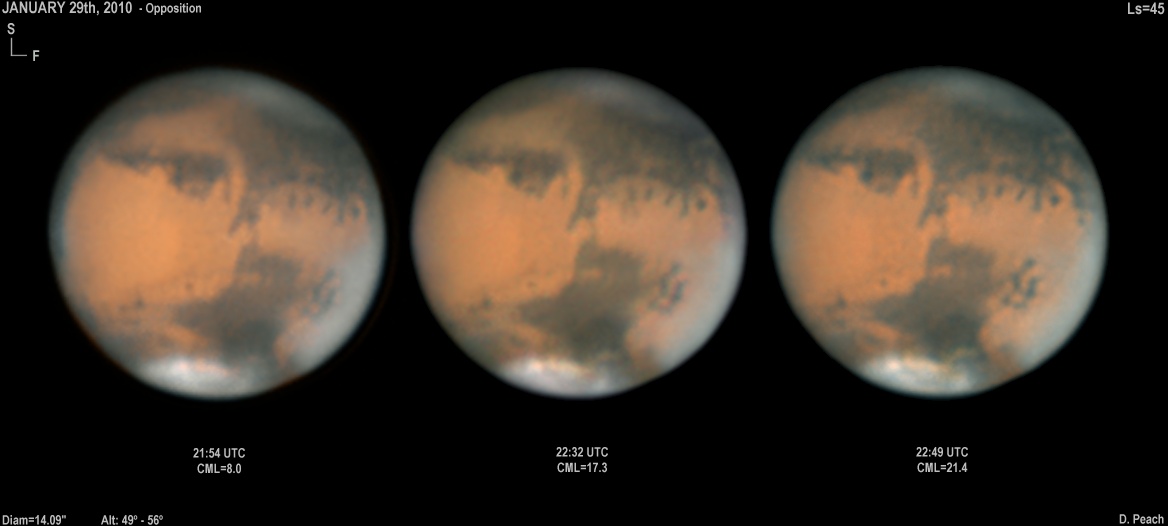
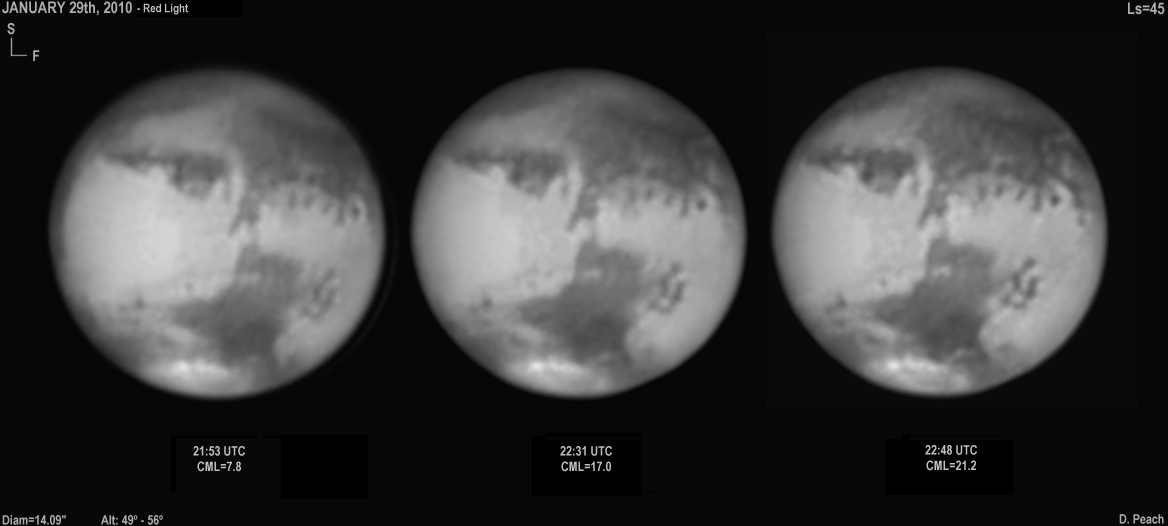
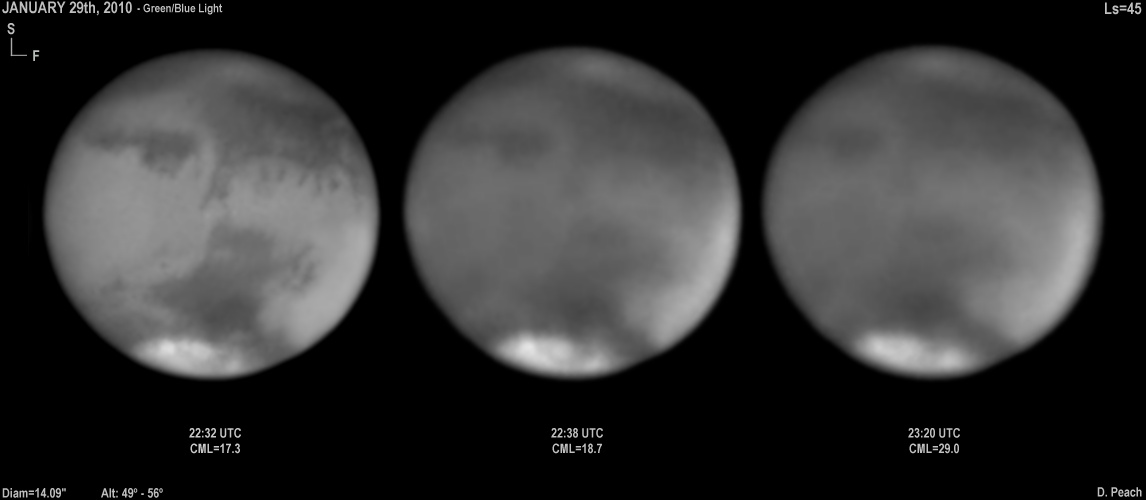
Mars on January 29th, 2010. Diam=14.09". Just a few hours past opposition for 2010.Dust clouds are visible over the NPC spreading out into the Baltia region. Syrtis Major is just appearing on the limb.
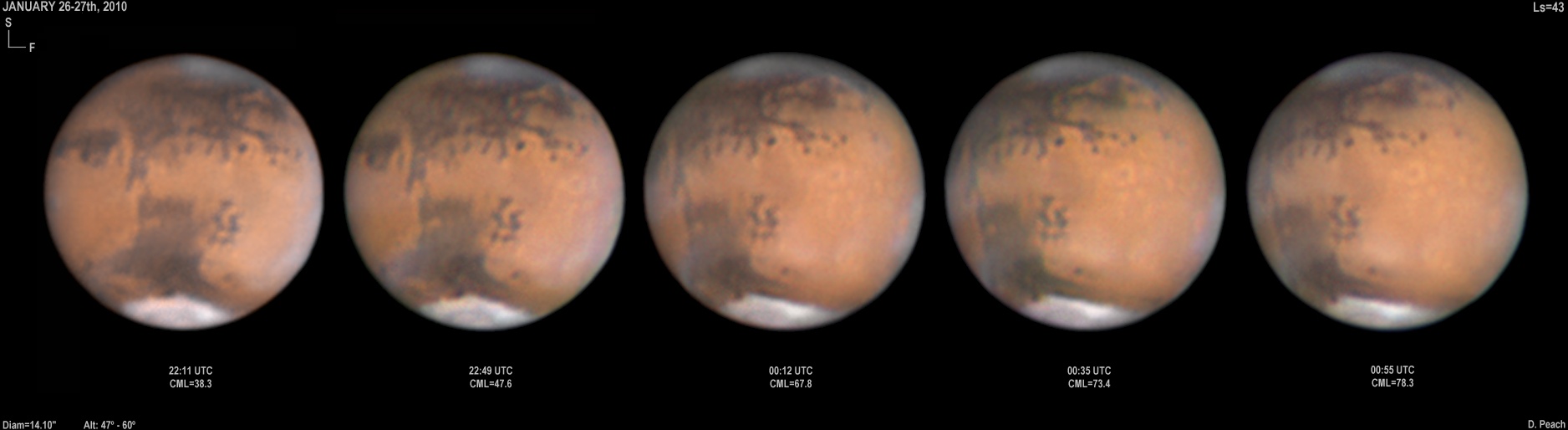
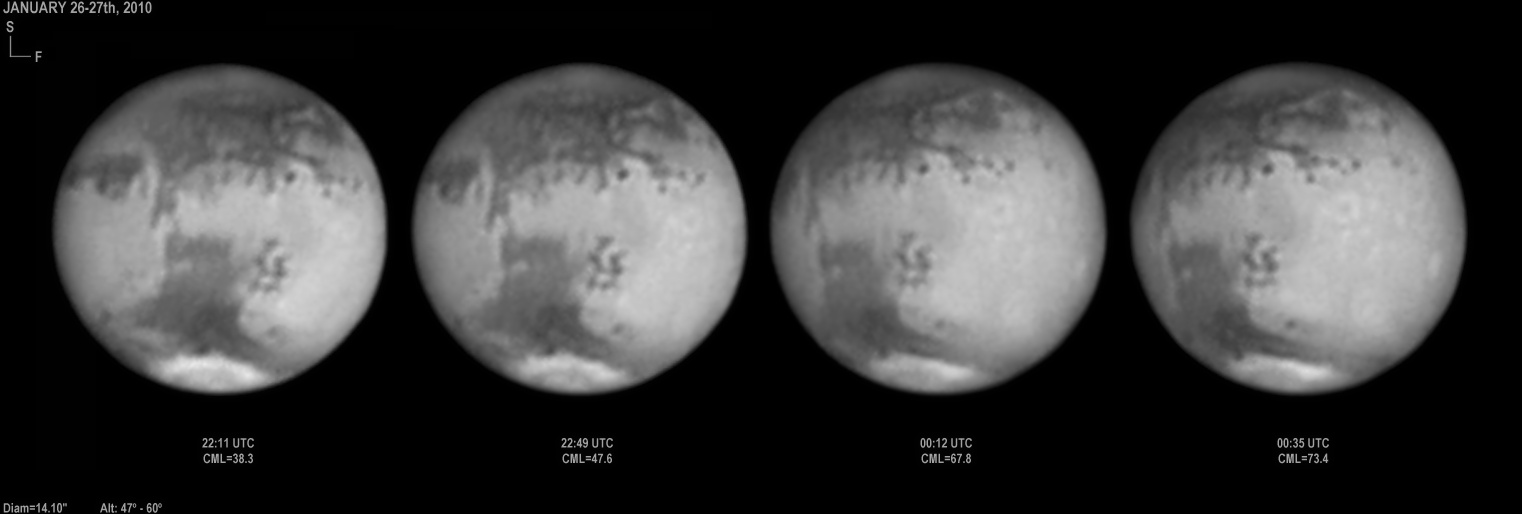
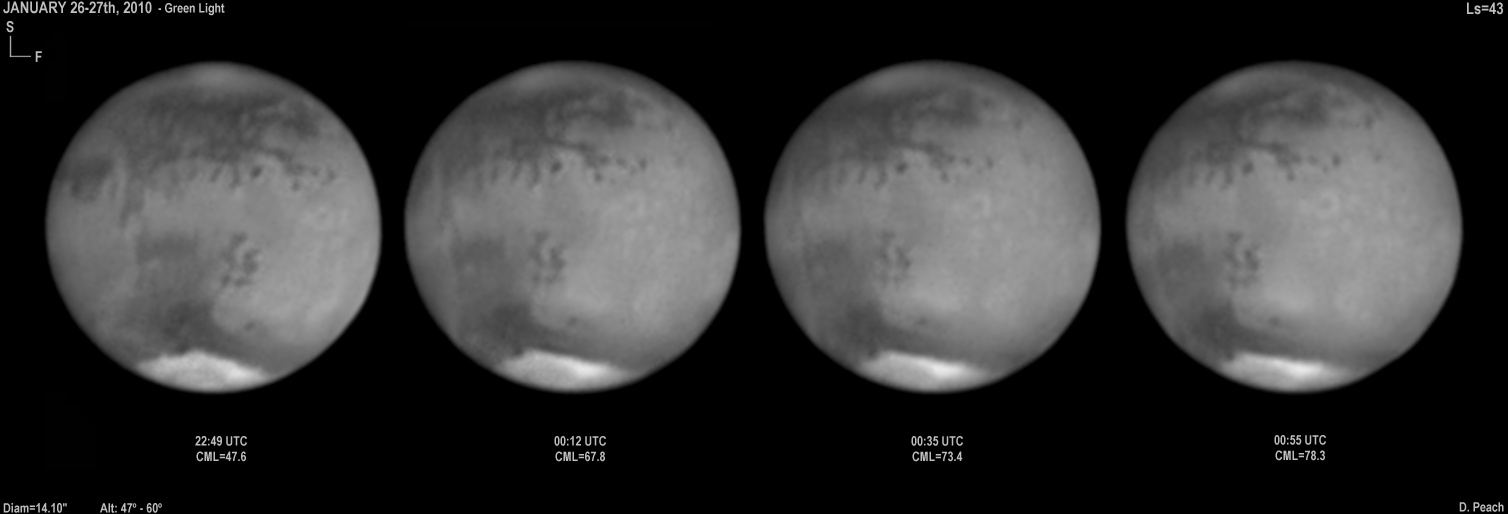
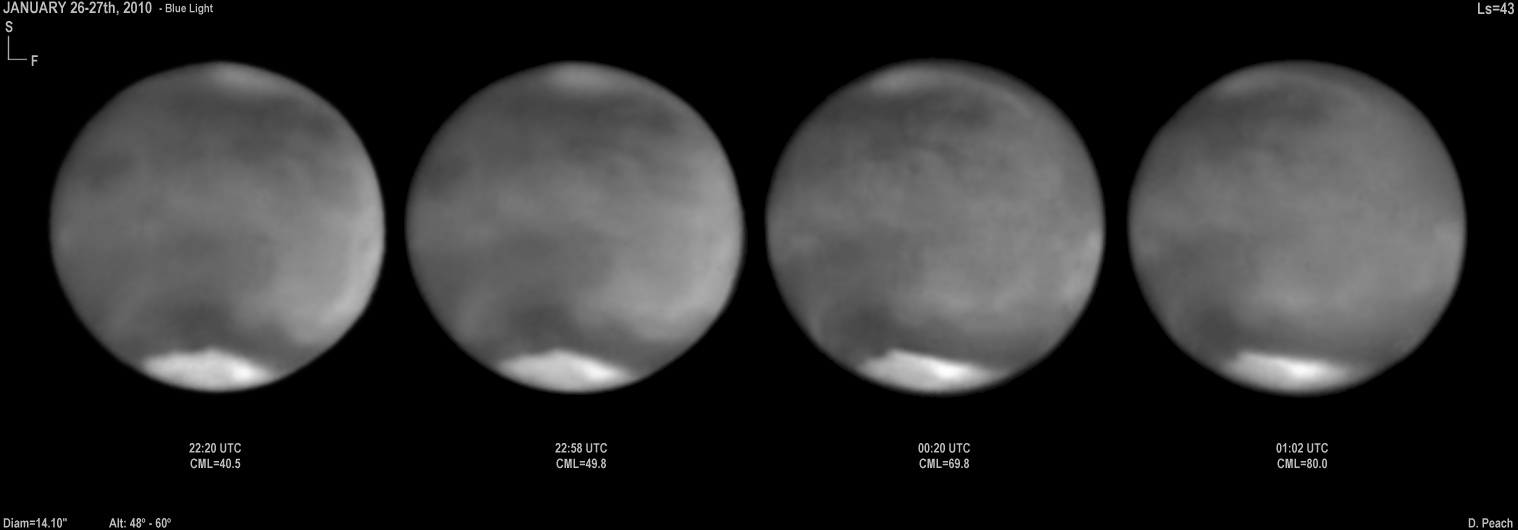
Mars on January 26-27th, 2010. Diam=14.10". Good seeing. Chryse, Mare Acidalium and Erythraeum visible. Solis Lacus is prominent as are the projections from Aurorae Sinus. Note the various clouds and hazes across the Planet.
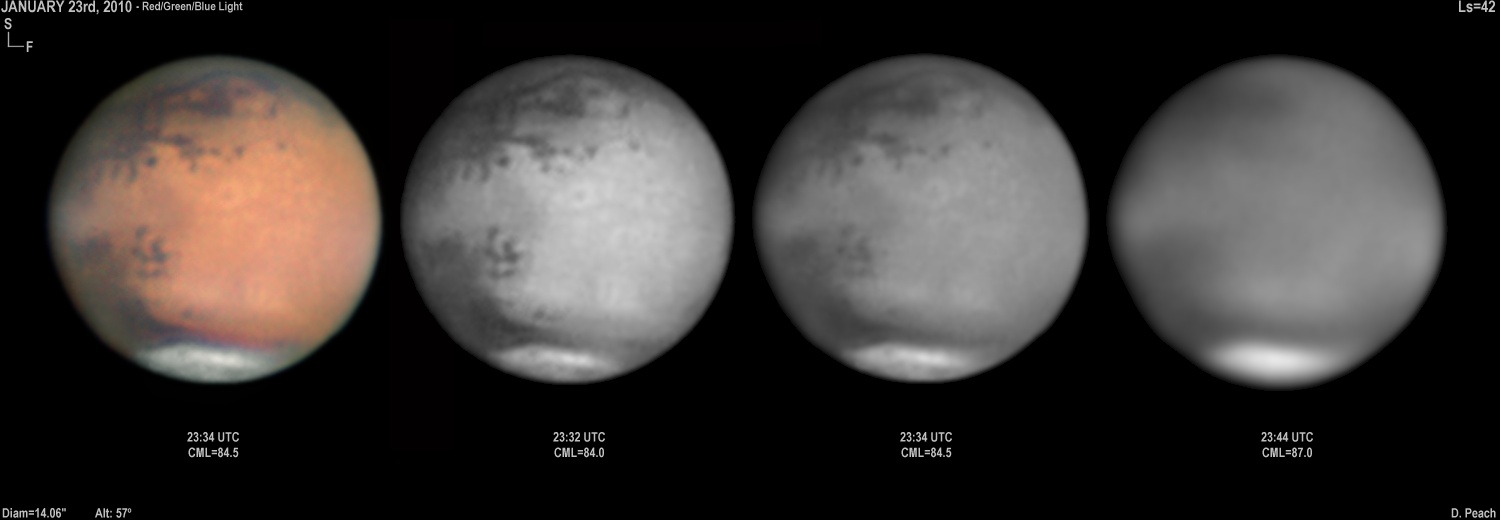
Mars on January 23rd, 2010. Diam=14.06". Fair seeing and shot through a brief gap in the clouds. Solis Lacus dominates this view, with haze over Chryse. The NPC thawing continues with details visible through it.
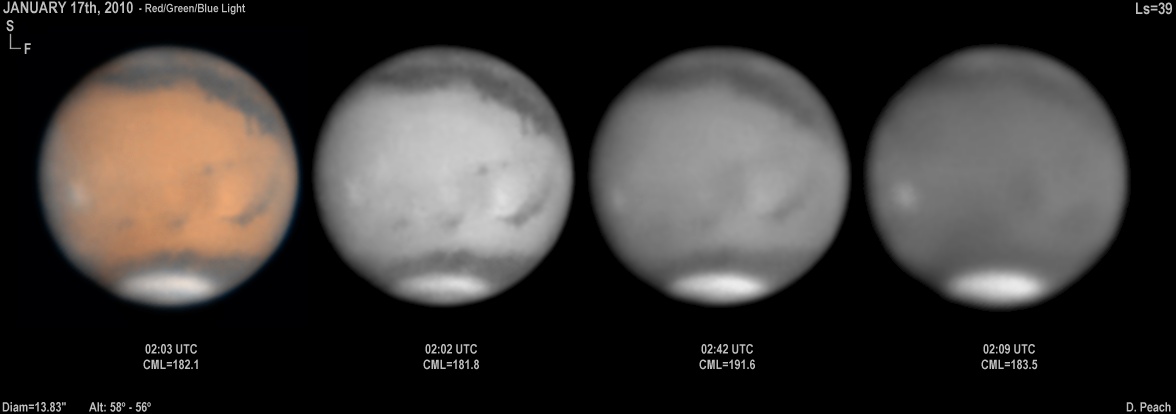
Mars on January 17th, 2010. Diam=13.83". Poor seeing. The Elysium and Tharsis regions of Mars are well seen. Note the bright cloud over the giant Olympus Mons volcano to the left.
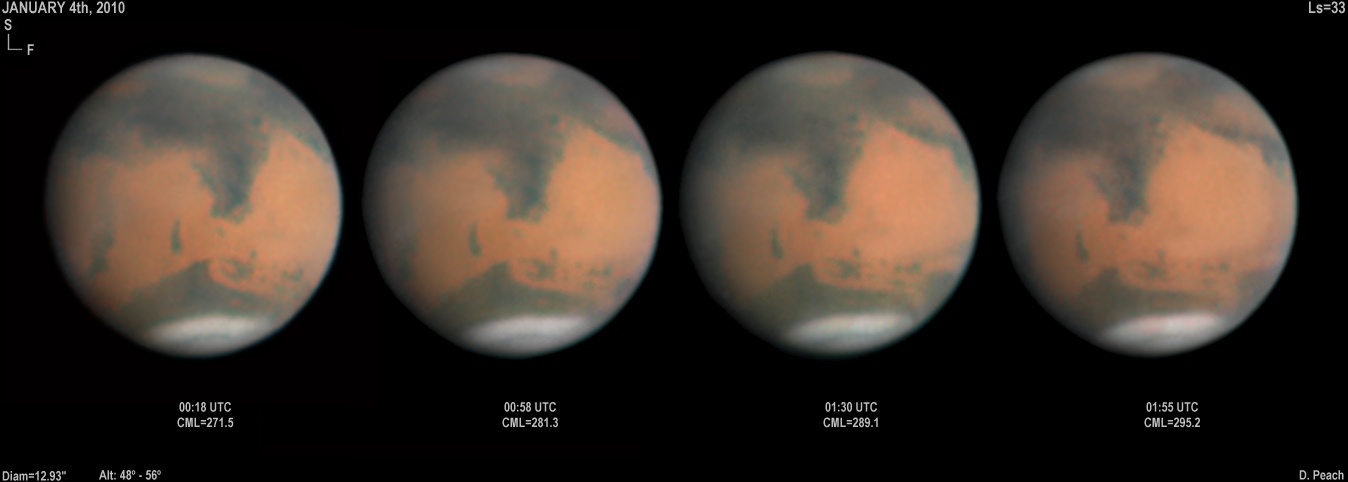
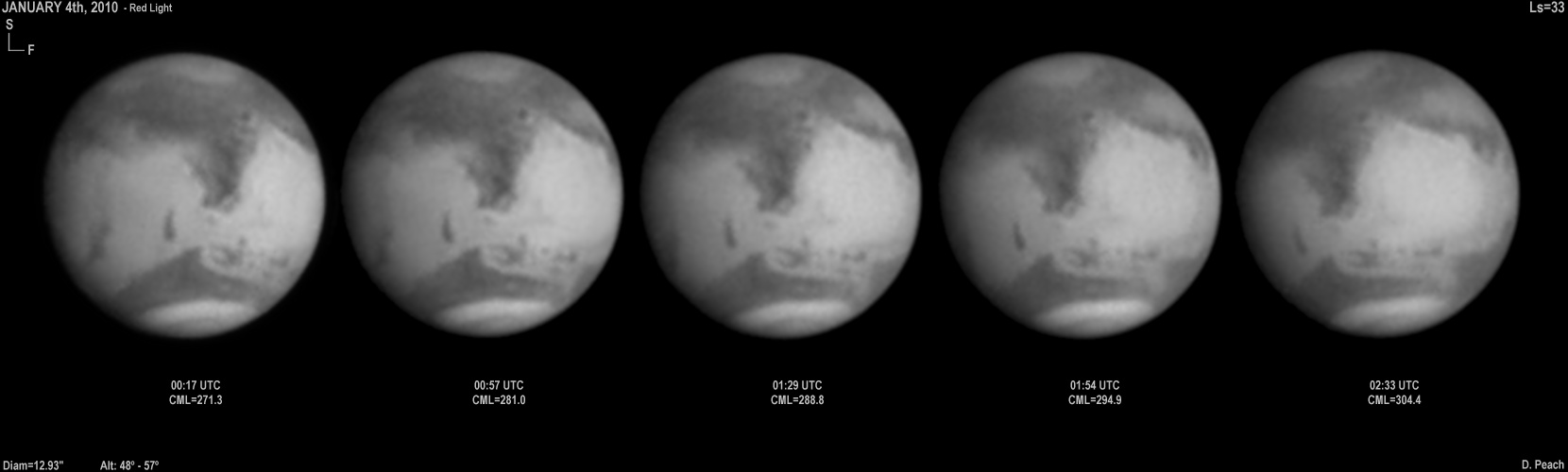

Mars on January 4th, 2010. Diam=12.93". Fair to Good seeing. Syrtis Major is centrre, with the summer albedo remnant of the NPC now visible through the cap itself. Some weak clouds over Libya and Hellas.
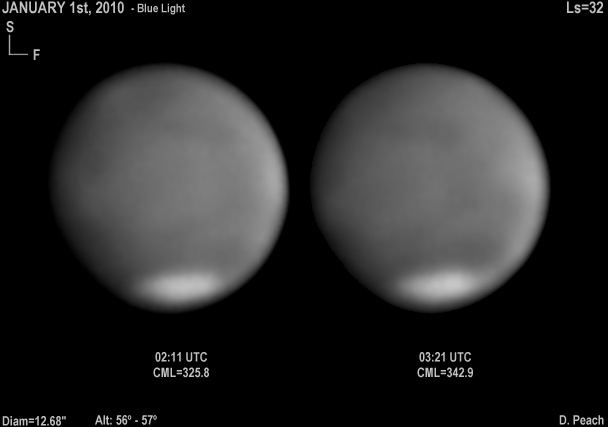

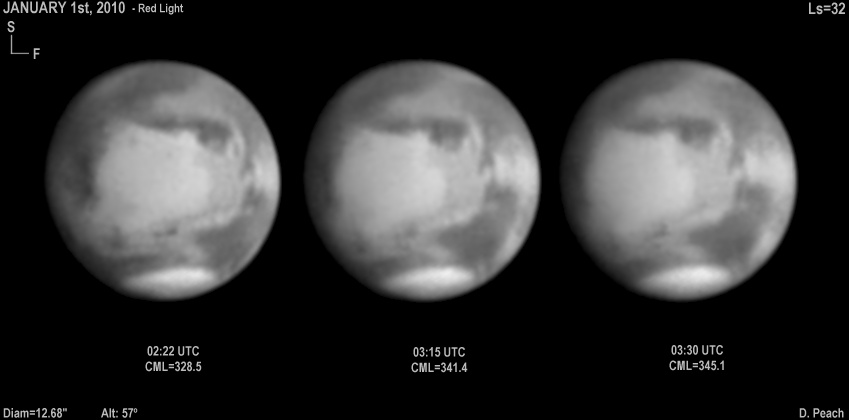
Mars on January 1st, 2010. Diam=12.68". Poor seeing again. Syrtis Major moving off at left, with Mare Acidalium/Erythraeum coming on at right with Sinus Meridiani central. A faint rift is visible in the NPC.


Mars on December 27th, 2009. Diam=12.22". Poor seeing. Mare Acidalium, Sinus Meridiani and Mare Erythraeum are all prominent in these images. The North Polar Cap is well defined.
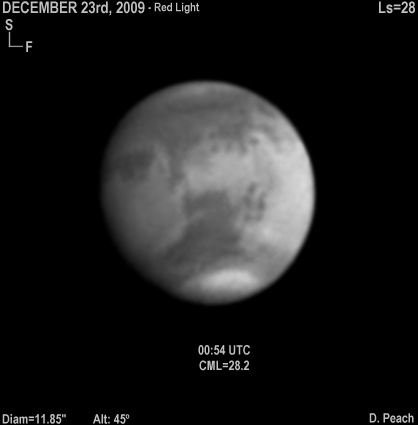
Mars on December 23rd, 2009. Diam=11.85". Very poor transparency and rapidly thickening fog prevented any colour images though some interesting details were still recorded in this red light image. Note the North Polar cap is well defined.
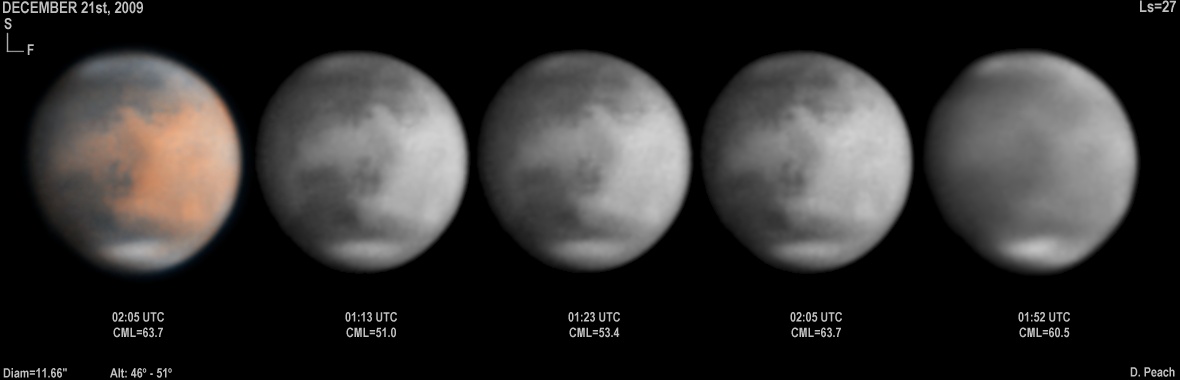
Mars on December 21st, 2009. Diam=11.66". Very poor seeing, though some interesting details were still recorded. Misty haze over Chryse and Tharsis. The Argyre basin is also bright. Solis Lacus is rotating into view.

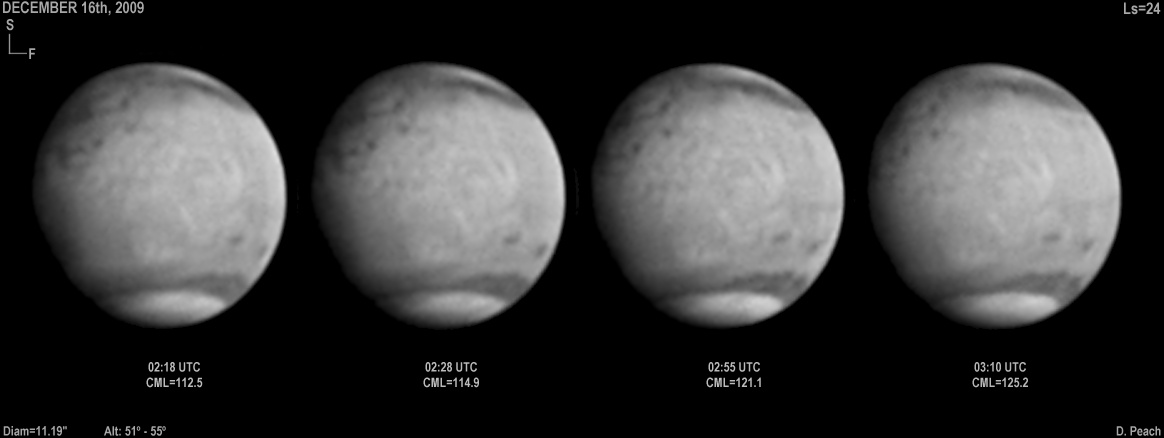
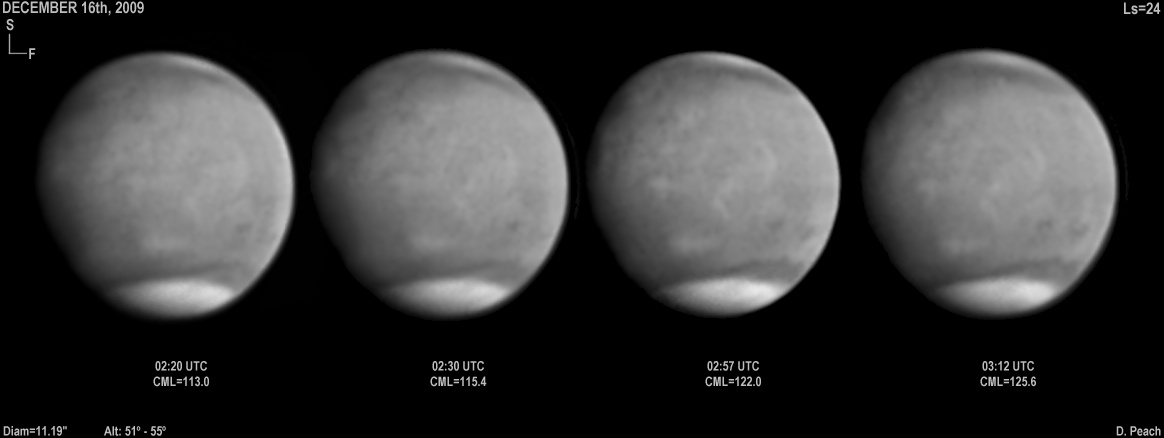
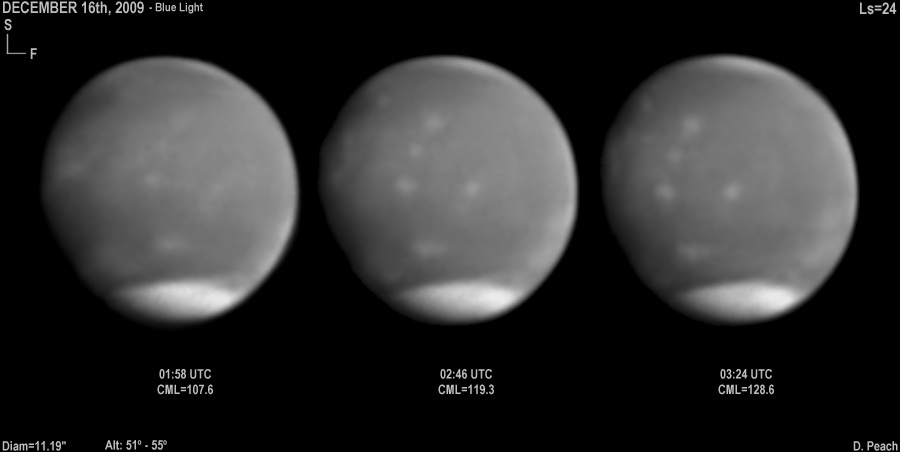
Mars on December 16th, 2009. Diam=11.19". Very prominent orographic clouds over all the major Tharsis volcanoes which intensify as the volcanoes approach the terminator.
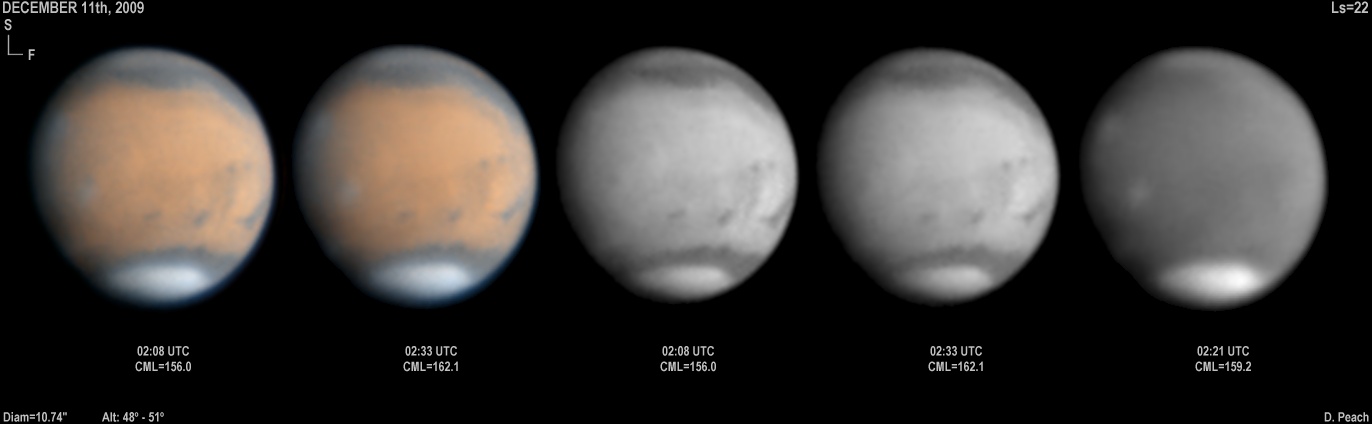
Mars on December 11th, 2009. Diam=10.74". Tharsis is appearing on the limb in these images with prominent orographic clouds visible over Olympus and Arsia Mons.
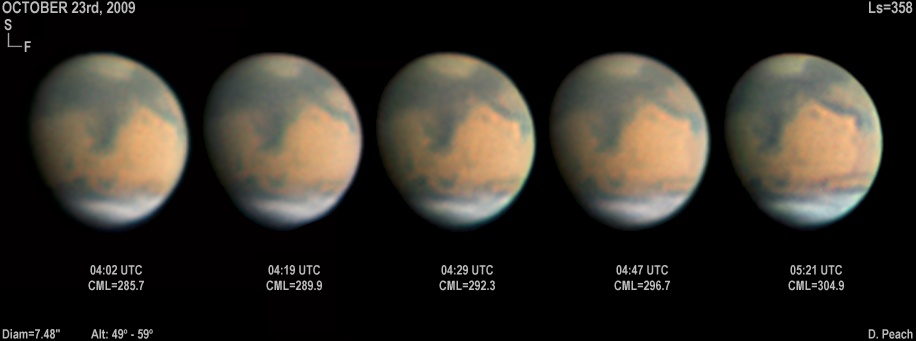

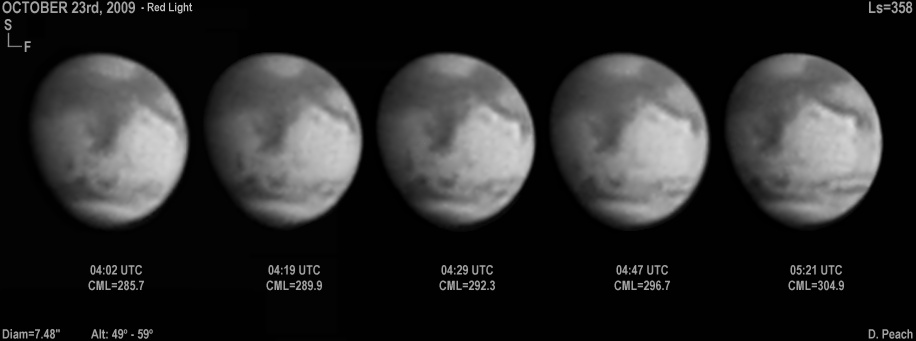
Mars on October 23th, 2009. Diam=7.48". The famous Syrtis Major is central in these images with the Hellas basin to the south. Ismenius Lacus is prominent along sith Boreo Syrtis to the north of Syrtis.

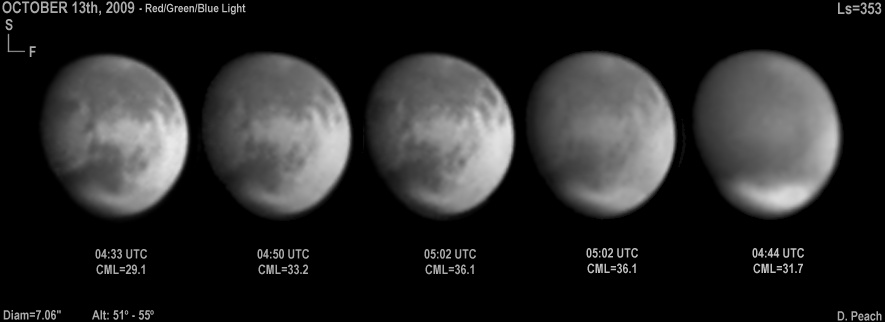
Mars on October 13th, 2009. Diam=7.06". The Chryse hemisphere is nicely on view here. Note the weak haze over Argyre, and extensive North Polar Hood.
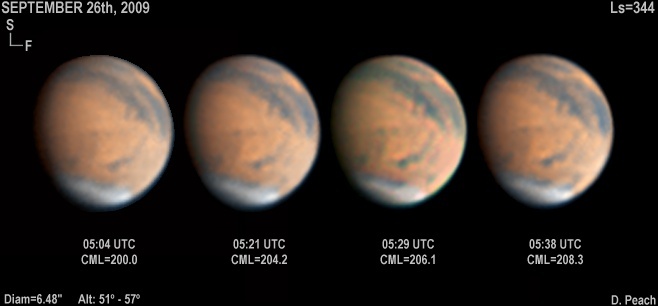
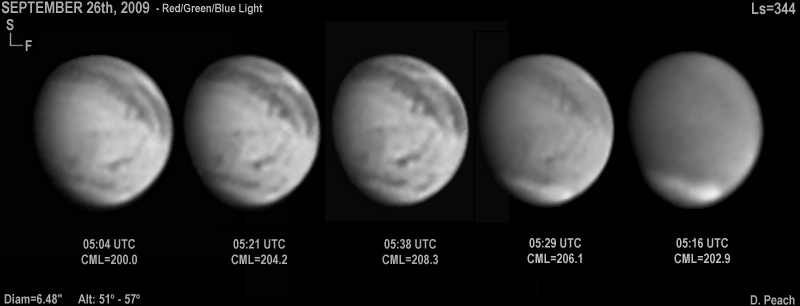
Mars on September 26th, 2009. Diam=6.48". Mare Cimmerium, and the Elysium region are the primary features on view here.
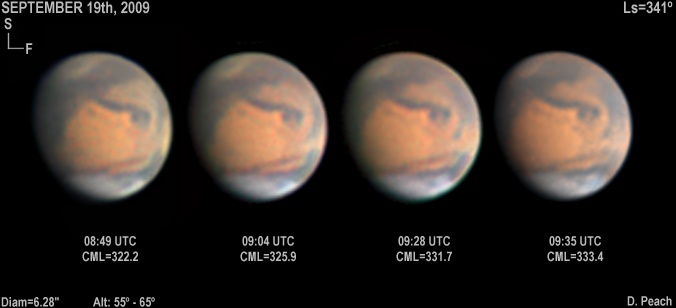
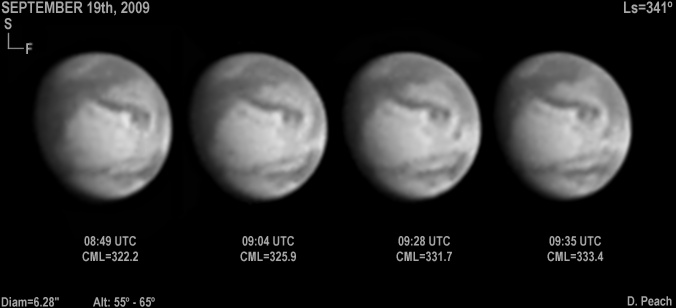
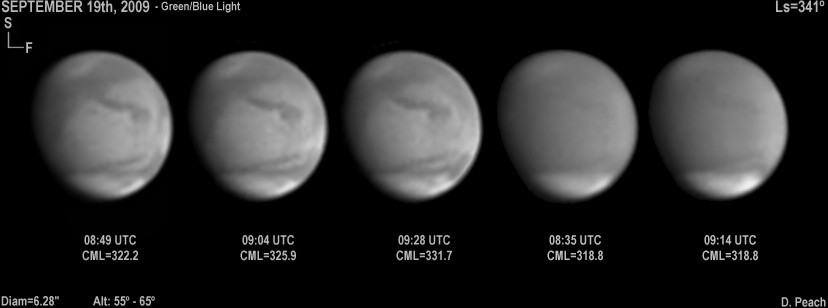
Mars on September 19th, 2009. Diam=6.27". Sinus Meridiani is central in these images with interesting details in the hazy North Polar Hood. Again very little activity in the Blue light image.
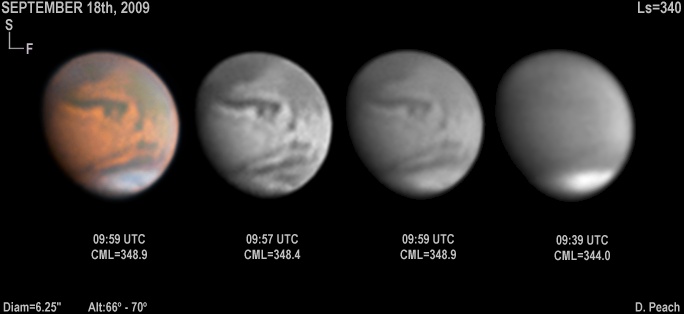
Mars on September 18th, 2009. Diam=6.25". Sinus Meridiani is central in these images with interesting details in the hazy North Polar Hood. Again very little activity in the Blue light image.
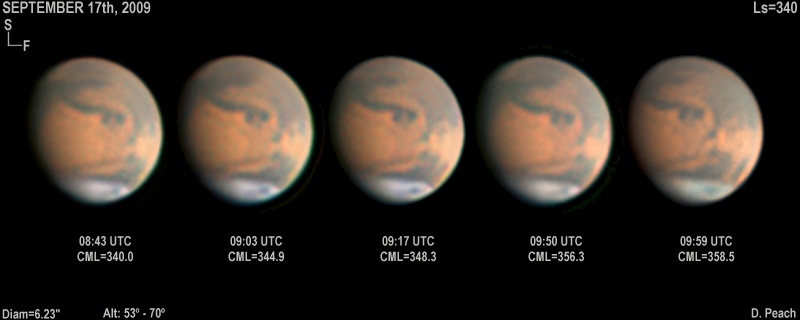
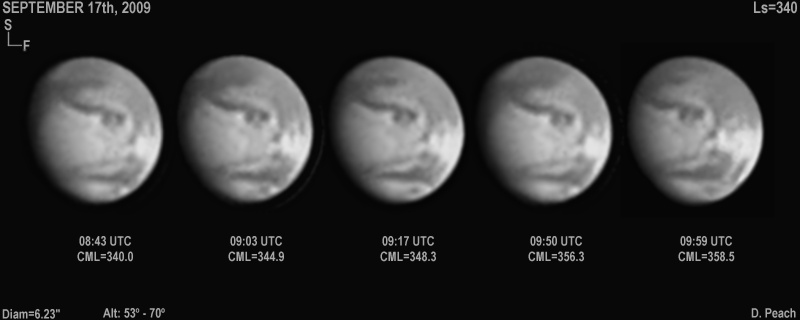
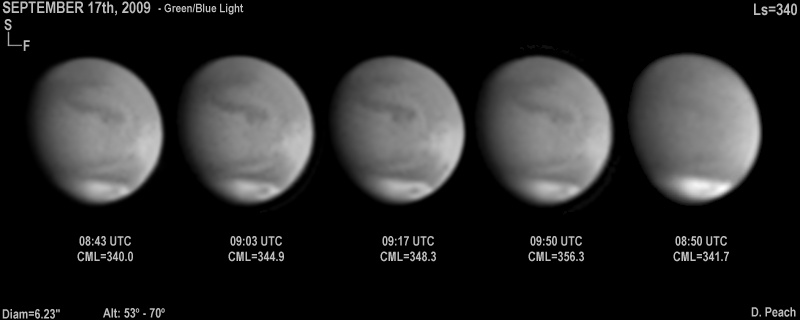
Mars on September 17th, 2009. Diam=6.22". Sinus Meridiani is central in these images with interesting details in the hazy North Polar Hood. Again very little activity in the Blue light images.
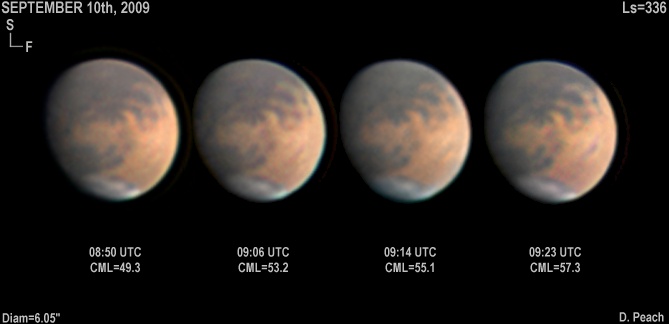
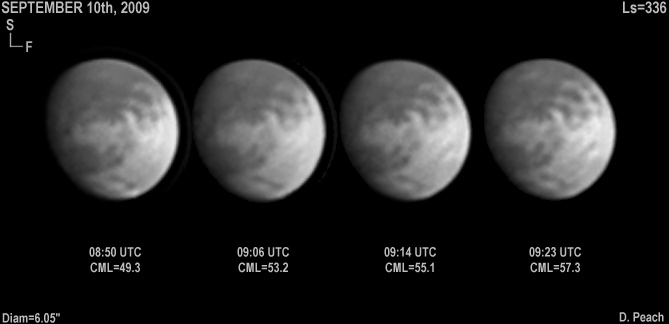
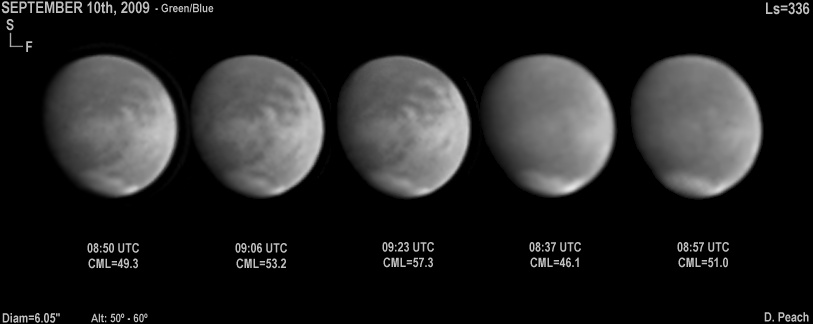
Mars on September 10th, 2009. Diam=6.04". Solis Lacus is again very prominent in this series of images. Mare Acidalium is also prominent. Very little cloud activity present in the Blue Light images.
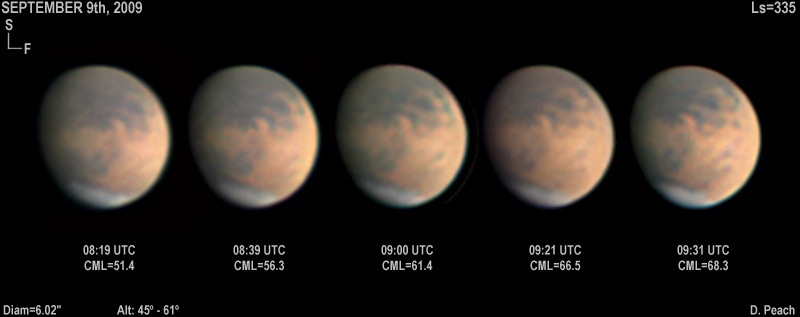
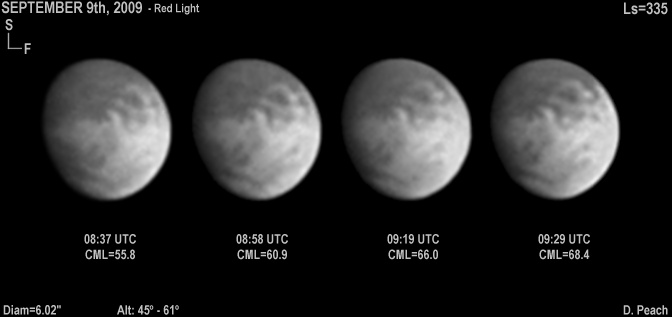
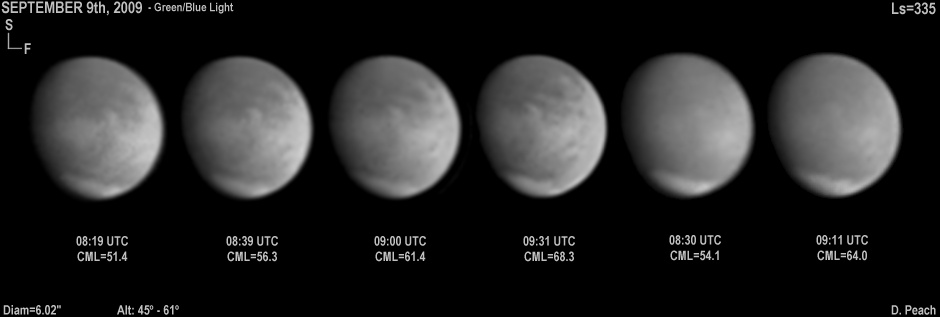
Mars on September 9th, 2009. Diam=6.02". Solis Lacus is very prominent in this series of images. Mare Acidalium is also prominent. Very little cloud activity present in the Blue Light images.
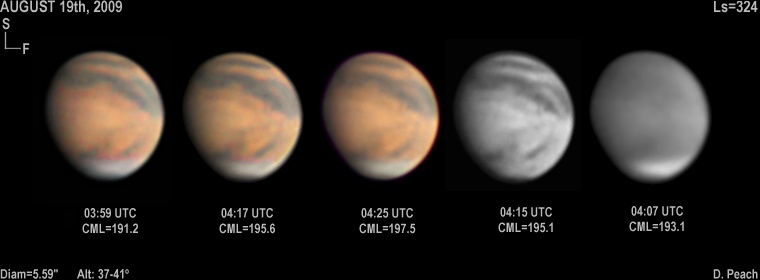
Mars on August 19th, 2009. Diam=5.59". Mare Cimmerium and the Elysium areas are nicely placed in these images. Faint clouds and hazes are visible in the Blue light image.
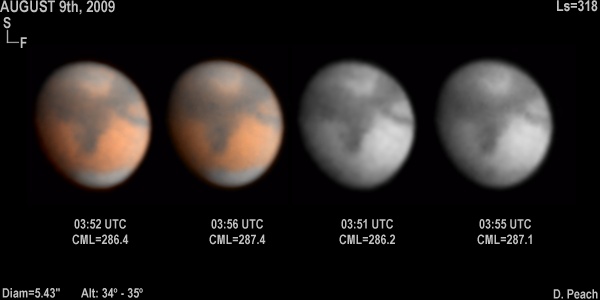
Mars on August 9th, 2009. Diam=5.43". The first set of images obtained for the apparition. Syrtis Major and Hellas are prominent.

Copyright © 2003-2004. www.damianpeach.com. No material used within this website may be used, amended or distributed without the consent of the webmaster.