
Mars Apparition 2007.
The 2007apparition of Mars is the best placed opposition of the current cycle for northern observers as the Planet reaches its maximum northward declination meaning Mars is placed high in the sky. The declination reaches +26º, while the disk diameter reaches almost 16 arc seconds at opposition time, and remaining well placed throughout the post opposition period.
A major global dust storm (similar to those in 2001, 1973 etc) occured on the Planet during the early stages of the apparition seriously affecting the visibility of the well known albedo markings as well as seriously affecting NASA's Martian rovers. Images from this period can be found further down this page.
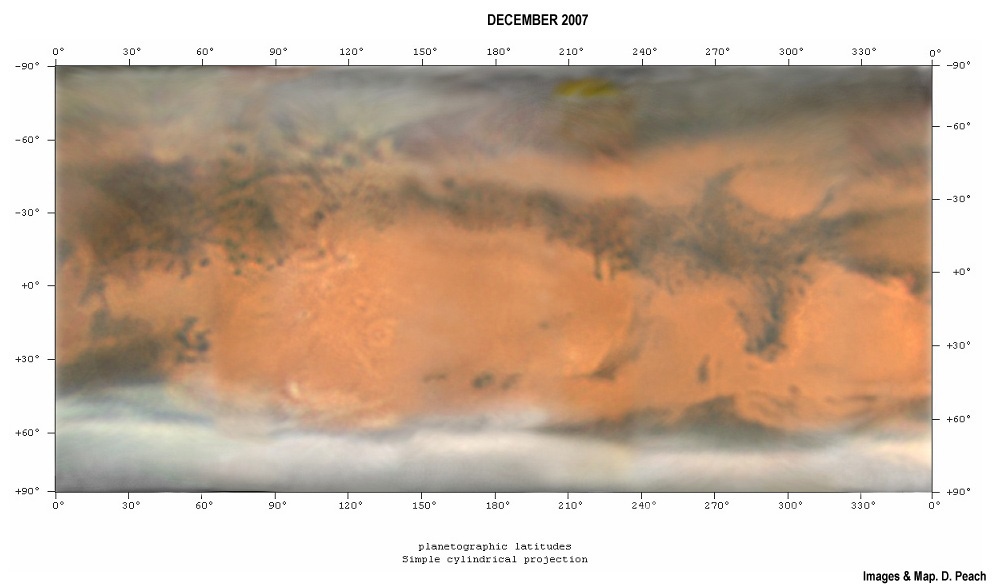
The entire face of Mars in 2007.
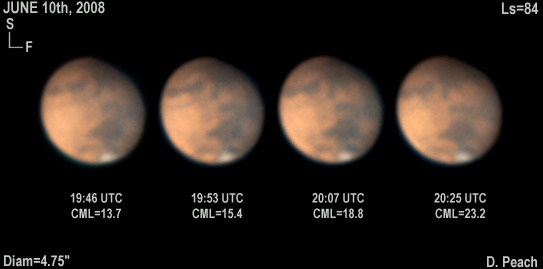
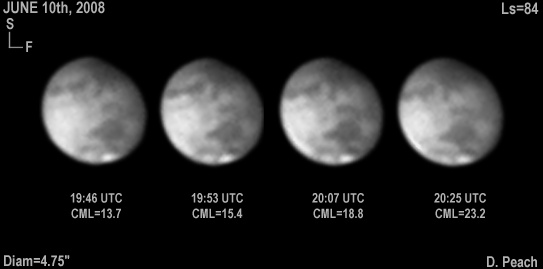
Mars on June 10th, 2008. Dia=4.75". The final image set of the apparition. Sinus Meridiani, Mare Acidalium and prominent, along with Oxia Palus. Note the tiny north polar cap with dark band around it.
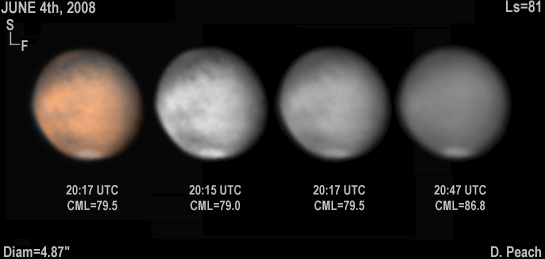
Mars on June 4th, 2008. Dia=4.87". Solis Lacus, Agathadaemon and Mare Acidalium are all well seen in this set of images.
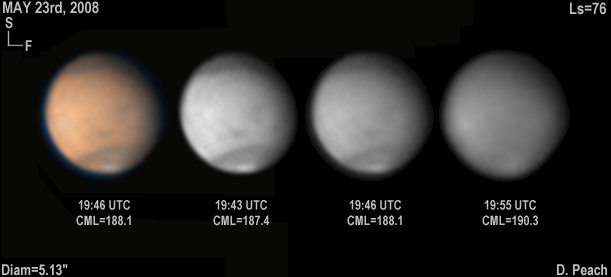
Mars on May 23rd, 2008. Dia=5.13". Propontis and Mare Boreum are well visible here. Note the shrunken North Polar Cap. Orographic clouds over Tharsis.
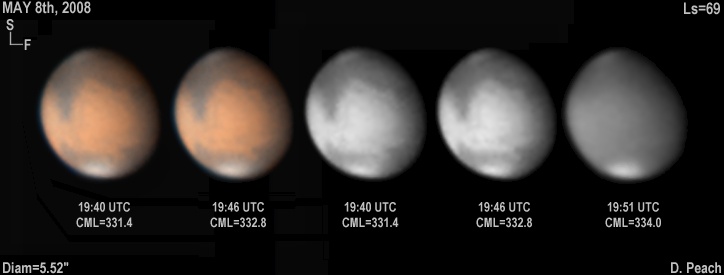
Mars on May 8th, 2008. Dia=5.52". Syrtis Major and Sinus Meridiani is well presented in these images.
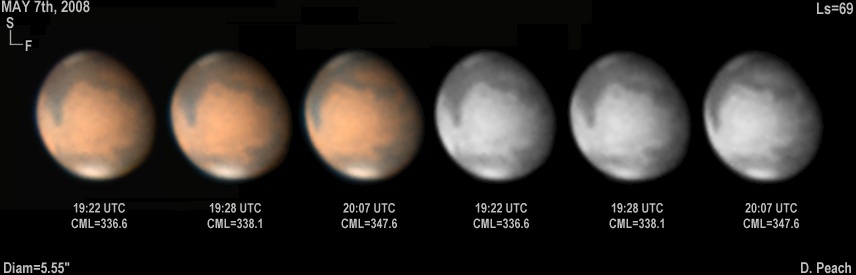
Mars on May 7th, 2008. Dia=5.55". Syrtis Major and Sinus Meridiani is well presented in these images.
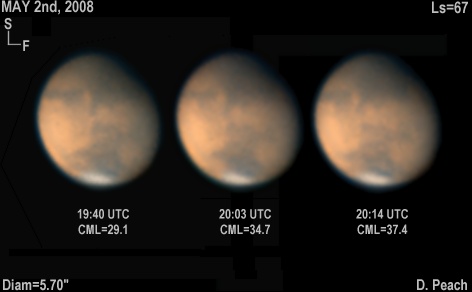
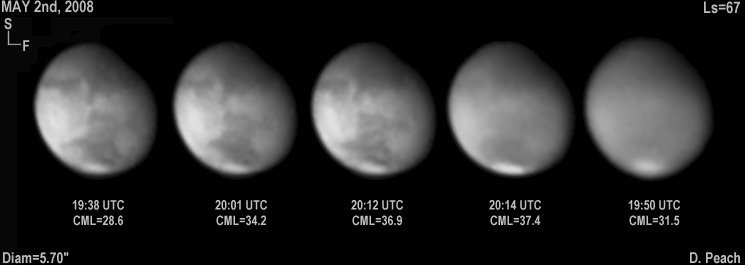
Mars on May 2nd, 2008. Dia=5.70". Mare Acidalium/Erythraeum is well presented in these images.
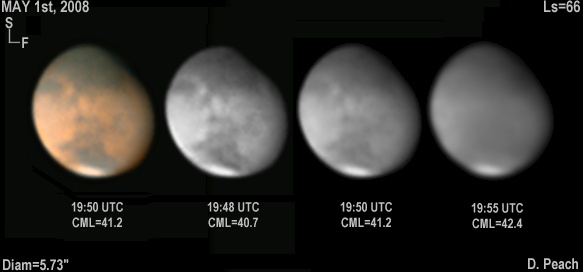
Mars on May 1st, 2008. Dia=5.73". Mare Acidalium/Erythraeum is well presented in these images. Note a weak equatorial cloud band.
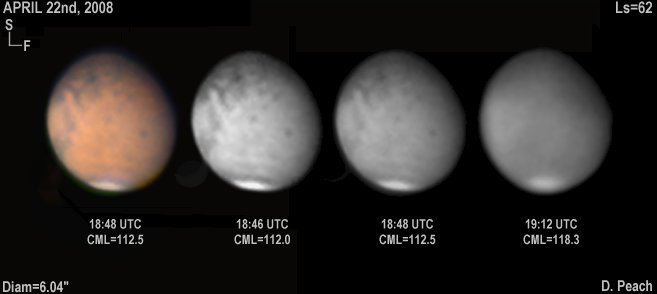
Mars on April 22nd, 2008. Dia=6.04". Solis Lacus is well seen, along with the dark spots of the Tharsis volcanoes.
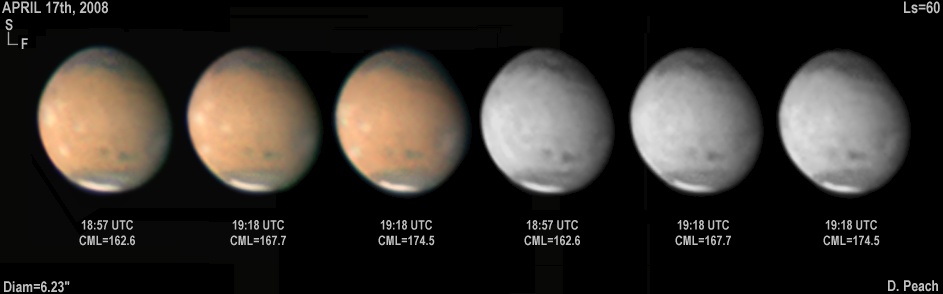
Mars on April 17th, 2008. Dia=6.23". Bright "domino clouds" over Tharsis. Also weak clouds over Elyisum.
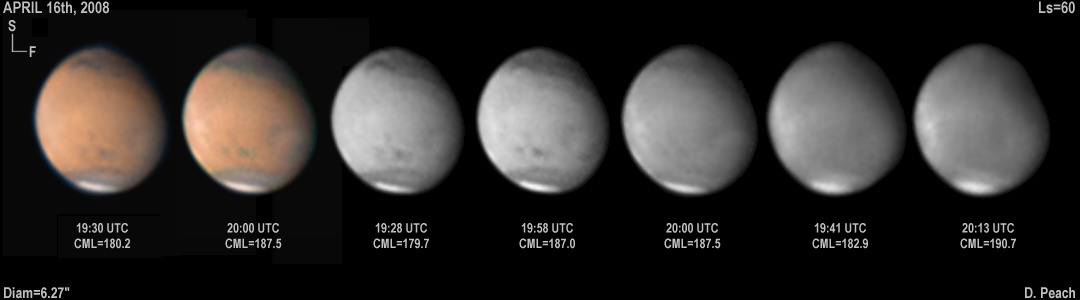
Mars on April 16th, 2008. Dia=6.27". Elysium and Propontis are seen in these images. Prominent clouds seen over Tharsis.
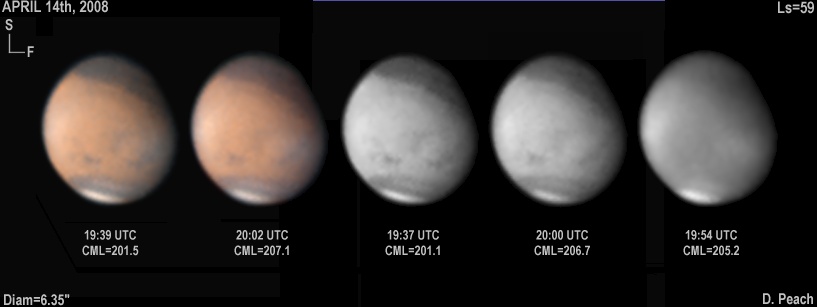
Mars on April 14th, 2008. Dia=6.35". Elysium and Propontis are seen in these images. Prominent clouds seen over Tharsis and Elysium.
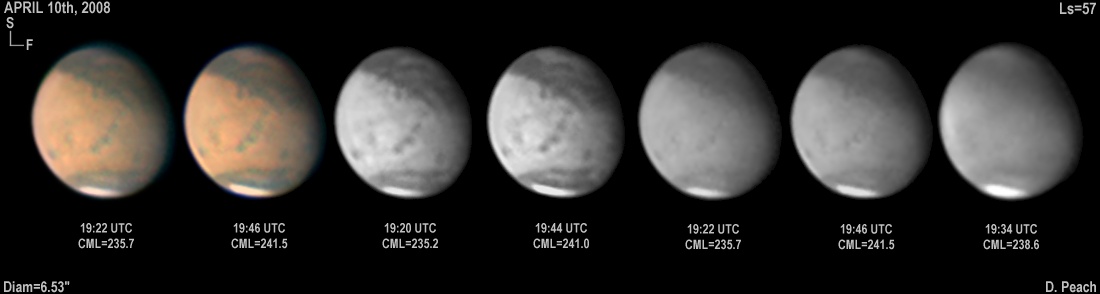
Mars on April 10th, 2008. Dia=6.53". Elysium is central in these images, with Sinus Gomer visible to the south. Weak clouds and hazes across the disk.
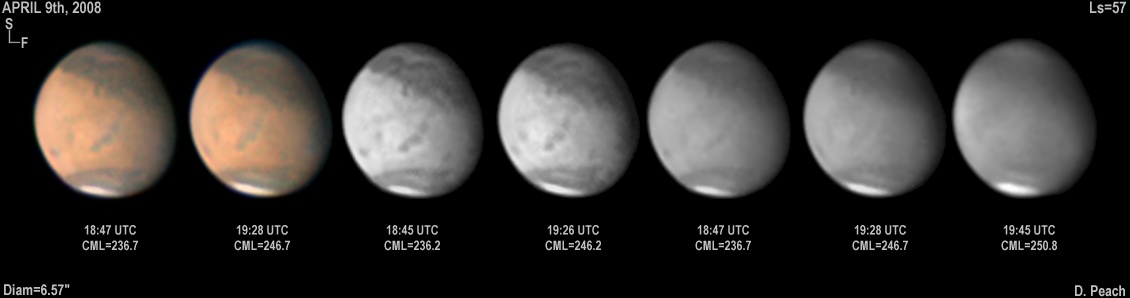
Mars on April 9th, 2008. Dia=6.57". Elysium is central in these images, with Sinus Gomer visible to the south. Weak clouds and hazes across the disk.
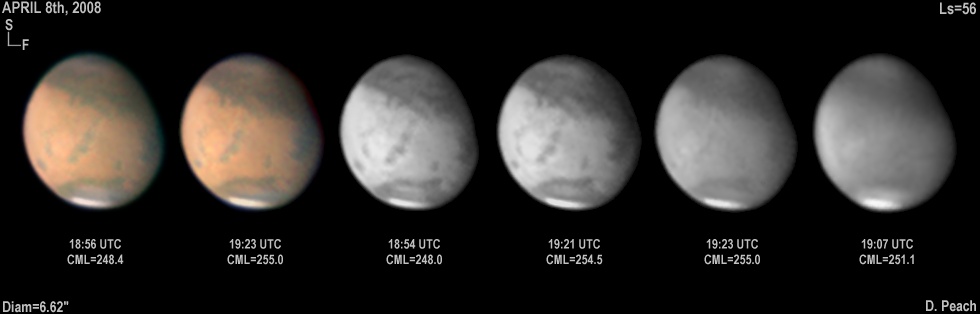
Mars on April 8th, 2008. Dia=6.62". Syrtis Major disappearing with "blue syrtis cloud" again seen. Weak clouds over Elysium and the far south.
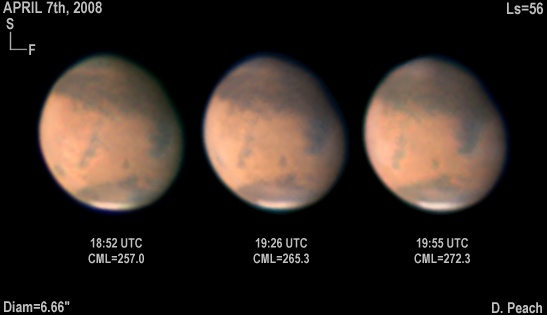
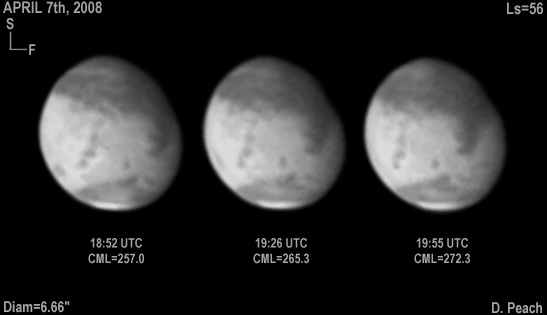
Mars on April 7th, 2008. Dia=6.66". Syrtis Major is again seen, with the famous "blue syrtis cloud" apparent. Also clouds over Elysium.
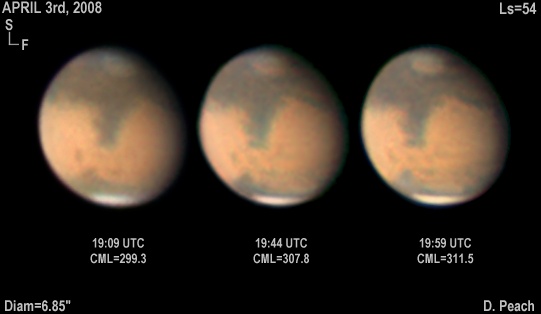
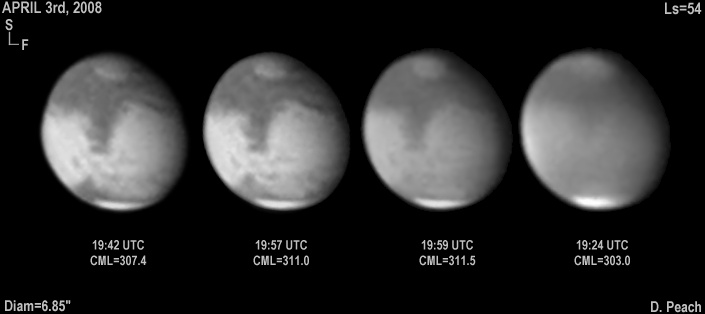
Mars on April 3rd, 2008. Dia=6.85". Syrtis Major and Hellas are central on the disk. Note Hellas appears misty. Also Sinus Sabeaus is appearing onto the disk.
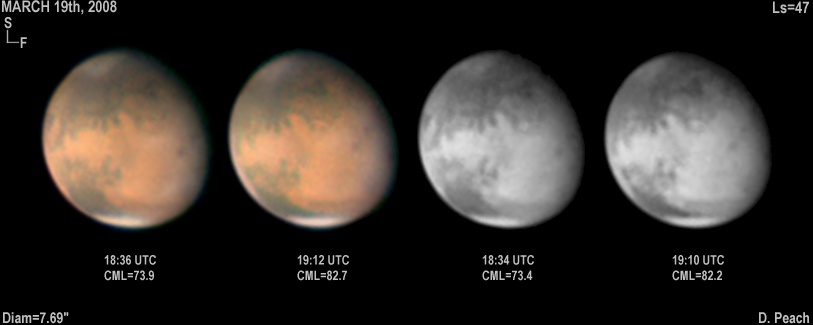
Mars on March 19th, 2008. Dia=7.69". Solis Lacus, Aurorae Sinus and Mare Acidalium are prominent here. Note the dark spots of the Tharsis volancoes. Lots of misty clouds present across the disk.
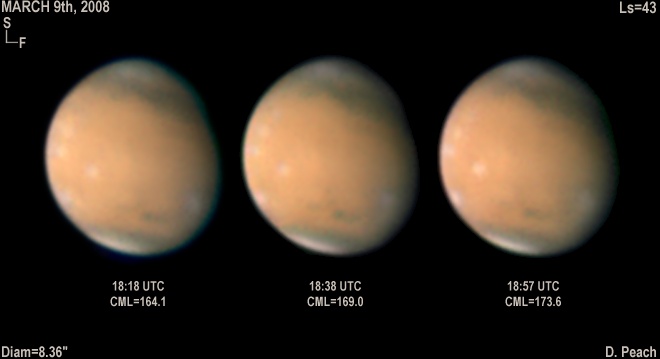
Mars on March 9th, 2008. Dia=8.36". Mare Sirenum to the south and Propontis complex to the north. Note the bright orographic clouds over Tharsis, this pattern often referred too as the "domino clouds".
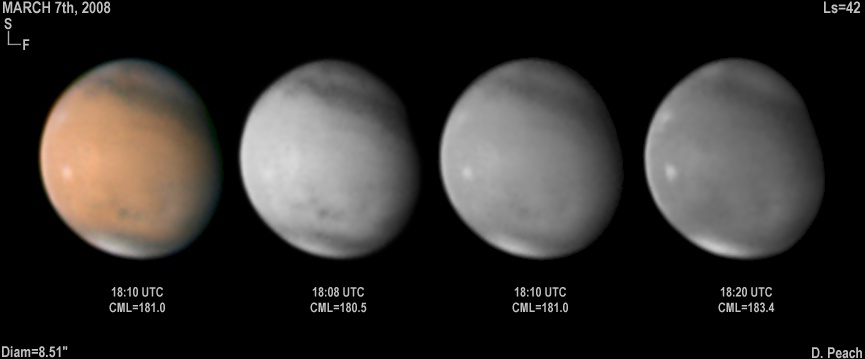
Mars on March 7th, 2008. Dia=8.51". Mare Sirenum to the south and Propontis complex to the north. Brilliant orographic cloud over Olympus Mons. Also bright orographic over Arsia Mons on the limb.
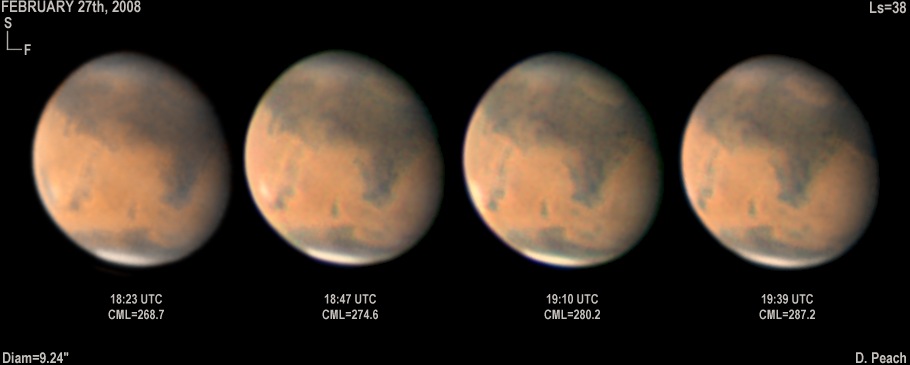
Mars on February 27th, 2008. Dia=9.24". Syrtis Major is well presented. Note the bright orographic cloud over Elyisum on the limb. Some misty hazes across the far south.
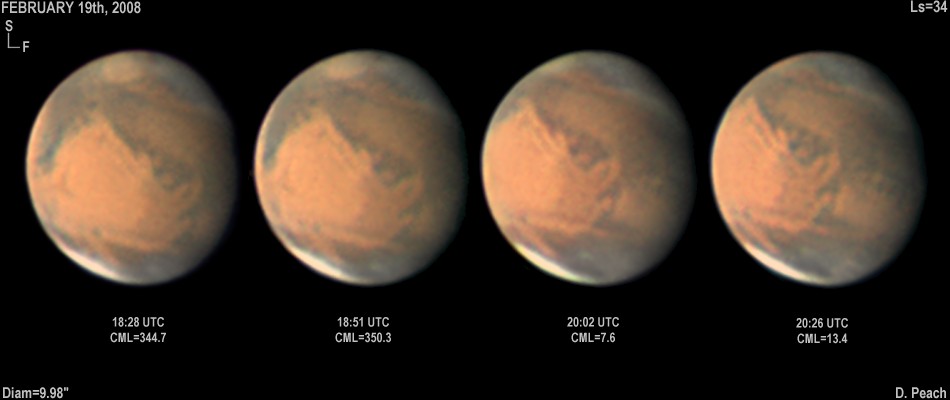
Mars on February 19th, 2008. Dia=9.98". Sinus Meridiani and Mare Acidalium are well seen. Syrtis Major is appearing at left. Again note the clouds visible over Tempe. Apparent diameter had fallen under 10" again.
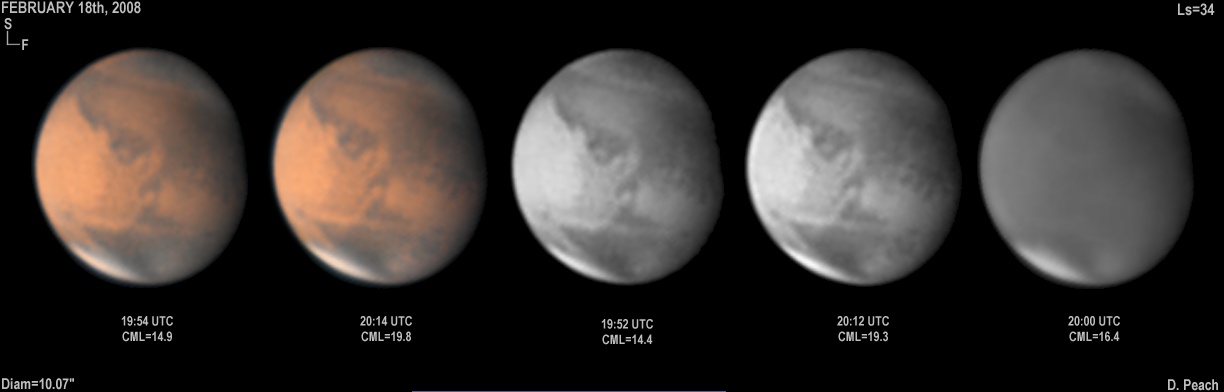
Mars on February 18th, 2008. Dia=10.07". Sinus Meridiani and Mare Acidalium are well seen. Again note the clouds visible over Tempe, and also Argyre.
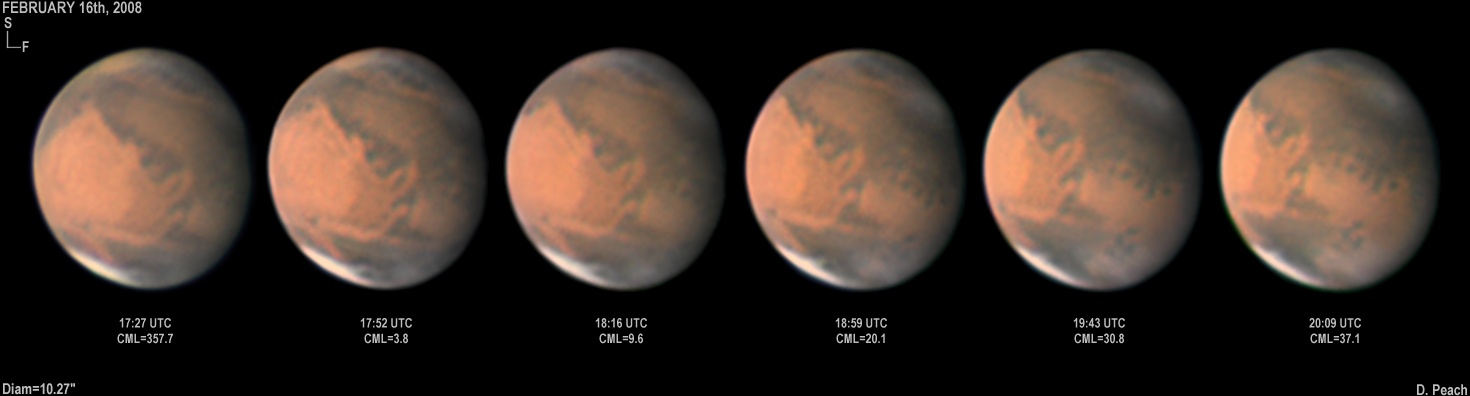
Mars on February 16th, 2008. Dia=10.27". Sinus Meridiani is well seen. Note the clouds visible over Tempe, and also Argyre.
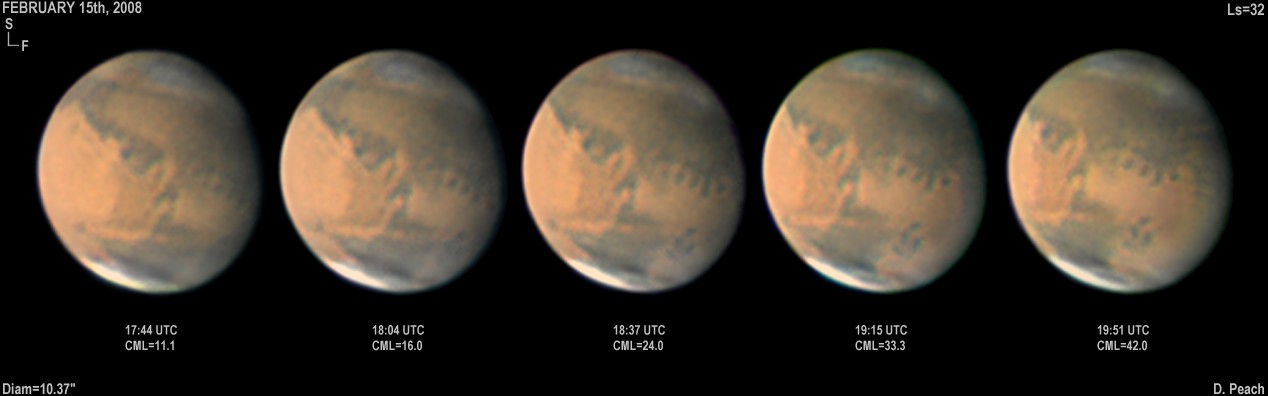
Mars on February 15th, 2008. Dia=10.37". Chryse and Mare Acidalium are again well presented. Sinus Meridiani is also visible. Note the clouds visible in both hemispheres.
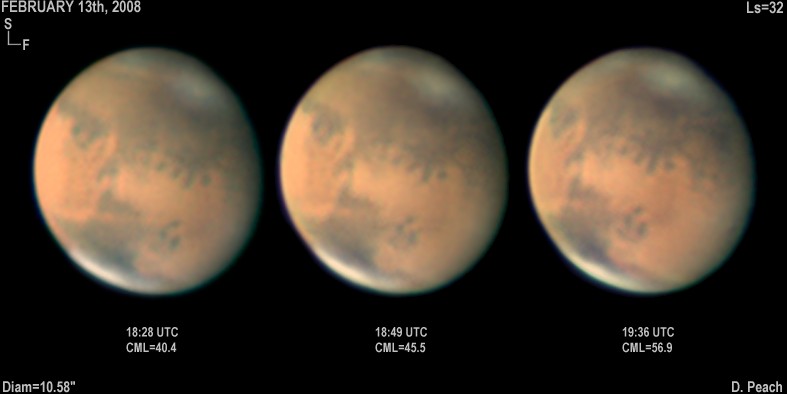
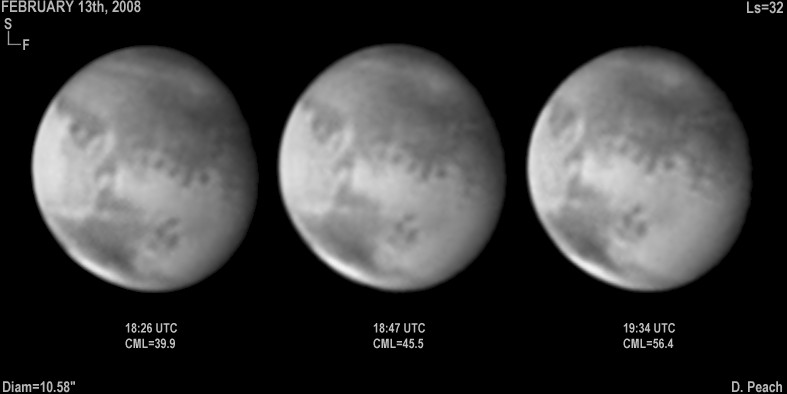
Mars on February 13th, 2008. Dia=10.58". Chryse and Mare Acidalium are again well presented. Sinus Meridiani is also visible as is Solis Lacus. Note the bright cloud over Argyre in the South.
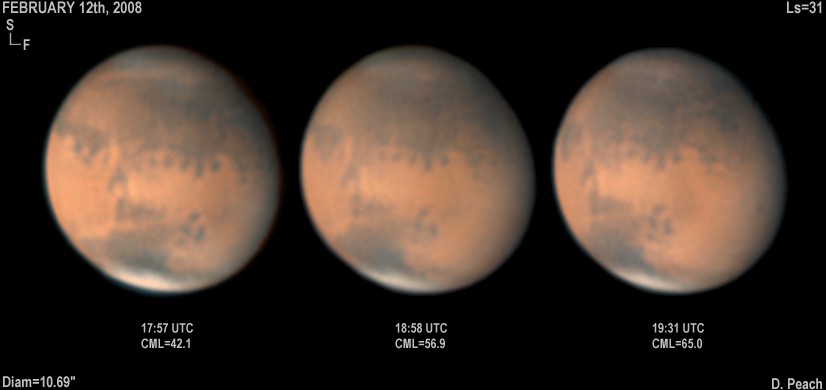
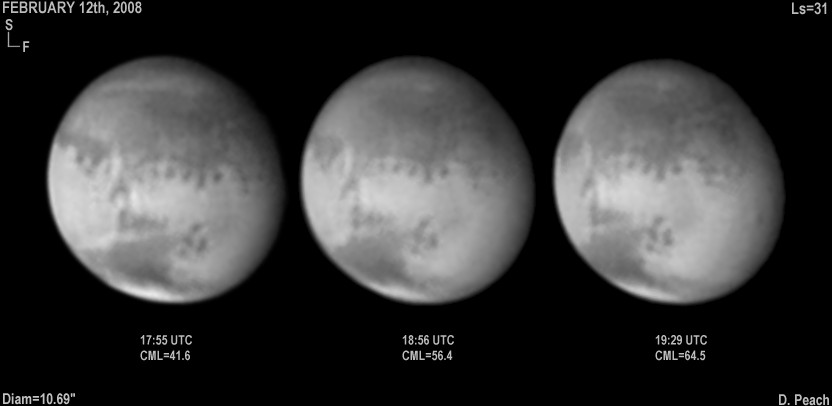
Mars on February 12th, 2008. Dia=10.69". Chryse and Mare Acidalium are well presented. Sinus Meridiani is also visible as is Solis Lacus. Ascraeus Mons is seen in the last image as a small dark spot.
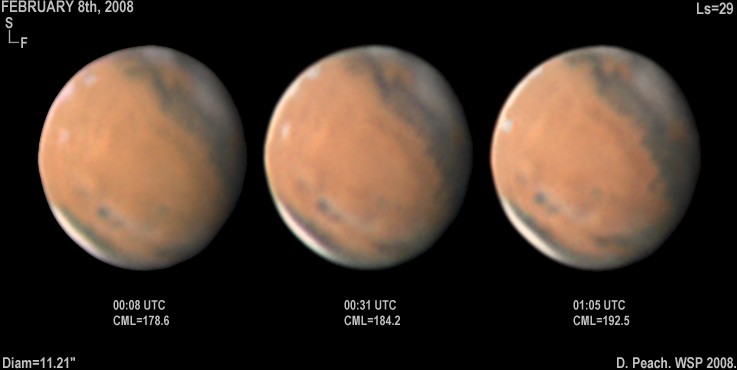
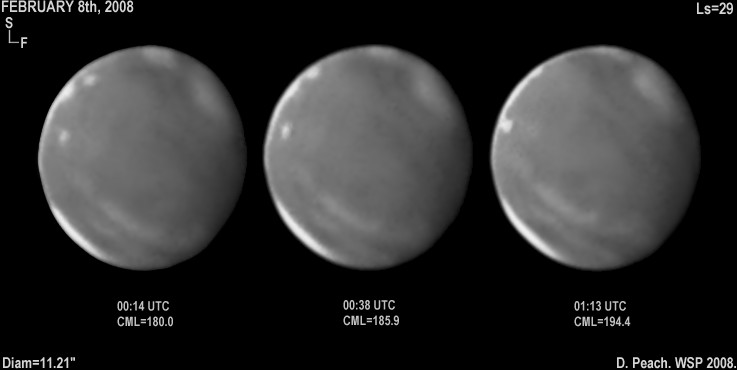
Mars on February 8th, 2008. Dia=11.21". Elysium is again well seen along with Propontis and Mare Cimmerium. Note the brilliant Orographic cloud over Olympus, Arsia and Pavonis Mons. 10" F/12.5 Mewlon.
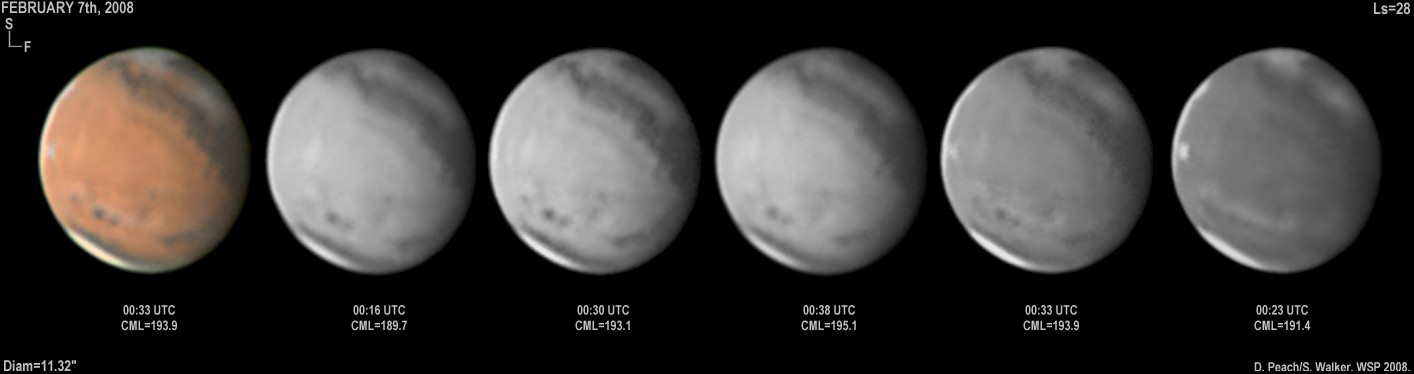
Mars on February 7th, 2008. Dia=11.32". Elysium is well seen along with Propontis and Mare Cimmerium. Note the brilliant Orographic cloud over Olympus Mons close to the limb. 10" F/12.5 Mewlon.
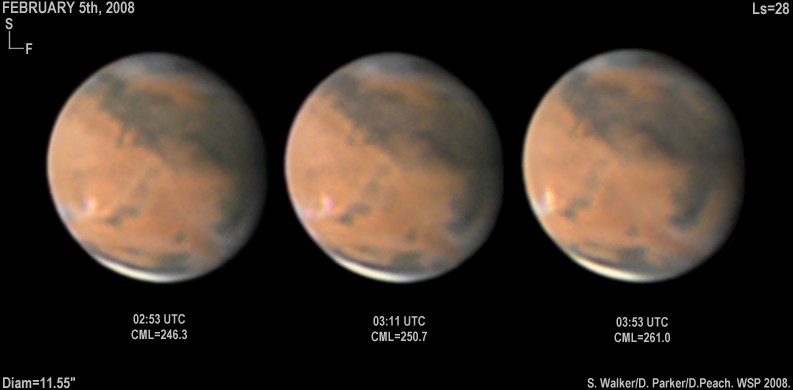
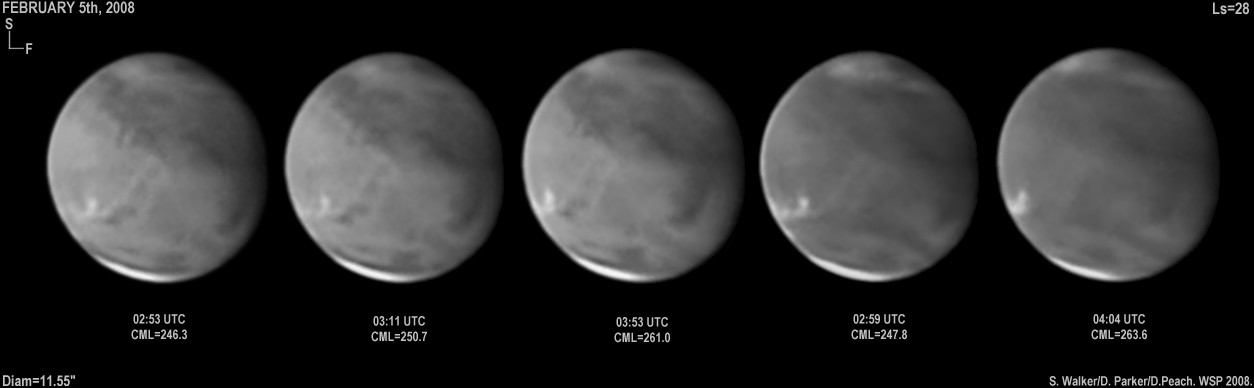
Mars on February 5th, 2008. Dia=11.55". Elyisum and Syrtis Major are again prominent. Note the brilliant orographic cloud over Elysium Mons in the Blue light images. 10" F/12.5 Mewlon.
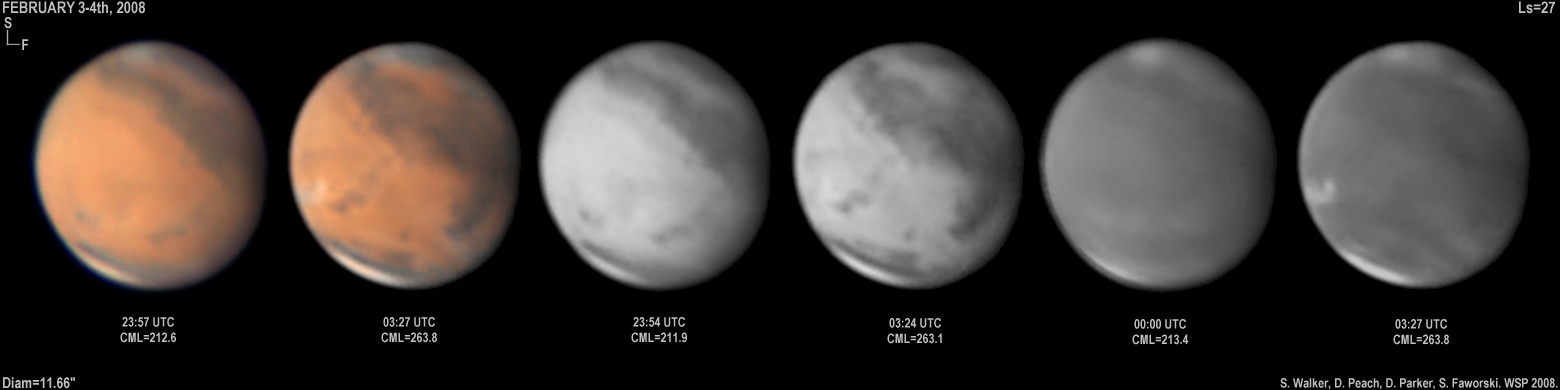
Mars on February 3-4th, 2008. Dia=11.66". Elyisum and Syrtis Major are prominent. Note the brilliant orographic cloud over Elysium Mons in the final Blue light image. 10" F/12.5 Mewlon.
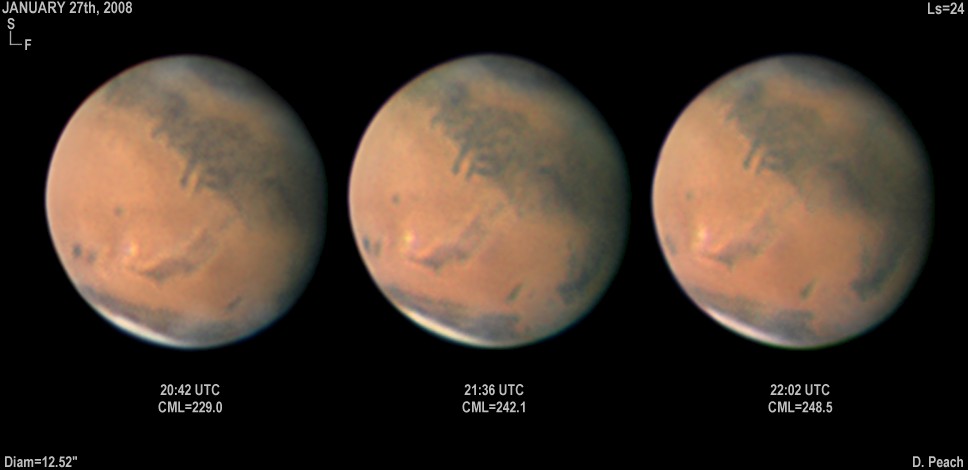
Mars on January 27th, 2008. Dia=12.52". Mare Cimmerium, Elysium and Syrtis Major are all well seen. Note the bright spots of Elysium Mons and Hecates Tholus and the familar projections of Sinus Gomer.
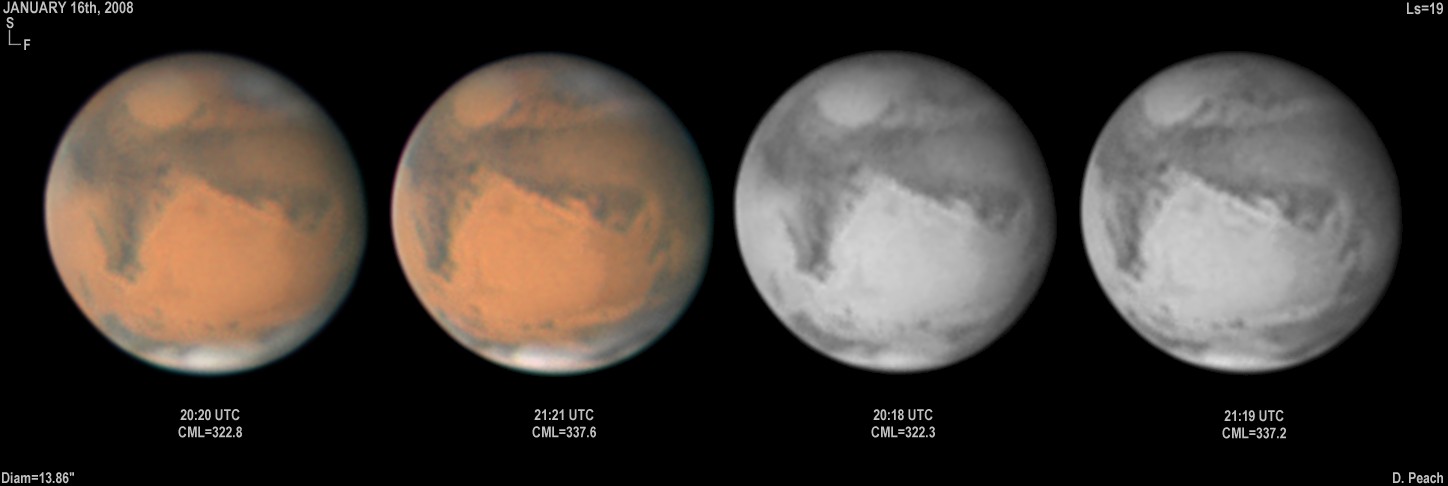
Mars on January 16th, 2008. Dia=13.86". Sinus Meridiani is nicely seen here along with Syrtis Major. Note the clouds across Mare Acidalium and Argyre.
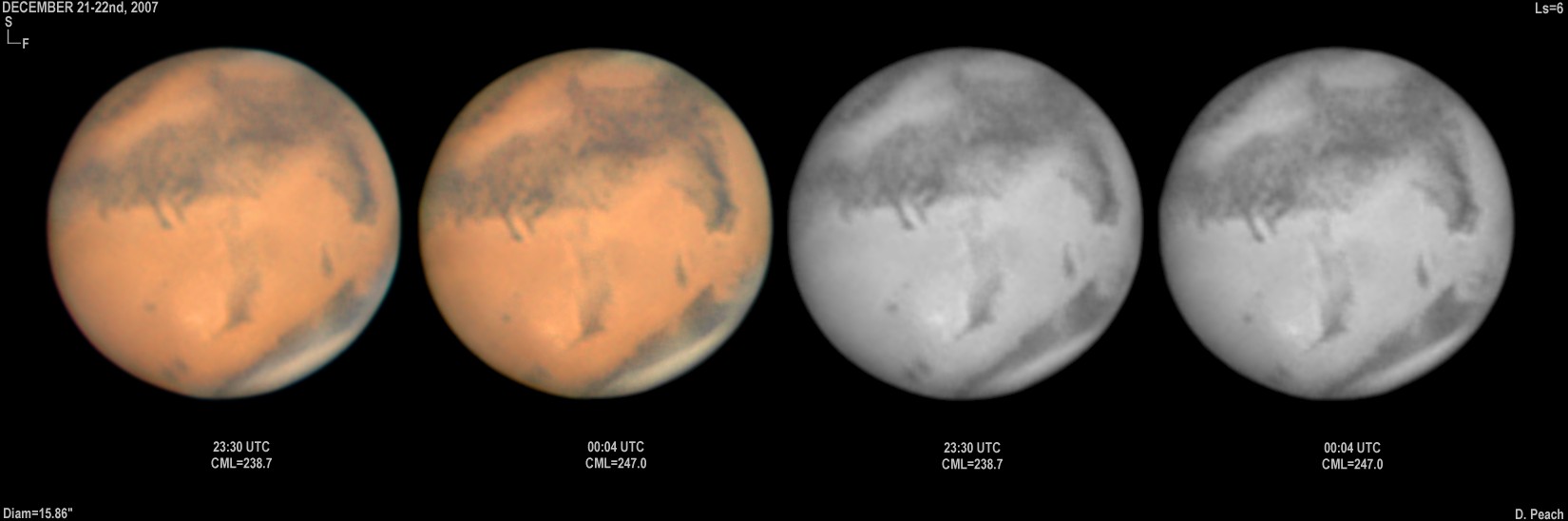
Mars on December 21-22nd, 2007. Dia=15.86". Syrtis Major and Elysium are promonent. Note the bright spot of Elysium Mons. Sinus Gomer and Mare Cimmerium are also well seen.
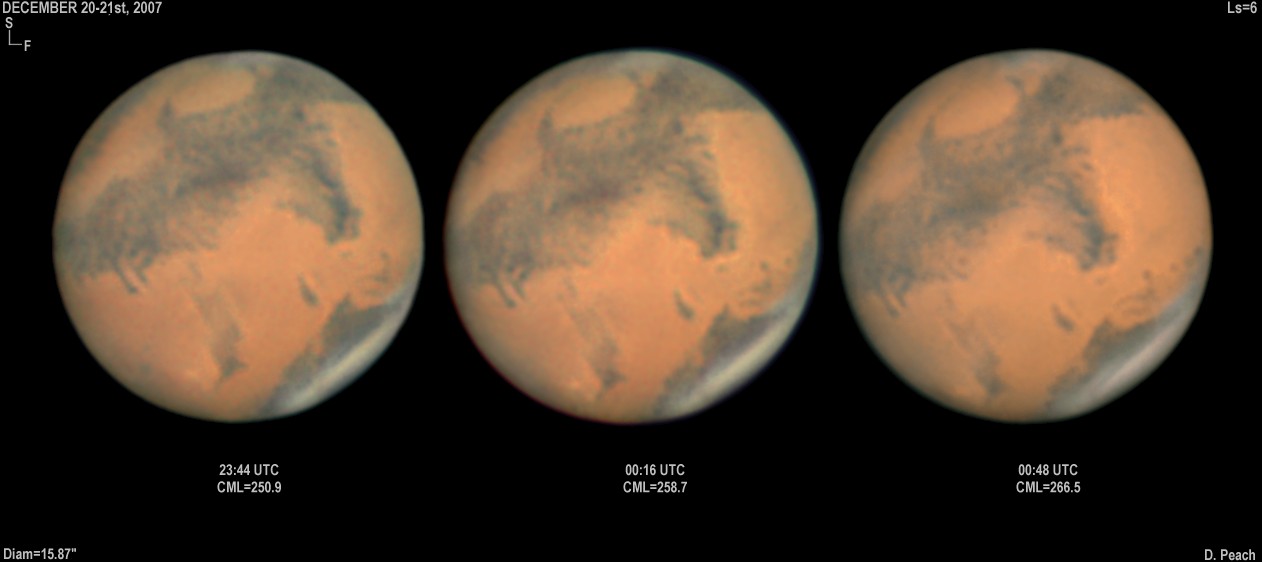
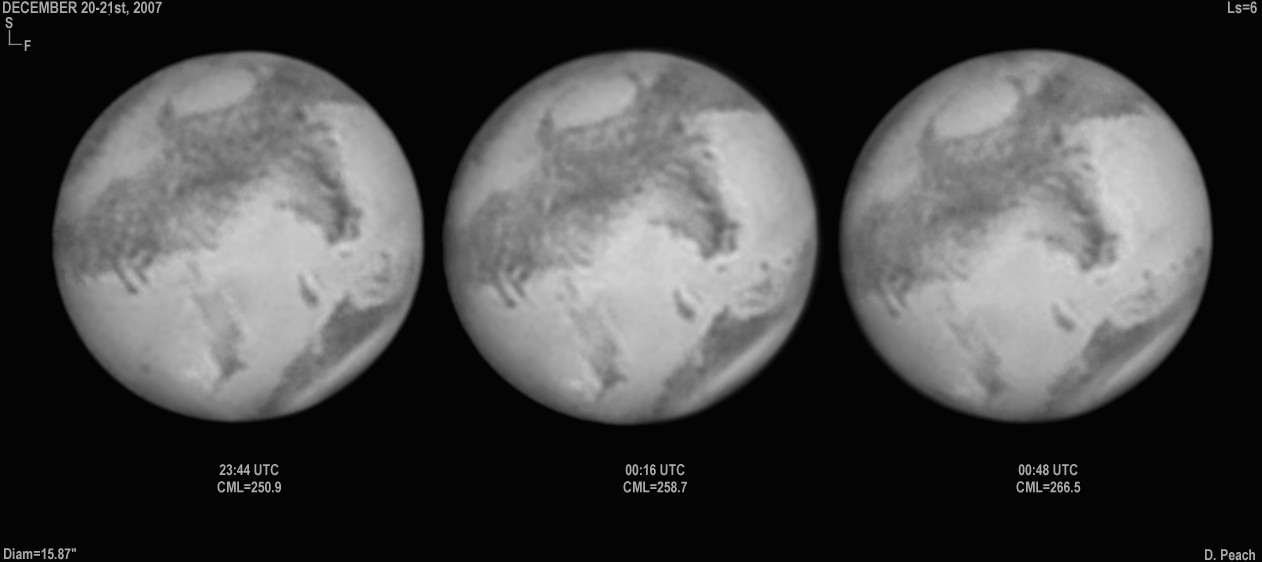
Mars on December 20-21st, 2007. Dia=15.87". Just past closest approach and maximum diameter for the apparition. Syrtis Major, Hellas and Mare Tyrhennum are prominent in the South with Utopia dark in the north. Lots of fine albedo variation is visible across the disk.
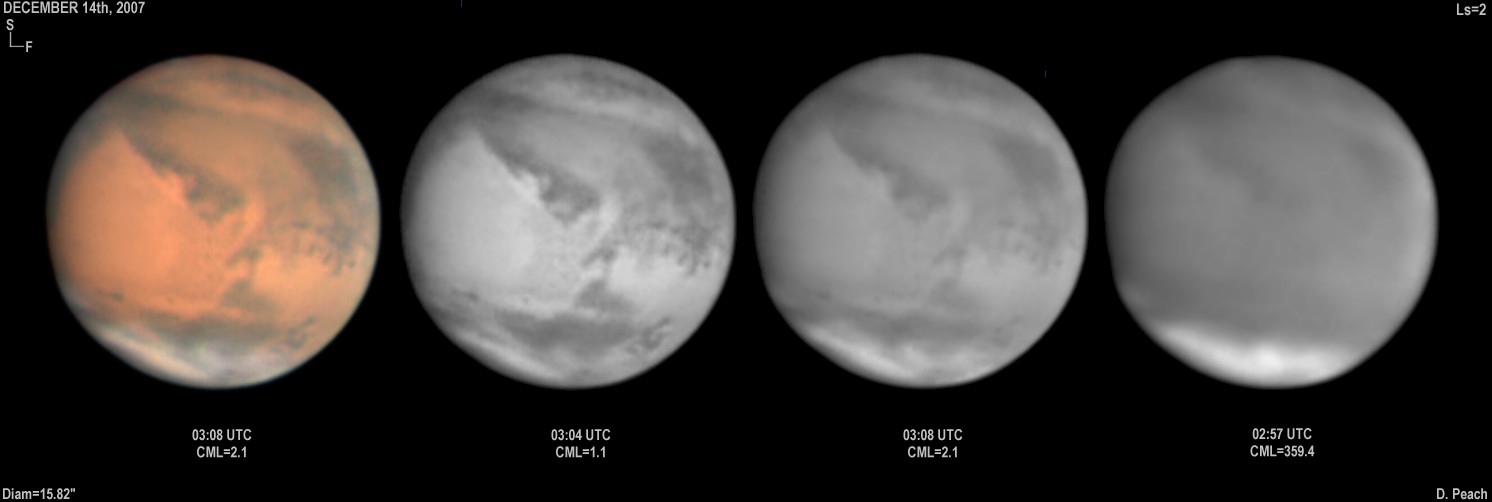
Mars on December 14th, 2007. Dia=15.82". Sinus Meridiani is central, with Oxia Palus and Mare Acidalium also promient.
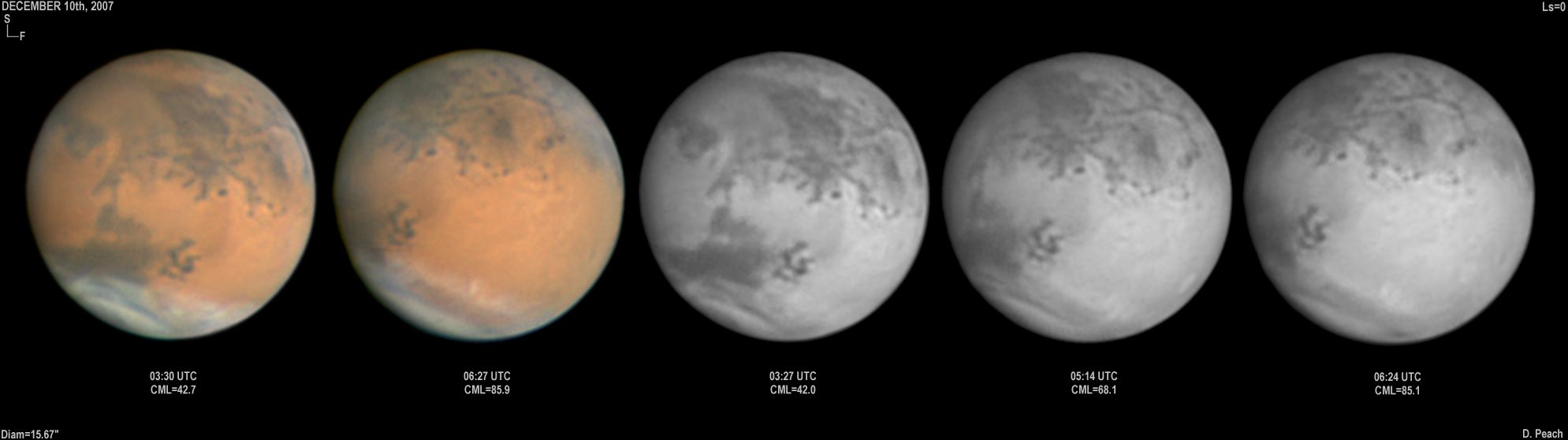
Mars on December 10th, 2007. Dia=15.67". Chryse is central in the first image while Solis lacus is in the second image. Note the misty clouds surround the NPC.
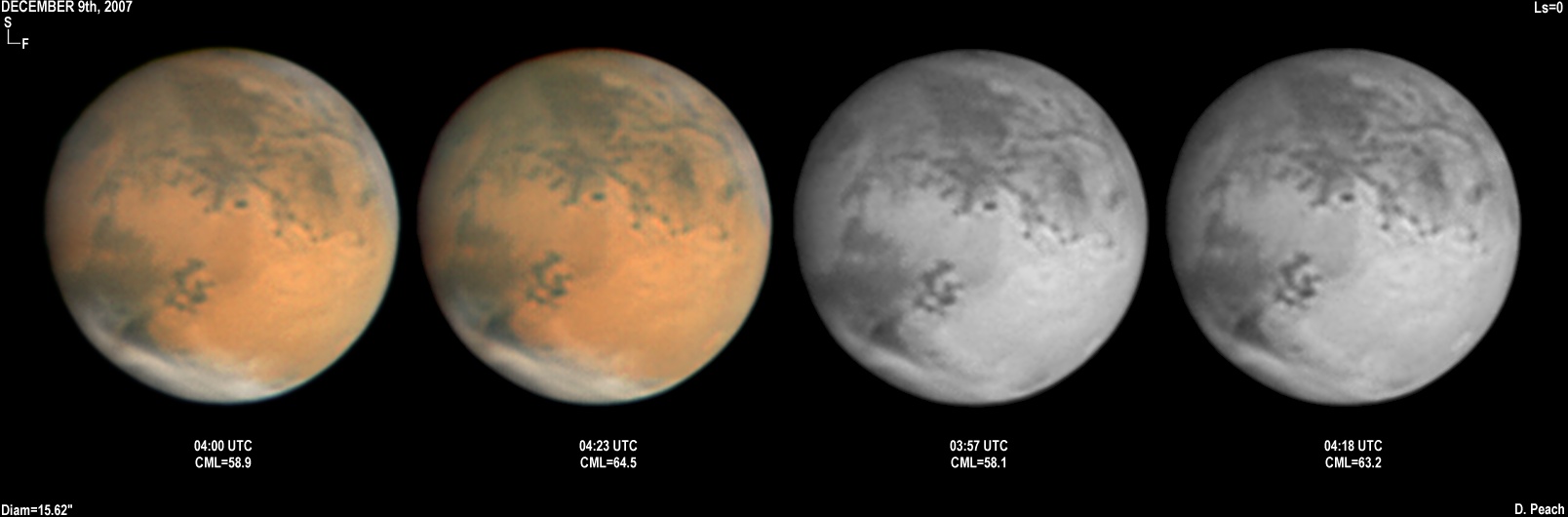
Mars on December 9th, 2007. Dia=15.62". Chryse, Mare Erythraeum, Aurorae Sinus and Mare Acidalium are all we seen in these images, along with Solis Lacus at right.
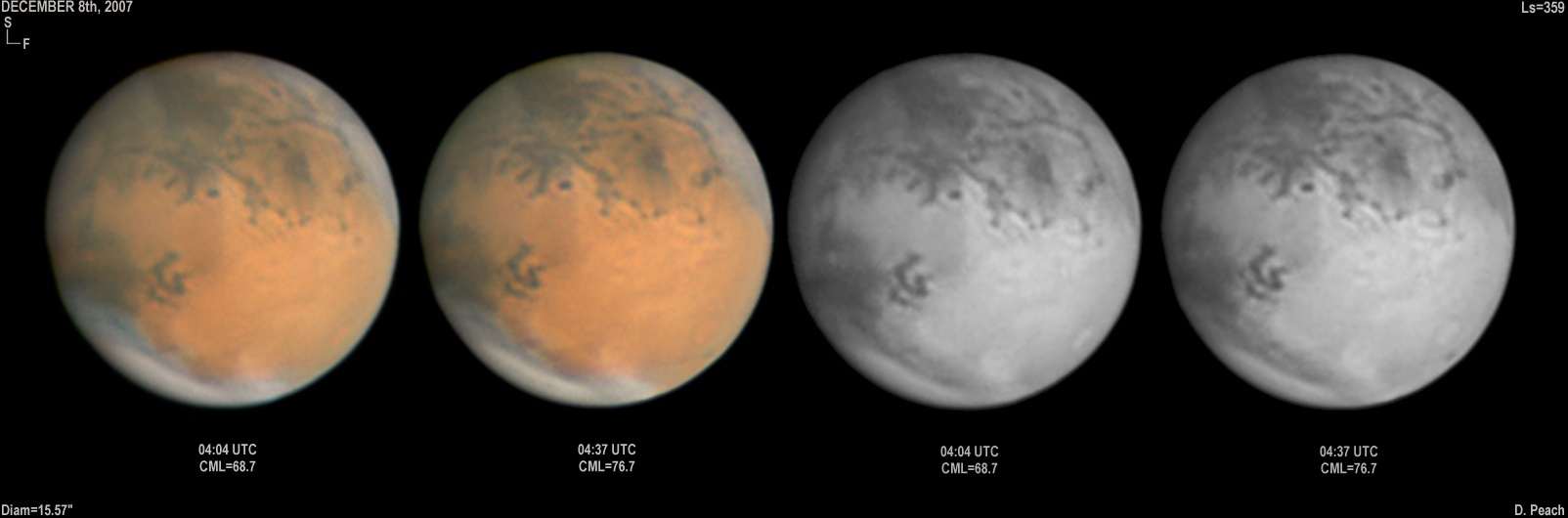
Mars on December 8th, 2007. Dia=15.57". Aurorae Sinus and Chryse are well presented here with the familiar finger like projections. Note the dramatic change in cloud activity from the previous day.
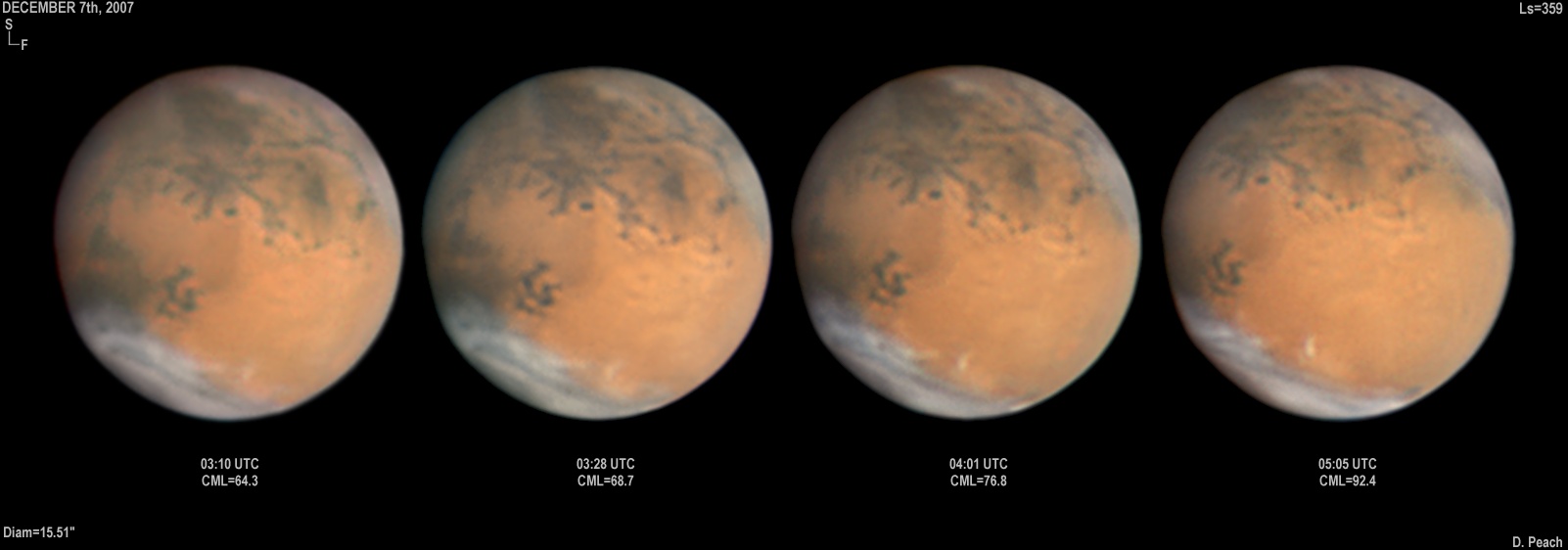
Mars on December 7th, 2007. Dia=15.51". Aurorae Sinus and Chryse are well presented here with the familiar finger like projections. Again note the interesting clouds around the NPC.
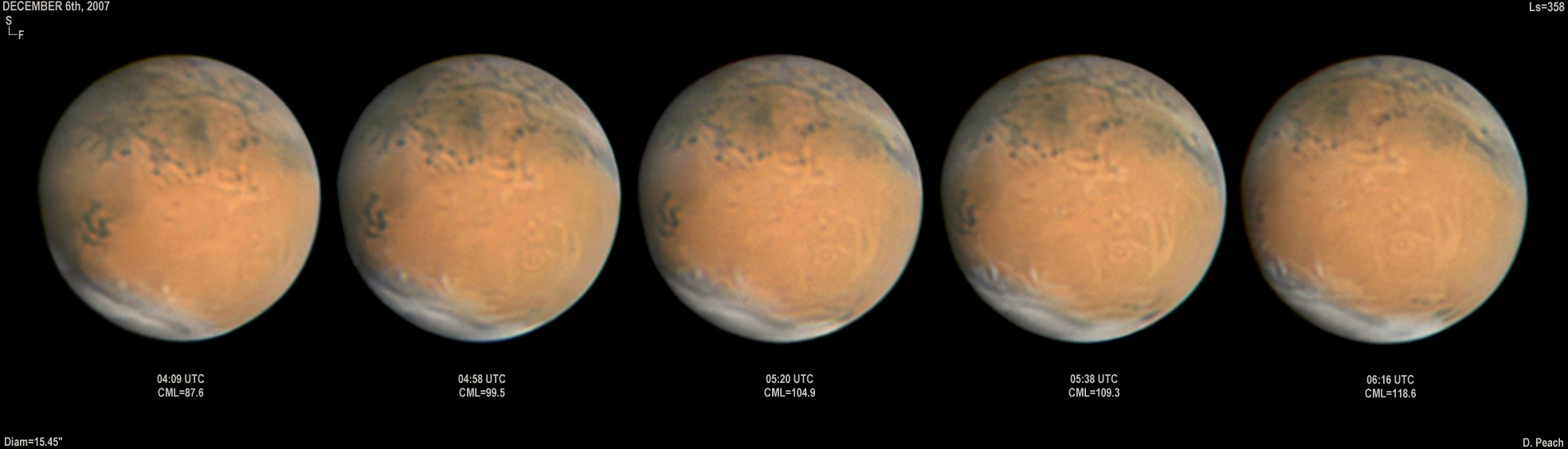
Mars on December 6th, 2007. Dia=15.45". My best set of images for this apparition. Considerable detail visible across the disk. Olympus Mons is clearly defined in the Tharsis desert as a "donut shaped" feature. Note the complex clouds surrounding the NPC.
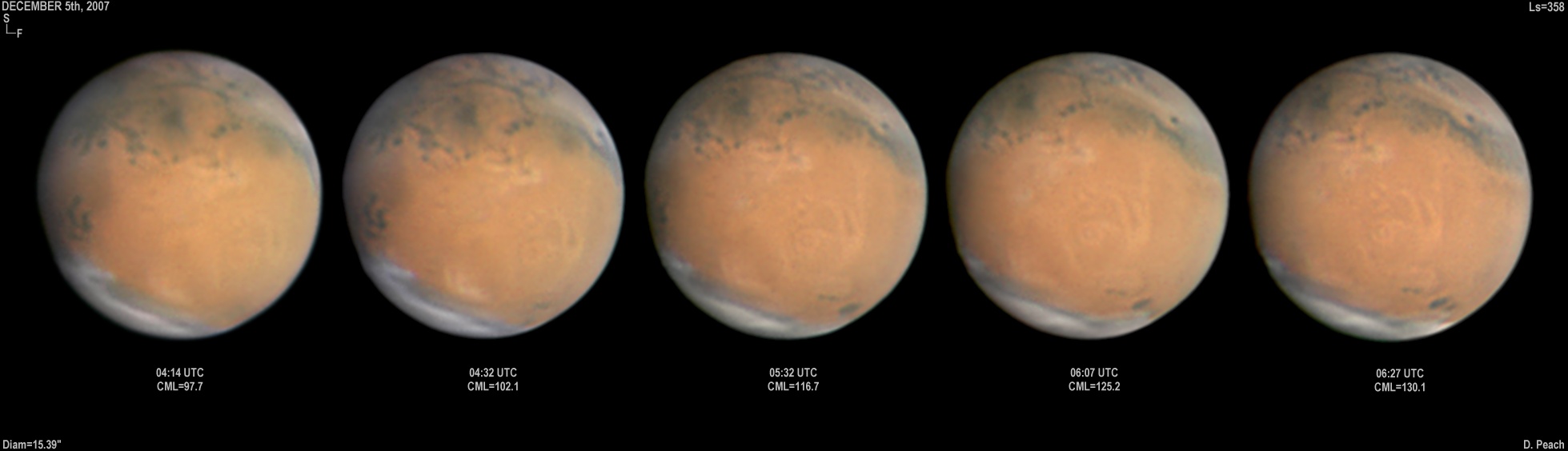
Mars on December 5th, 2007. Dia=15.39". Solis Lacus is again very prominent here, with the "Y" shape of Agathodaemon/Melas Lacus etc marking the floor of Valles Marineris. Note in the last image Orographic clouds over the Tharsis volcanoes, especially Arsia and Pavonis Mons. Also note the "donut shaped" feature in the Tharsis desert which is actually Olympus Mons.
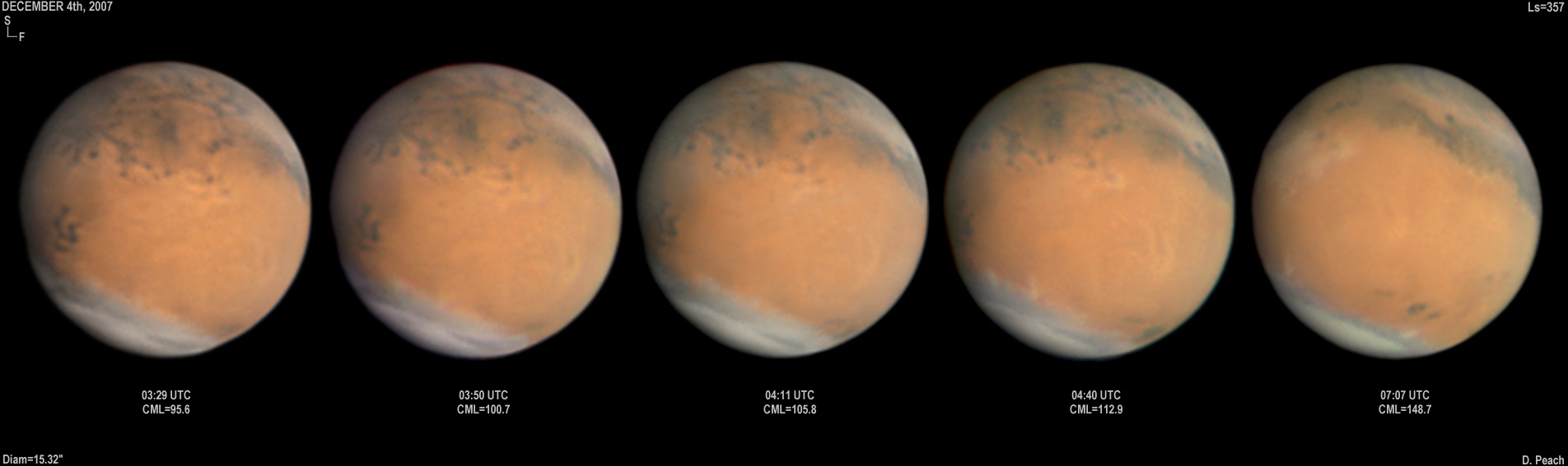
Mars on December 4th, 2007. Dia=15.32". Solis Lacus is very prominent here, with the "Y" shape of Agathodaemon/Melas Lacus etc marking the floor of Valles Marineris. Note in the last image Orographic clouds over the Tharsis volcanoes, especially Arsia and Pavonis.
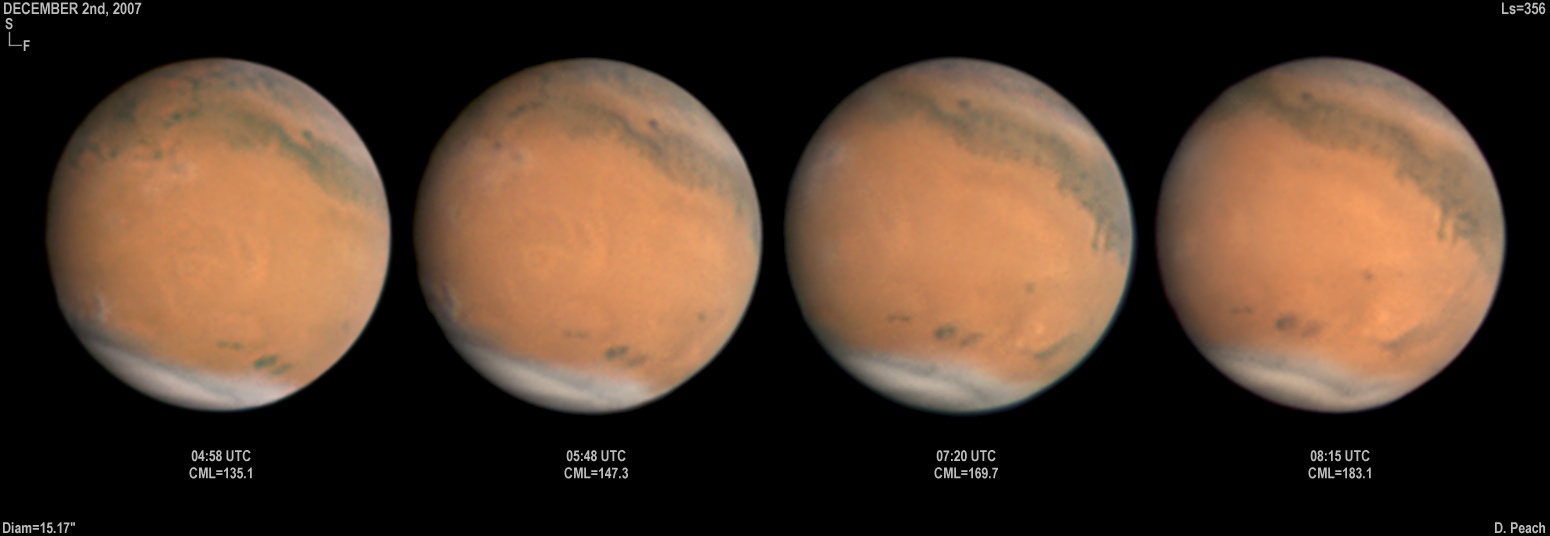
Mars on December 2nd, 2007. Dia=15.17". Mare Cimmerium/Sirenum and prominent along with Propontis. Note Elyisum Mons and Hecates Tholus are seen as two small bright spots. Solis Lacus is rotating out of view with Orographic clouds over Arsia and Pavonis Mons.
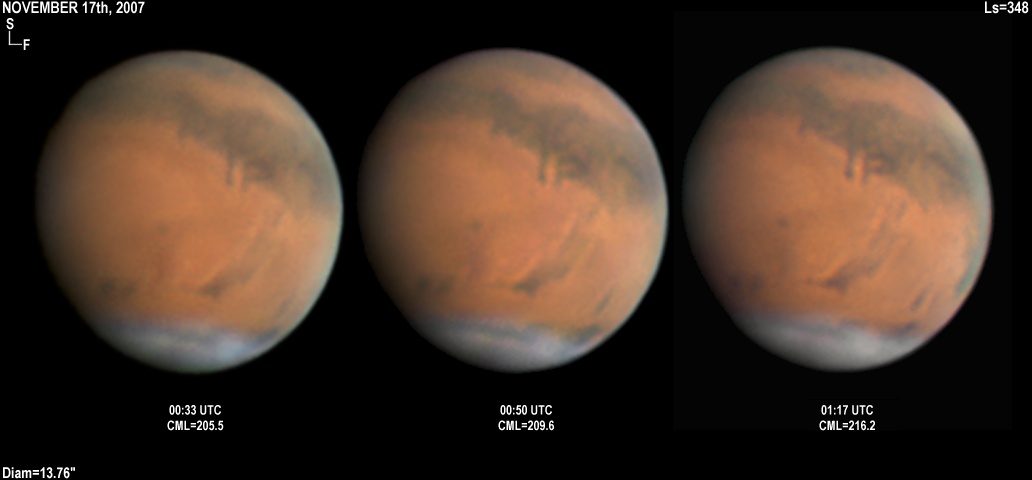
Mars on November 17th, 2007. Dia=13.76". Mare Cimmerium, Elysium, Hyblaeus and Sinus Gomer are prominent.
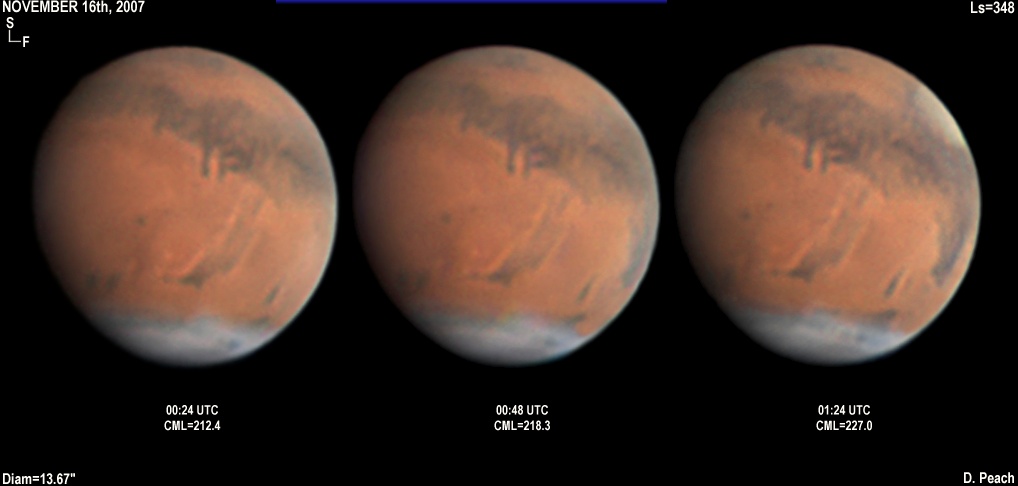
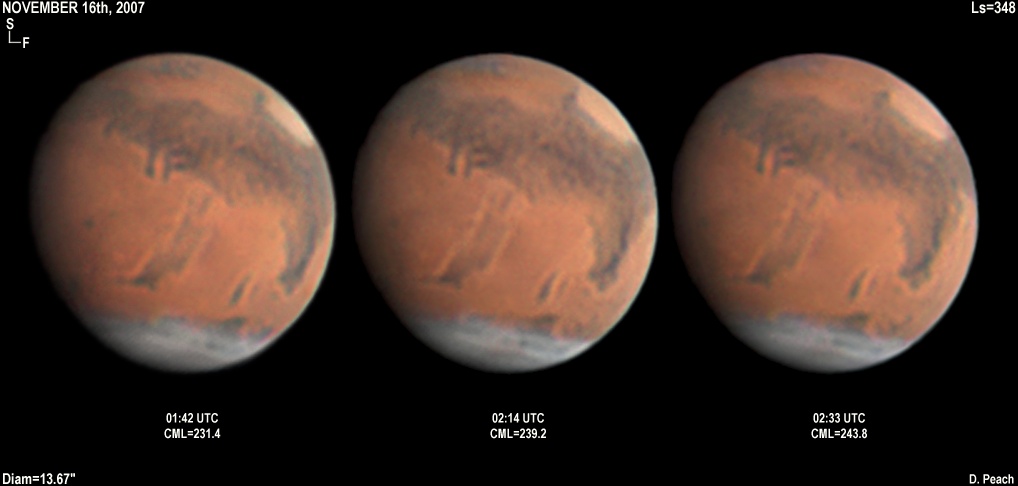
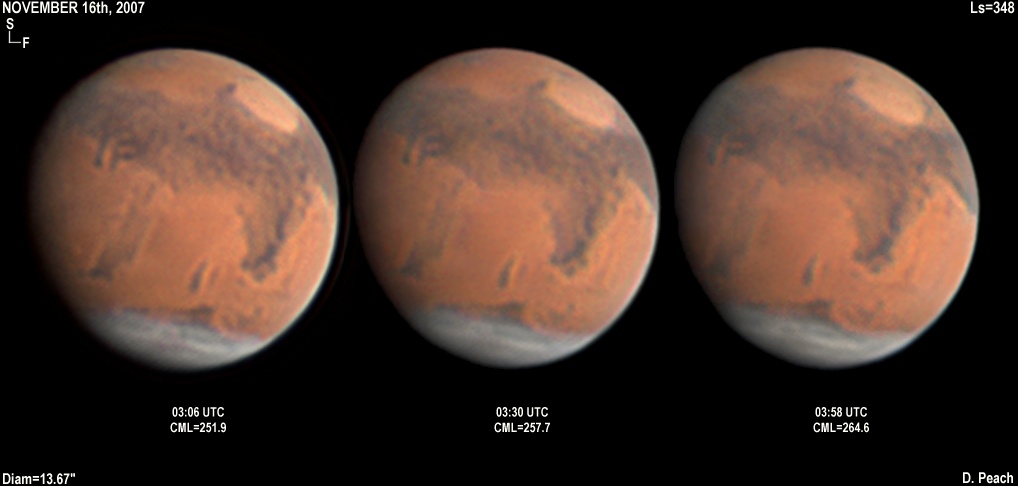
Mars on November 16th, 2007. Dia=13.67". Syrtis Major is very prominent along with Hellas and Elyisum. Some interesting clouds and hazes around the North Polar Cap.
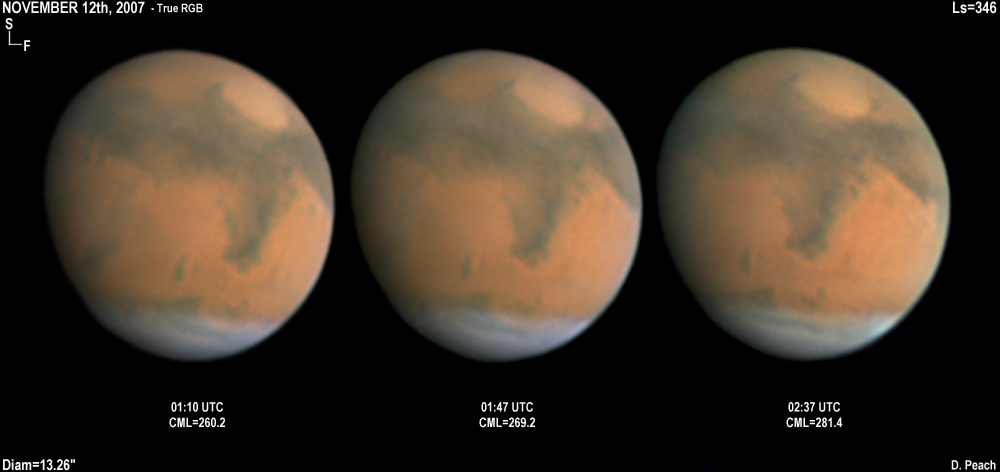
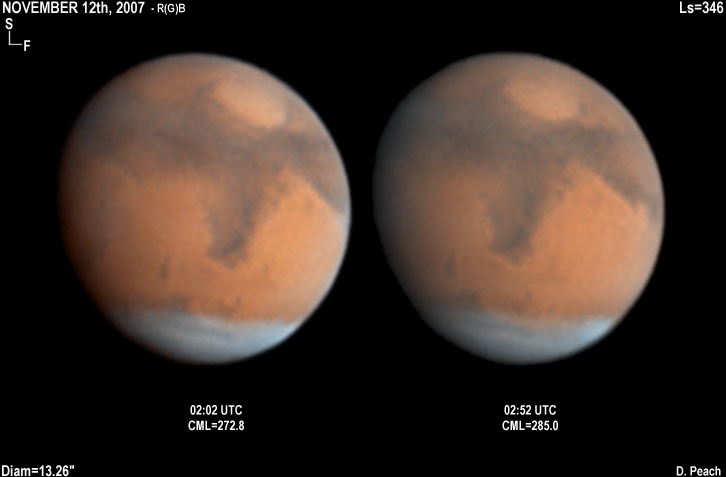
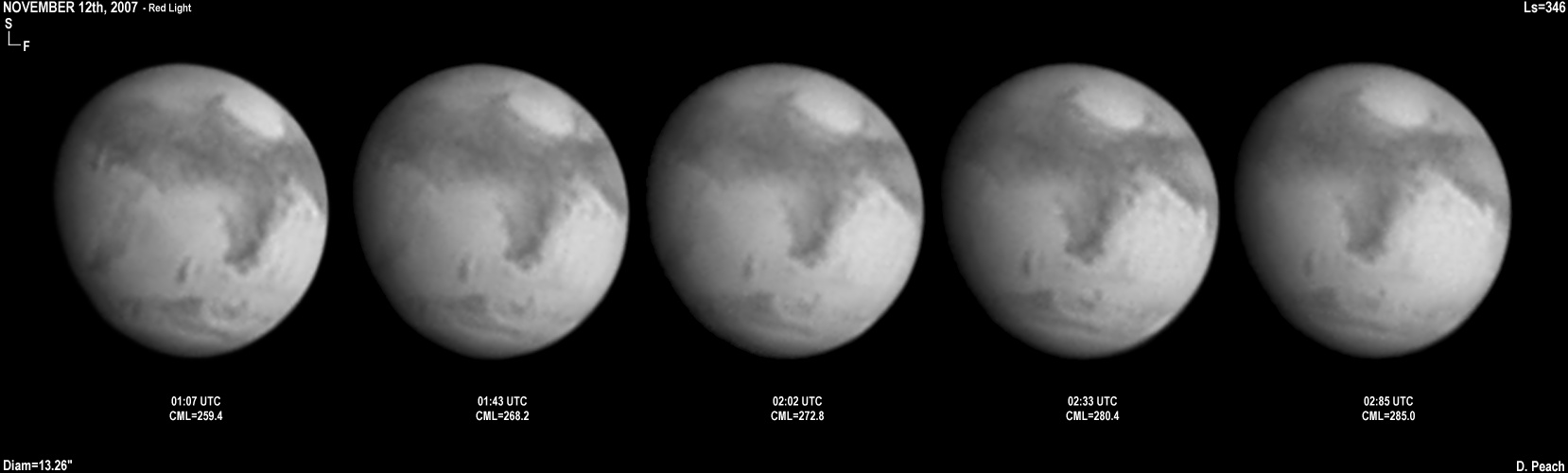
Mars on November 12th, 2007. Dia=13.26". Syrtis Major is very prominent along with a rather dusty Hellas. Note the detail in the NPR. Some delicate clouds/hazes across the Martian disk.
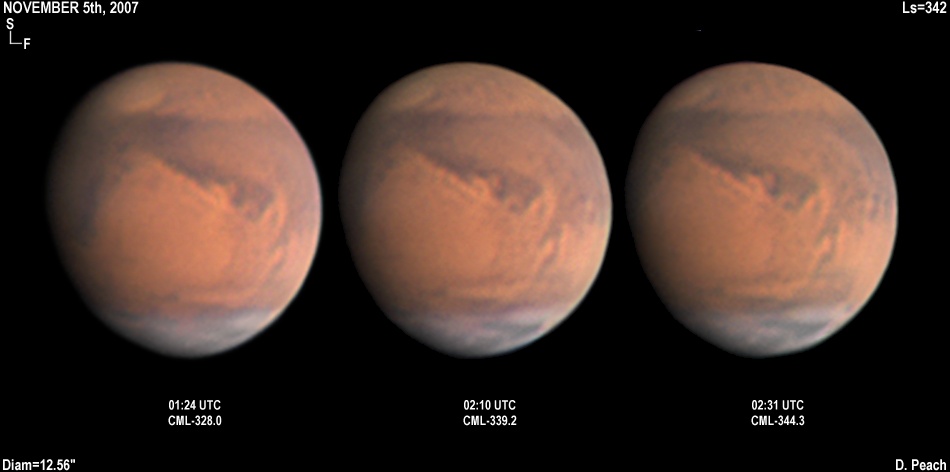
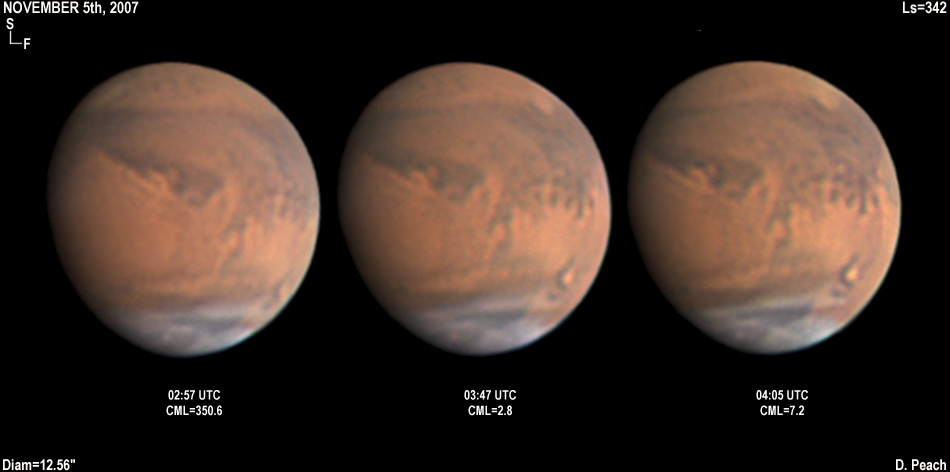
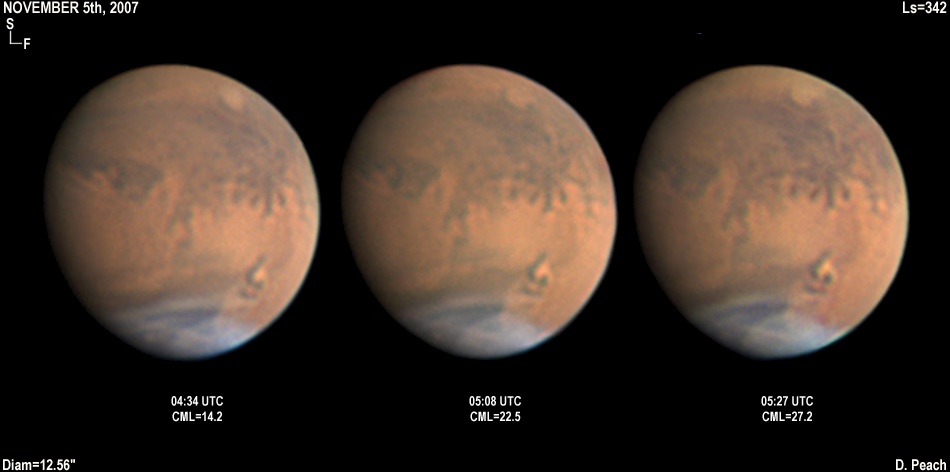
Mars on November 5th, 2007. Dia=12.56". Mare Erythraeum is central along with Chryse and Niliacus Lacus/Mare Acidalium. Streaky and opaque NPH over Acidalium. Weak dust cloud over Chryse obscuring Niliacus Lacus. New bright dust core near Achillis Fons.
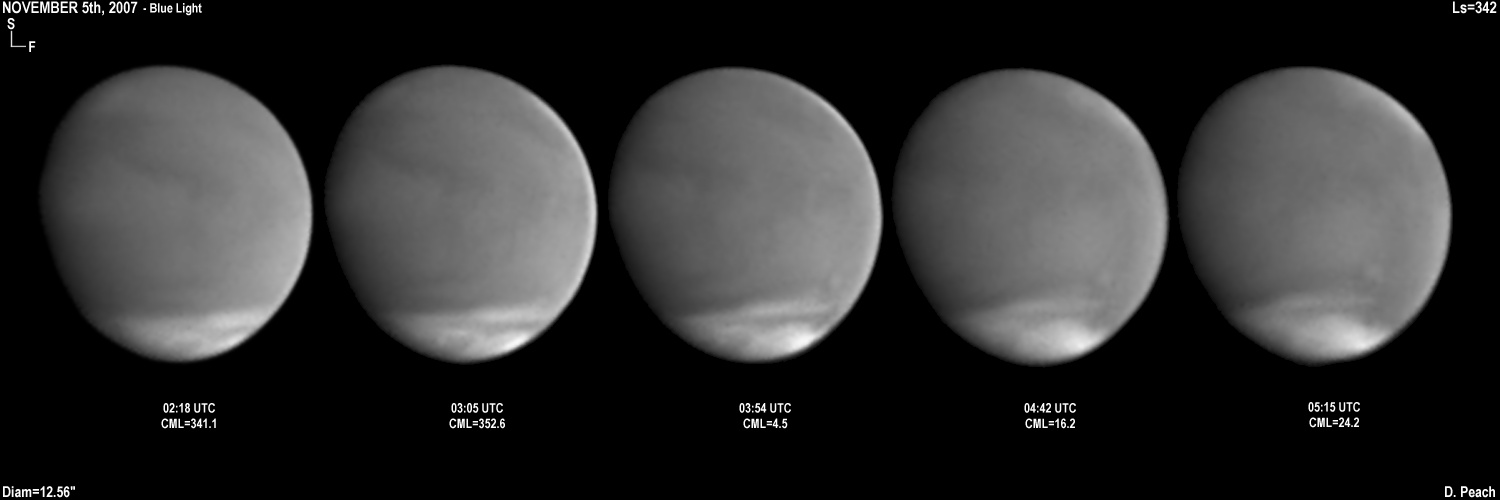
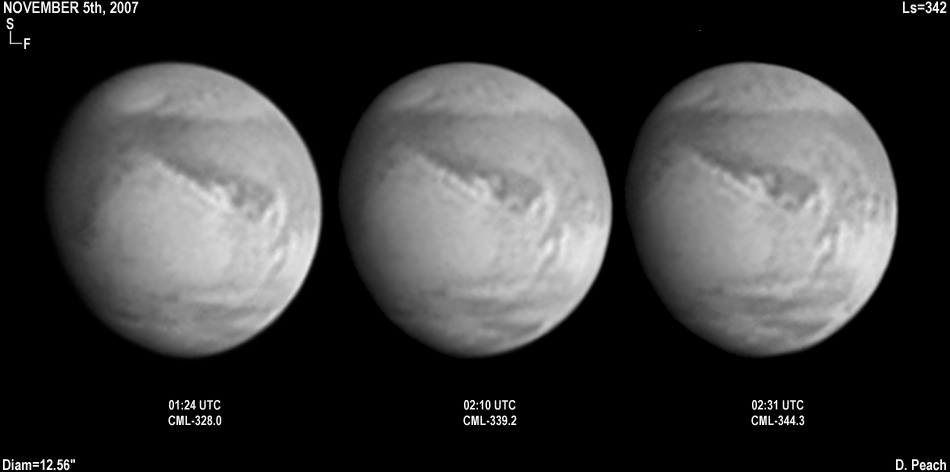
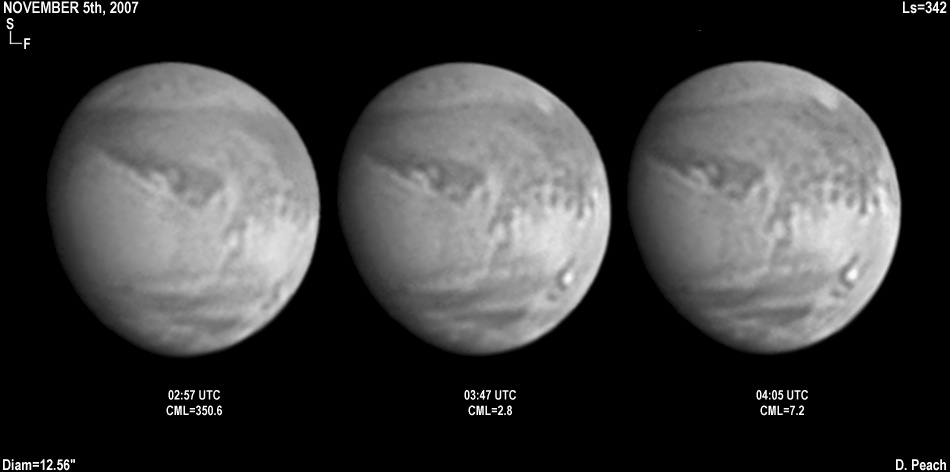
Mars on November 5th, 2007. Dia=12.56". Mare Erythraeum is central along with Chryse and Niliacus Lacus/Mare Acidalium. Streaky and opaque NPH over Acidalium. Weak dust cloud over Chryse obscuring Niliacus Lacus. New bright dust core near Achillis Fons.
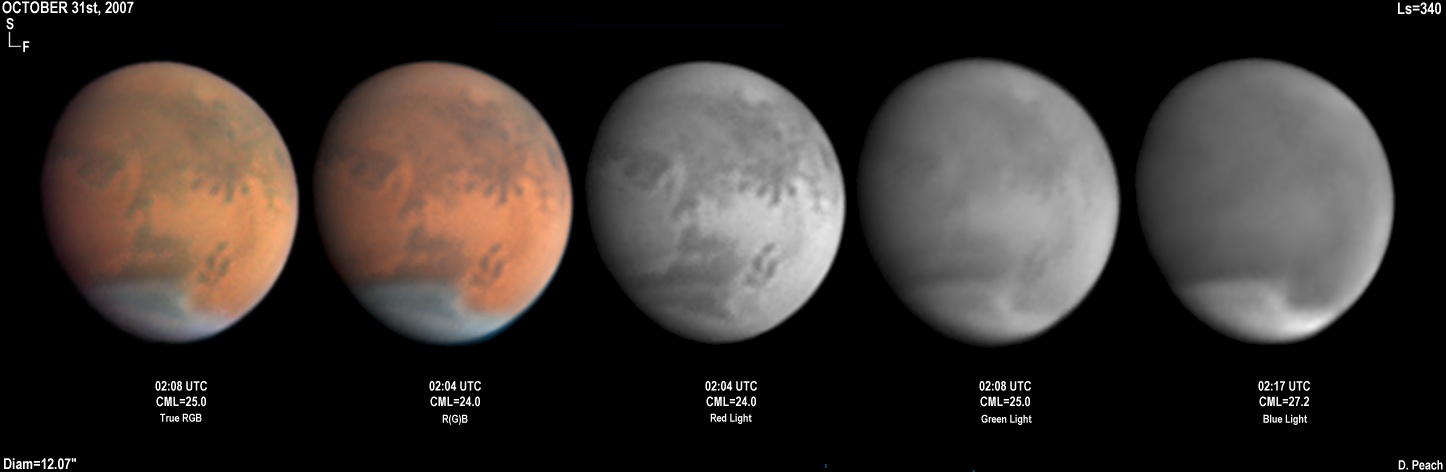
Mars on October 31st, 2007. Dia=12.07". Mare Erythraeum is central along with Chryse and Niliacus Lacus/Mare Acidalium. Streaky and opaque NPH over Acidalium. Indus "canal" is very dark connecting Oxia Palus with Niliacus Lacus.
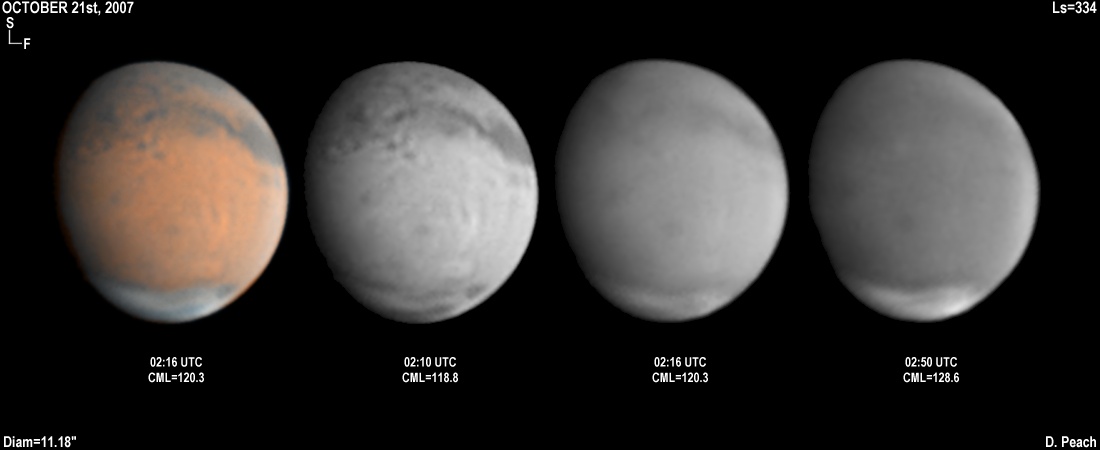
Mars on October 21st, 2007. Dia=11.18". Solis Lacus is coming into view. Note the Tharsis volcanos are seen as dusky spots with Arsia Mons appearing darkest.
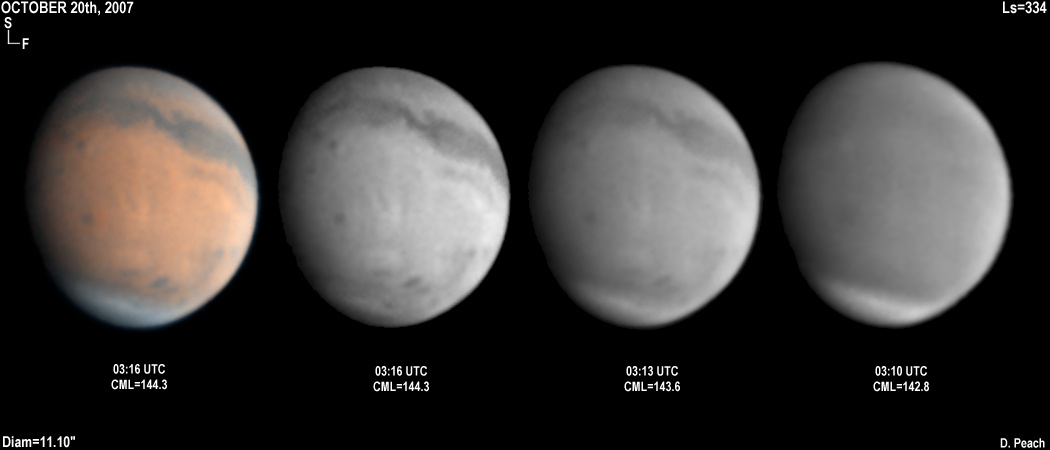
Mars on October 20th, 2007. Dia=11.10". Mare Sirenum is well seen along with the dark spots of Olympus and Arsia Mons.
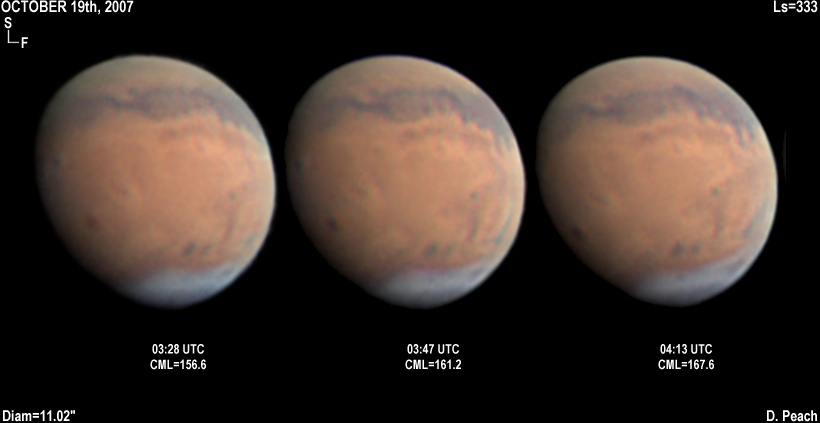
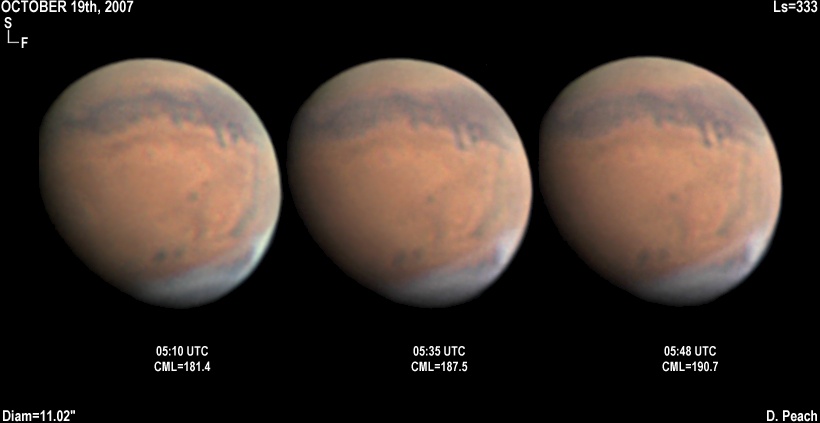
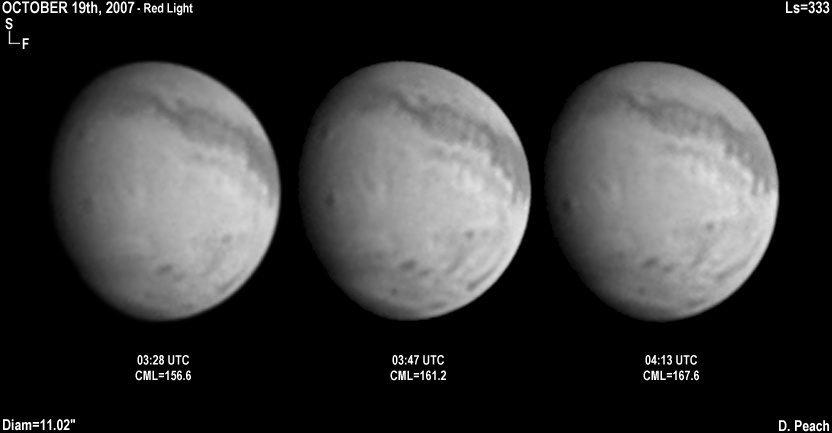
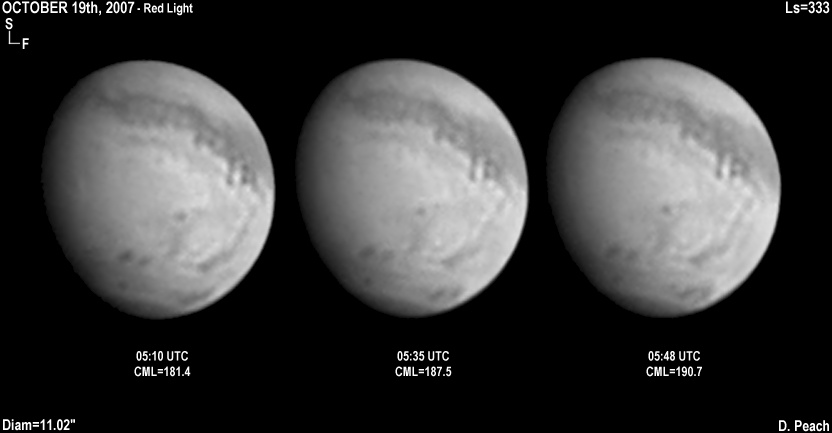
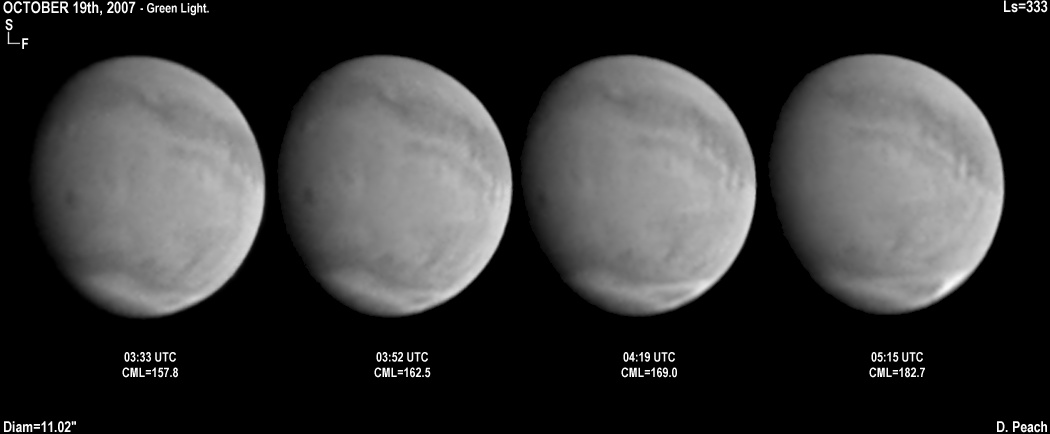
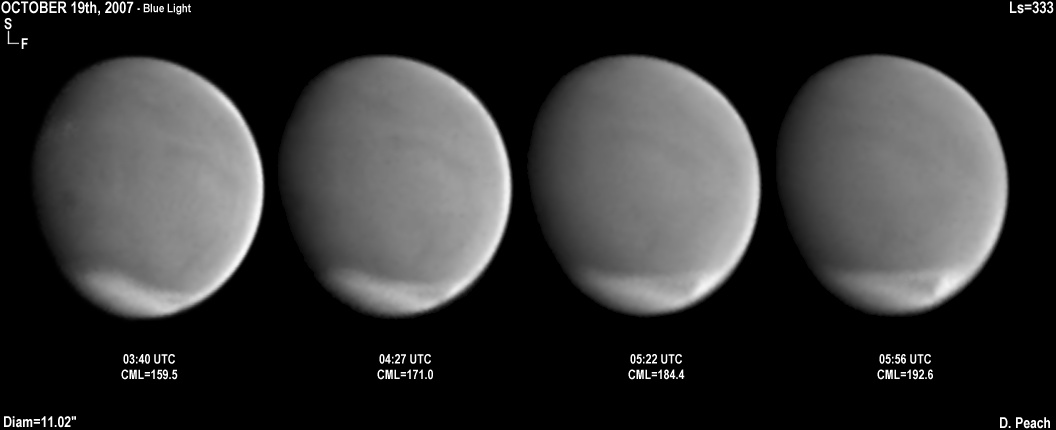
Mars on October 19th, 2007. Dia=11.02". Mare Cimmerium is well seen along with Elyisum and its surrounding dusky markings. The Hyblaeus extension bordering Elysium has become extended following the storm as noted in previous months. Note the detail with the northern polar region. The Arsia Mons orographic cloud has become active again.
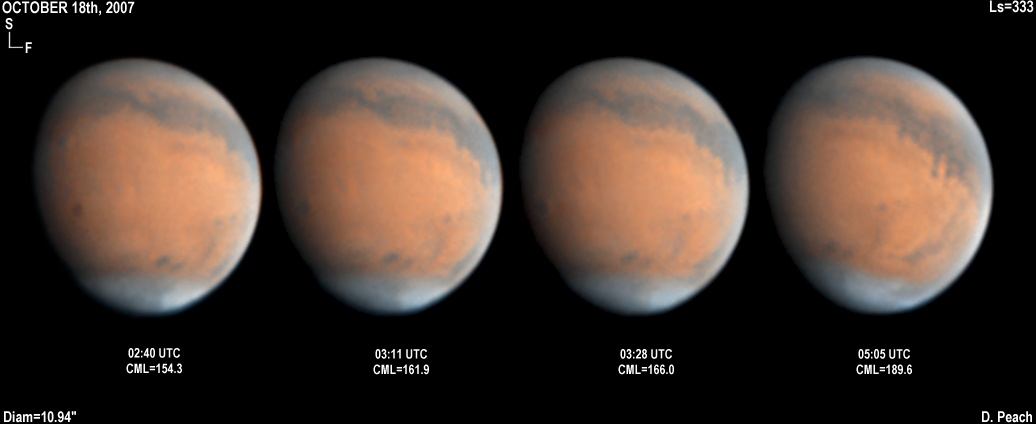
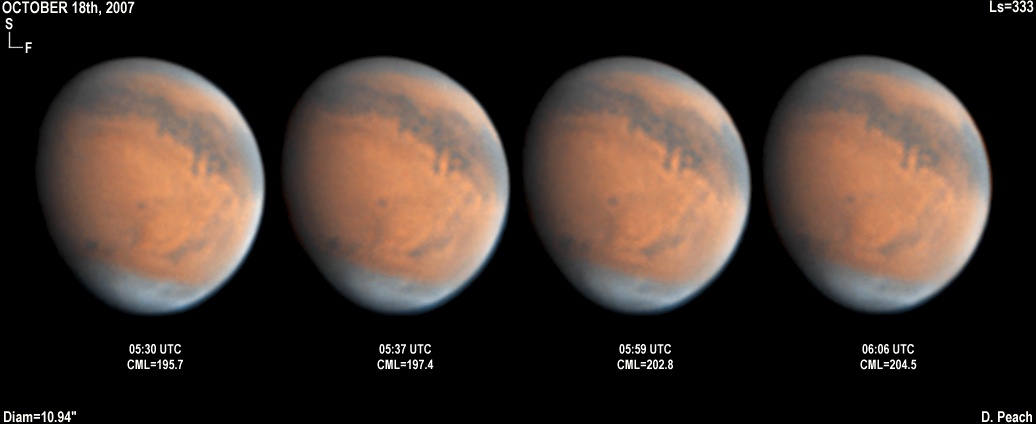
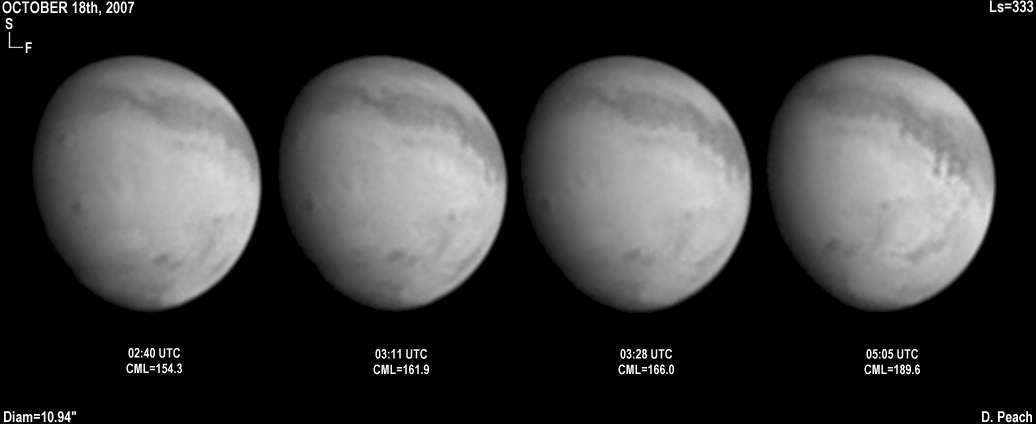
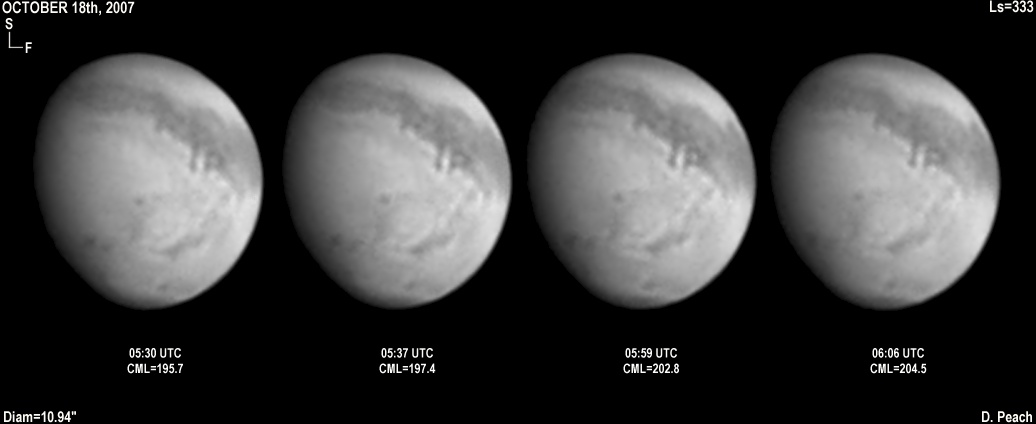
Mars on October 18th, 2007. Dia=10.94". Mare Cimmerium is well seen along with Elyisum and its surrounding dusky markings. The Hyblaeus extension bordering Elysium has become extended following the storm as noted in previous months.
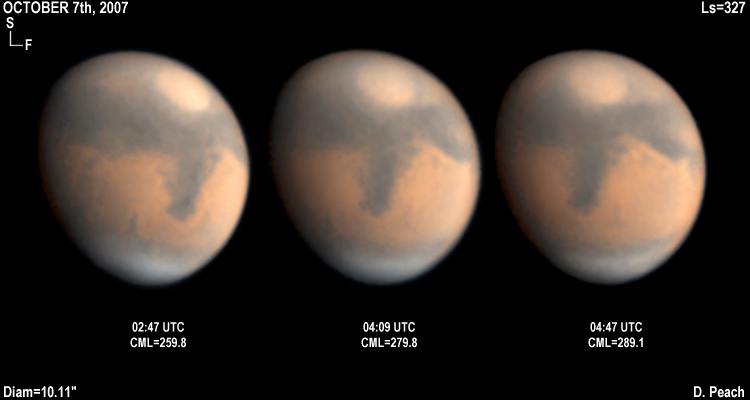
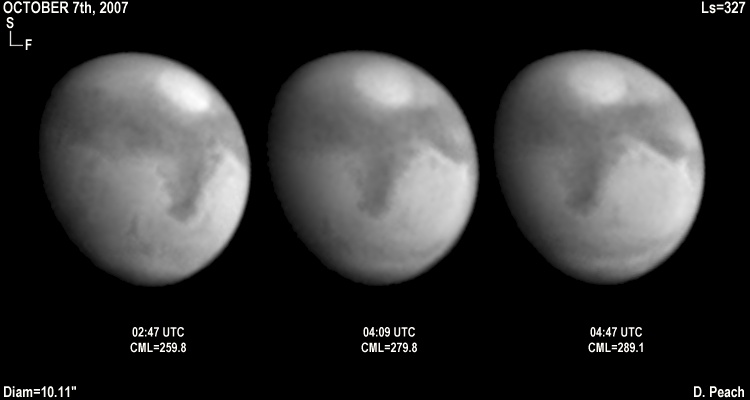
Mars on October 7th, 2007. Dia=10.11". Syrtis Major is prominent with Hellas bright. NPH is dense.
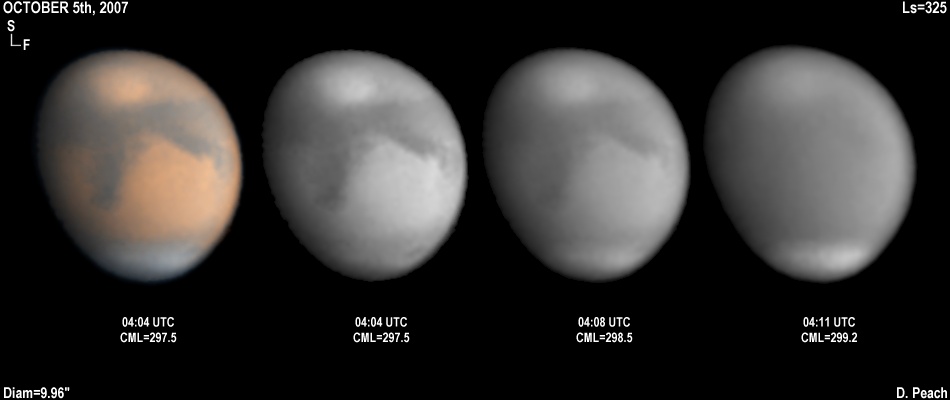
Mars on October 5th, 2007. Dia=9.96". Poor seeing. Syrtis Major is prominent. NPH is dense. Hellas bright.
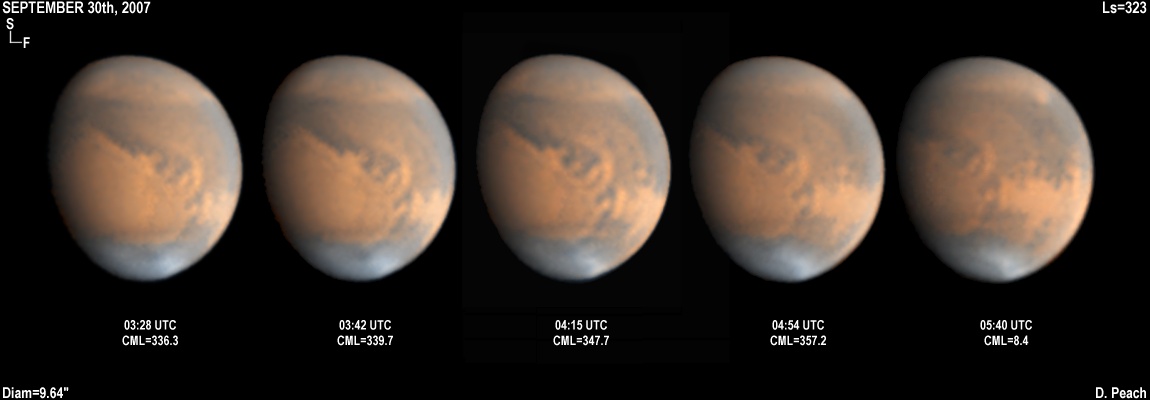
Mars on September 30th, 2007. Dia=9.64". Sinus Meridiani is central. Oxia Palus is dark with the Indus "canal" connecting it to Niliacus Lacus. The NPH is dense and clumpy.
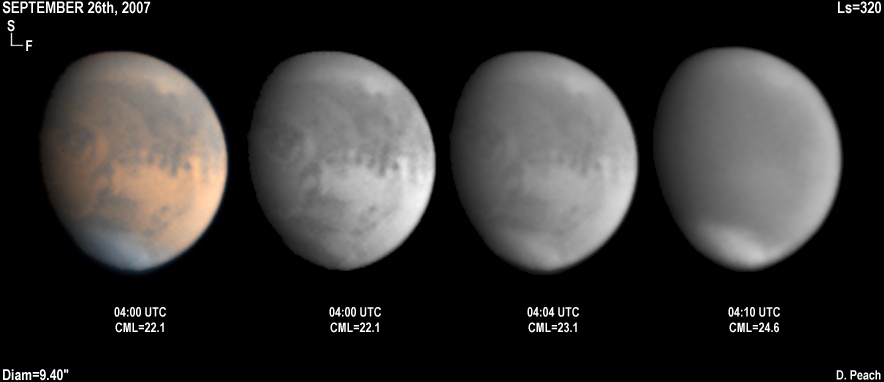
Mars on September 26th, 2007. Dia=9.42". Mare Erythraeum is central along with Chryse and Mare Acidalium. Aurorae Sinus is dark with its familiar finger like projections. Indus "canal" is dark connecting Oxia Palus with Niliacus Lacus. Argyre is bright to the south. The NPH is dense and extensive across Mare Acidalium.
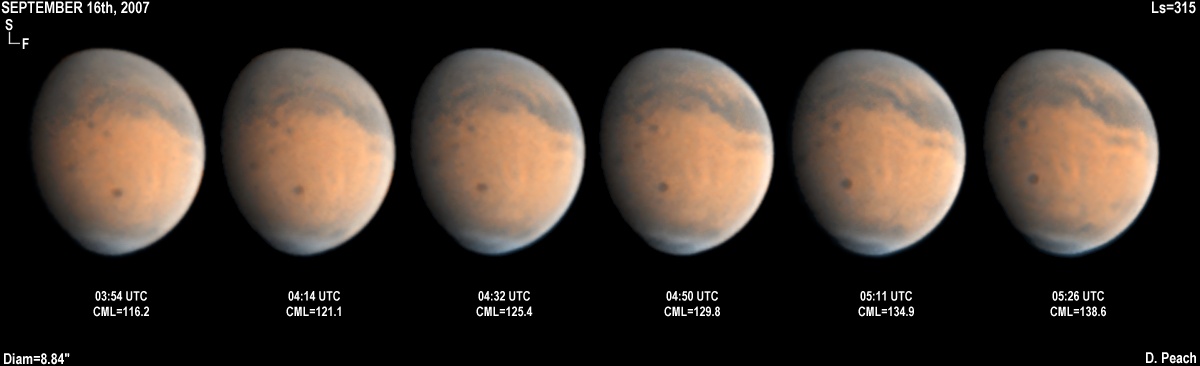
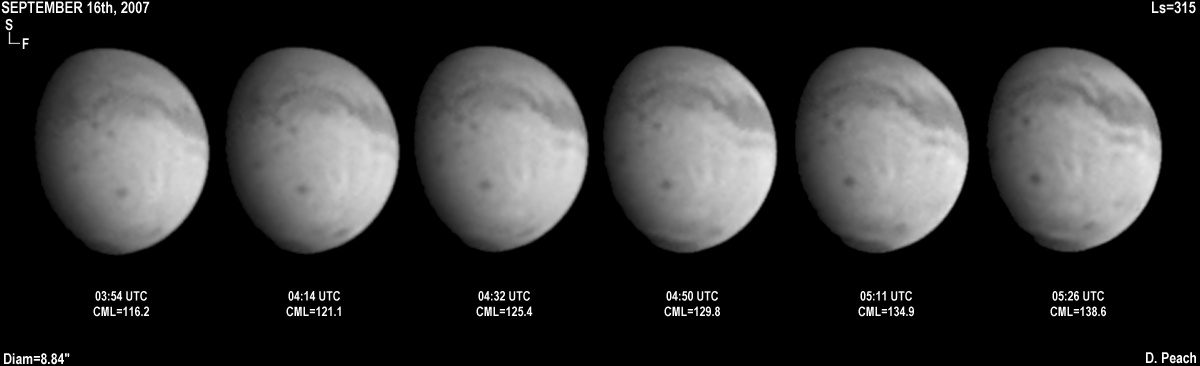
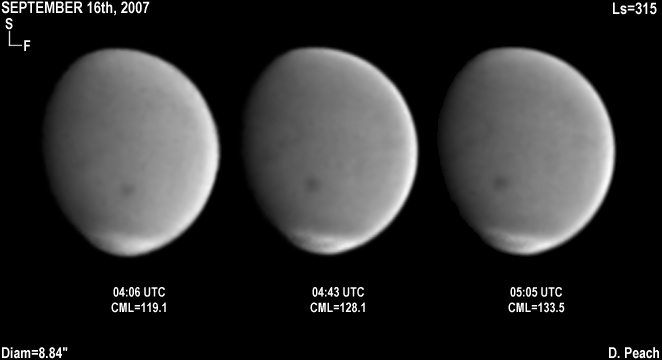
Mars on September 16th, 2007. Dia=8.84". Mare Sirenum prominent having changed somewhat since the duststorm back in June-July. Olympus Mons seen as a prominent dark spot. Ascraeus, Pavonis and Arsia Mons also seen as dark spots moving over the terminator. Solis Lacus is also visible at the terminator. Markings visible below the NPH.
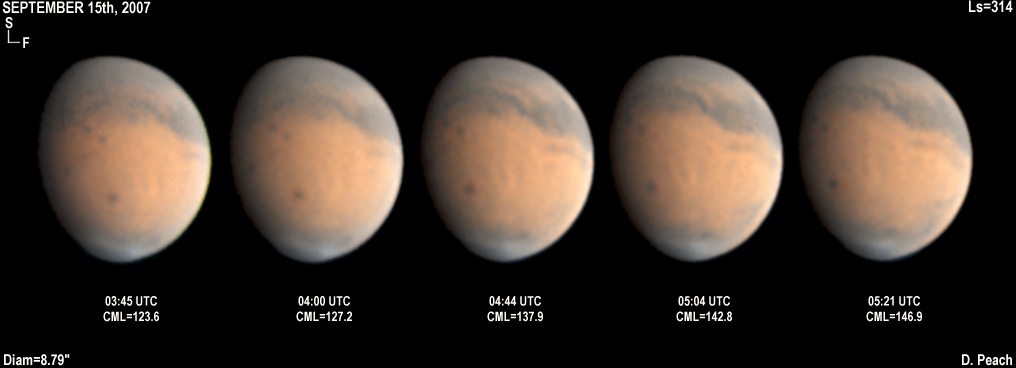
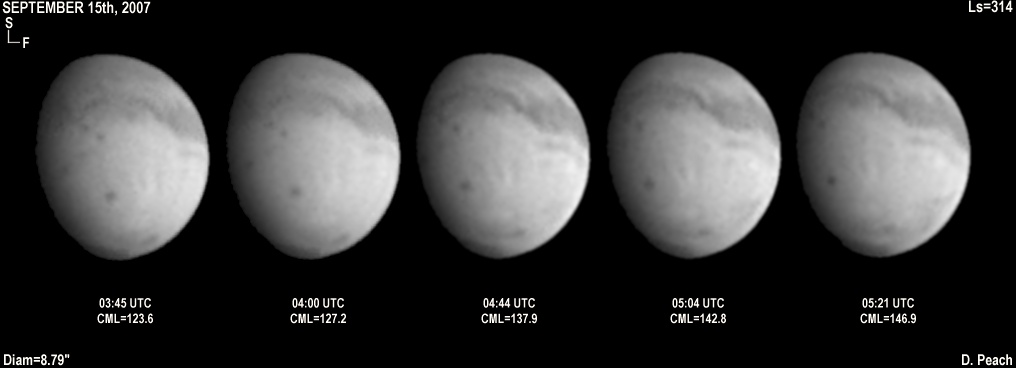
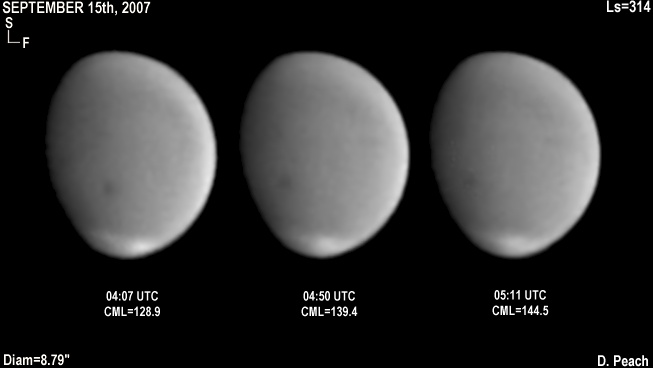
Mars on September 15th, 2007. Dia=8.79". Mare Sirenum prominent having changed somewhat since the duststorm back in June-July. Olympus Mons seen as a prominent dark spot. Ascraeus, Pavonis and Arsia Mons also seen moving over the terminator.
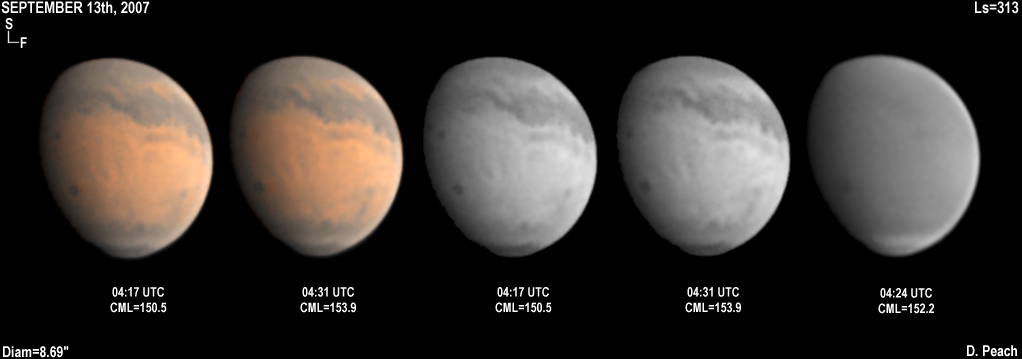
Mars on September 13th, 2007. Dia=8.69". Mare Sirenum prominent. Propontis visible. Olympus Mons seen as a dark spot appearing at the terminator.
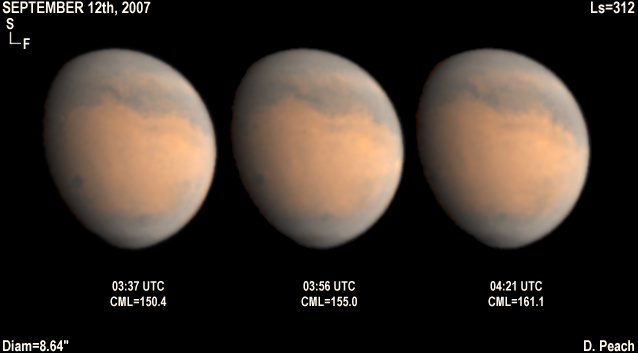
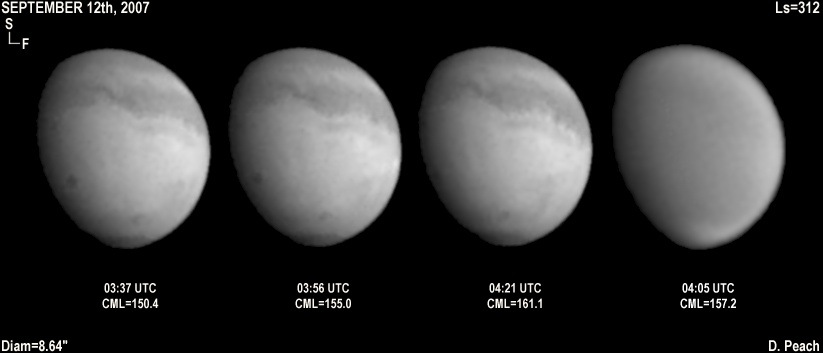
Mars on September 12th, 2007. Dia=8.64". Mare Sirenum prominent. Propontis visible. Olympus Mons seen as a dark spot appearing at the terminator.
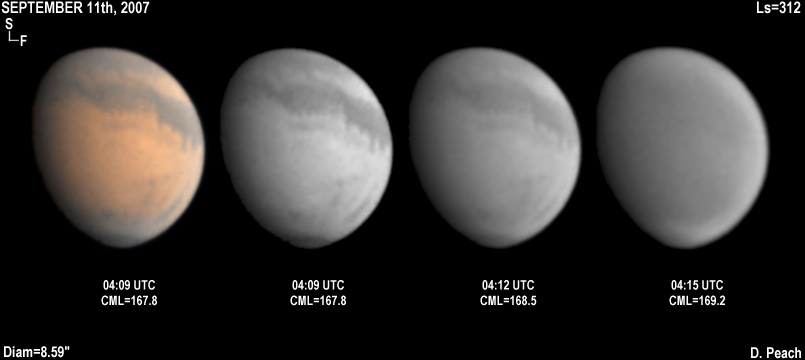
Mars on September 11th, 2007. Dia=8.59". Mare Cimmerium/Sirenum prominent, with Gomer Sinus protrusions well seen. Hyblaeus extension visible. Cerberus II visible. Trivium-Cerberus dots visible. Propontis appearing over the terminator.
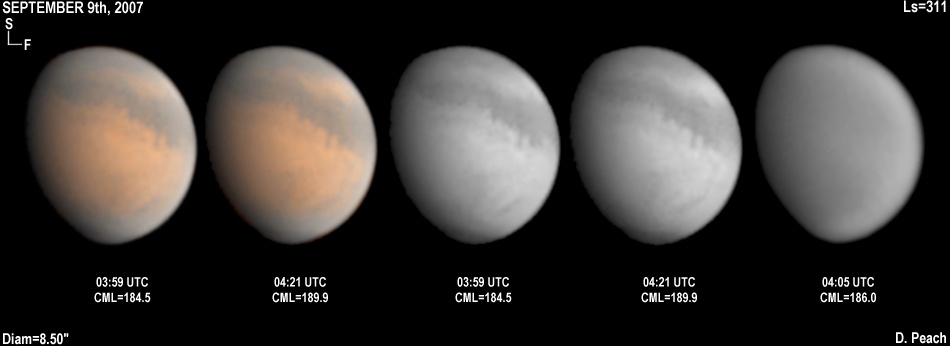
Mars on September 9th, 2007. Dia=8.50". Mare Cimmerium prominent, with Gomer Sinus protrusions well seen. Hyblaeus extension visible. Cerberus II visible. Trivium-Cerberus dots visible.
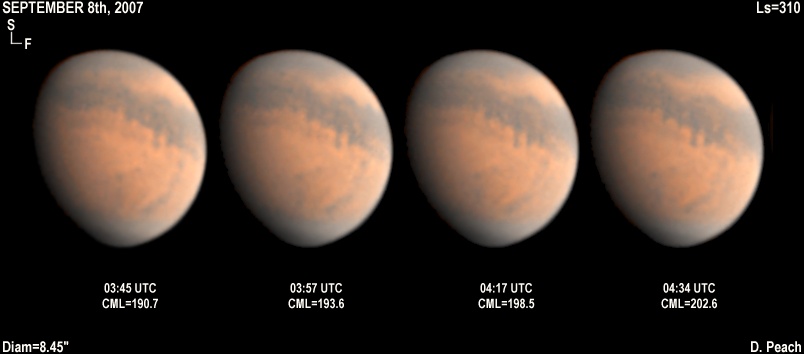
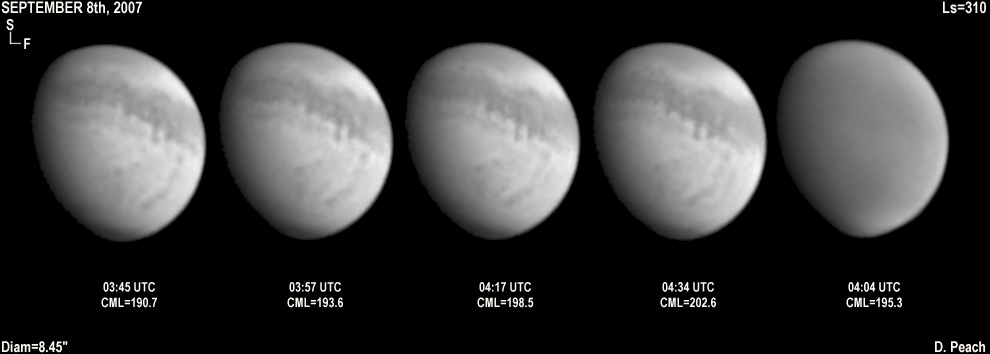
Mars on September 8th, 2007. Dia=8.46". Mare Cimmerium prominent, with Gomer Sinus protrusions well seen. Hyblaeus extension visible. Cerberus II visible. Trivium-Cerberus dots visible.
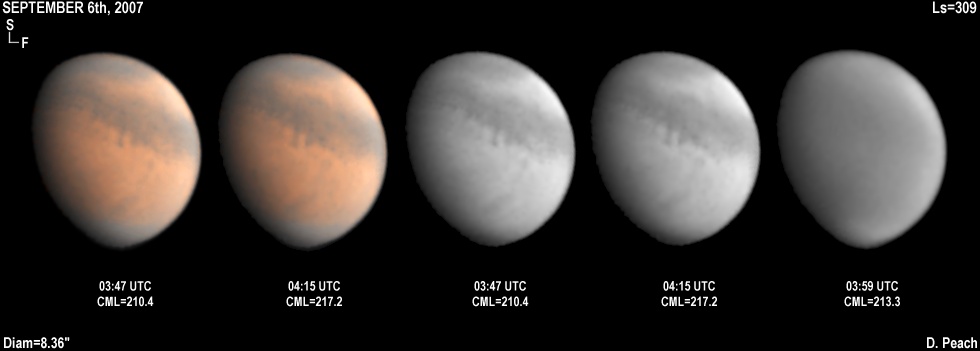
Mars on September 6th, 2007. Dia=8.36". Mare Cimmerium prominent, with Gomer Sinus protrusions well seen. Hyblaeus extension weakly visible. Cerberus II visible.

Mars on September 4th, 2007. Dia=8.28". Poor seeing. Syrtis Major prominent. Hellas is again very bright. Hesperia is dusky. Cerberus II seen - revived in appearance post storm.
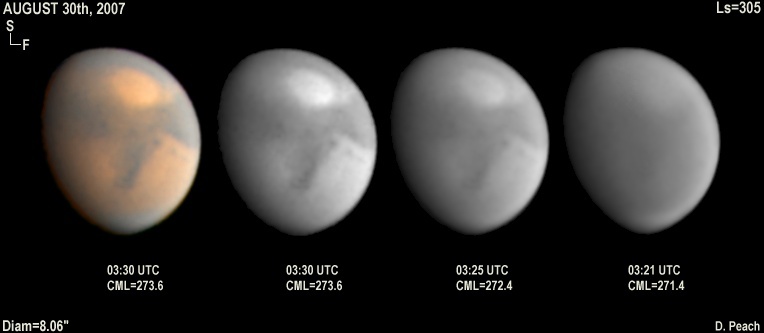
Mars on August 30th, 2007. Dia=8.06". Syrtis Major central and quite prominent. Hellas is very bright.
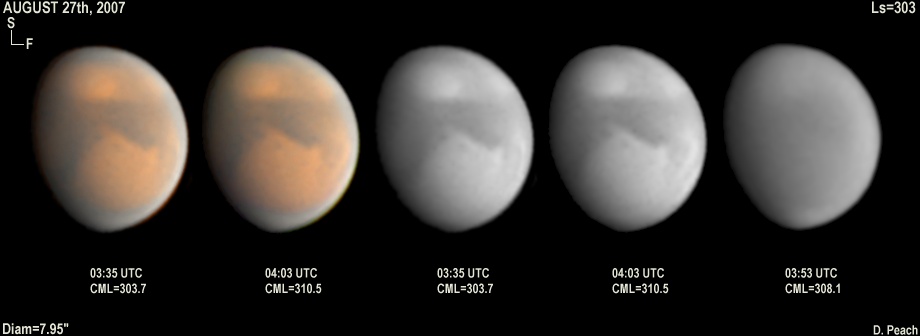
Mars on August 27th, 2007. Dia=7.95". Sinus Meridiani is visible along with dust clouds in Chryse. Syrtis Major appearing. Hellas is bright near the terminator. Markings still of low contrast due to airborne dust.
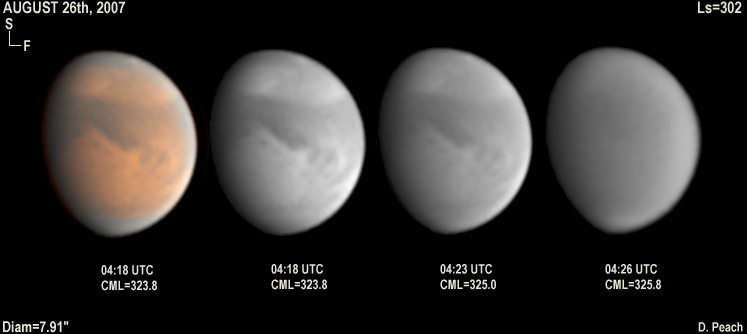
Mars on August 25th, 2007. Dia=7.91". Sinus Meridiani is visible along with dust clouds in Chryse. Hellas is bright near the terminator. Markings still of low contrast due to airborne dust.
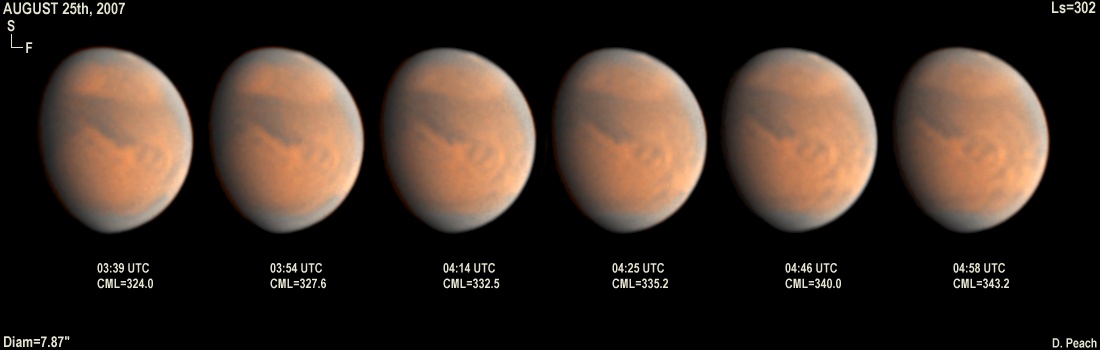
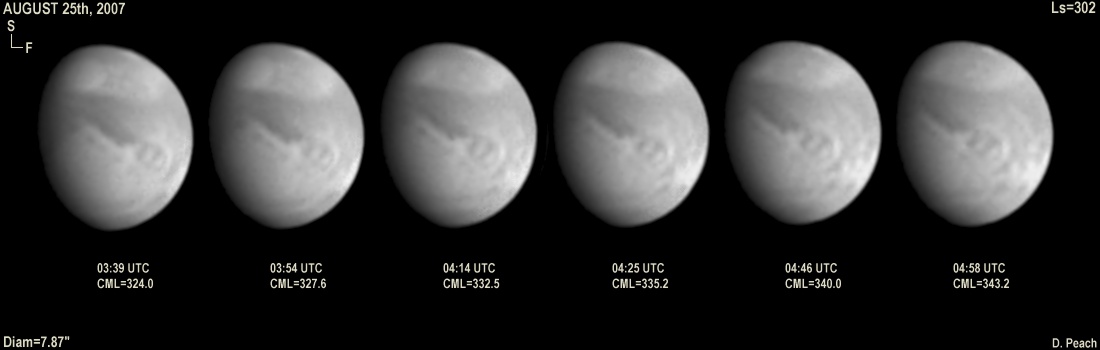
Mars on August 25th, 2007. Dia=7.87". Sinus Meridiani is visible along with dust clouds in Chryse. Hellas is bright near the terminator. Markings still of low contrast due to airborne dust.

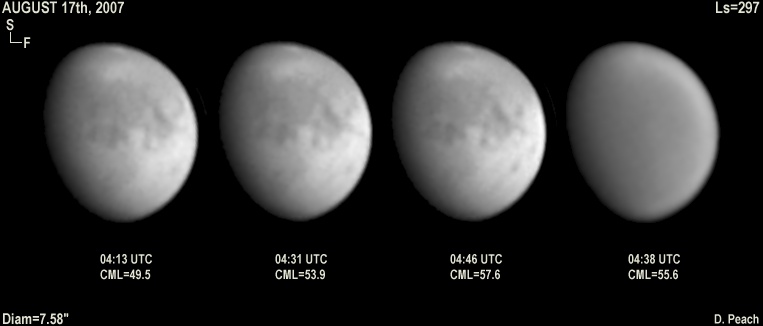
Mars on August 17th, 2007. Dia=7.58". Solis Lacus and Aurorae Sinus are visible with Juventae Fons also apparent. Argyre is dusty. Dust still obscuring Solis Lacus in places, and generally reducing global transparency. Note Solis Lacus has changed from its pre-storm appearance.
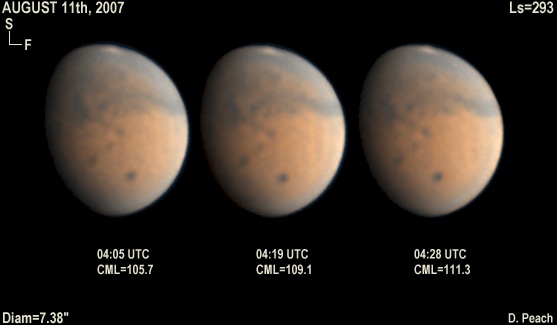
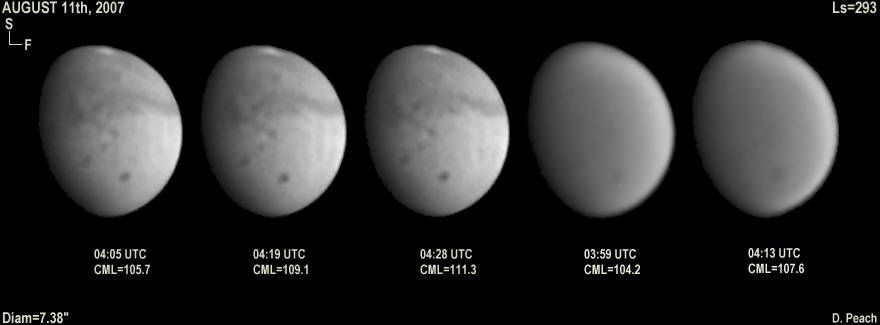
Mars on August 11th, 2007. Dia=7.38". Mare Sirenum is seen along with the edge of Solis Lacus/Phasis. All Tharsis volacones (Arsia, Pavonis, Ascraeus and Olympus Mons) are all visible as dark spots due to airborne dust increasing the albedo. Dust still obscuring Solis Lacus in places, and generally reducing global transparency.
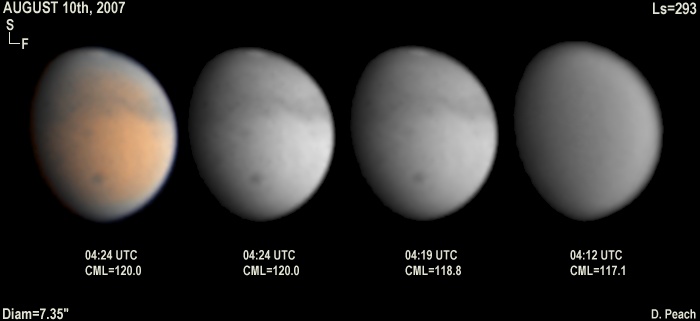
Mars on August 10th, 2007. Dia=7.35". Mare Sirenum is seen. Olympus Mons is seen as a prominent dark spot. Arsia Mons is also seen as a dark spot. Airborne dust significantly reducing transparency.
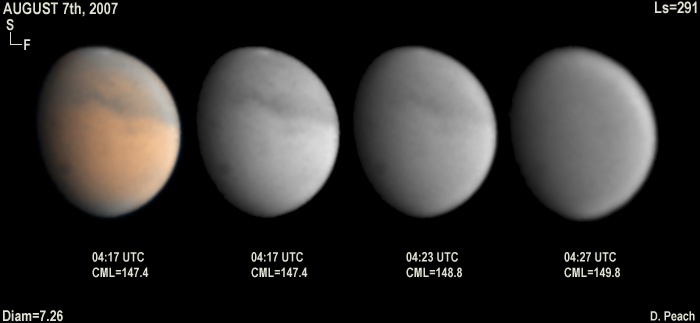
Mars on August 7th, 2007. Dia=7.26". Mare Sirenum is seen. Olympus Mons is seen at the terminator as a dark spot. Airborne dust significantly reducing transparency.
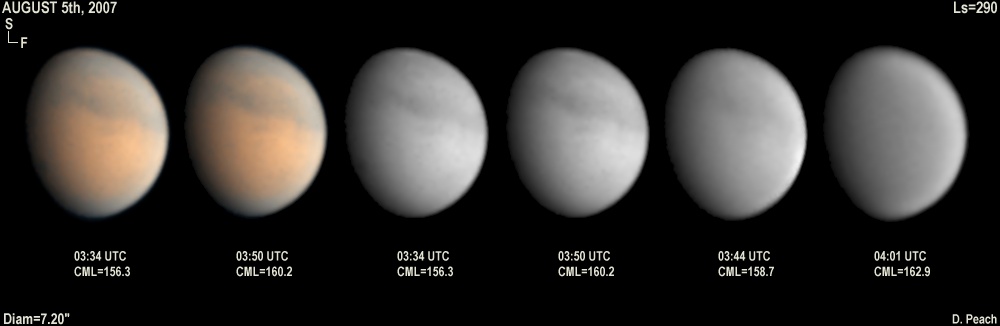
Mars on August 5th, 2007. Dia=7.20". Mare Cimmerium/Mare Sirenum are seen. Airborne dust significantly reducing transparency.
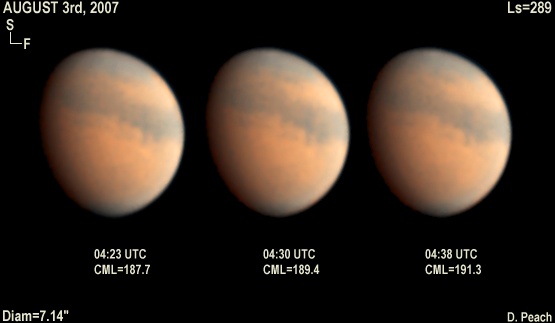
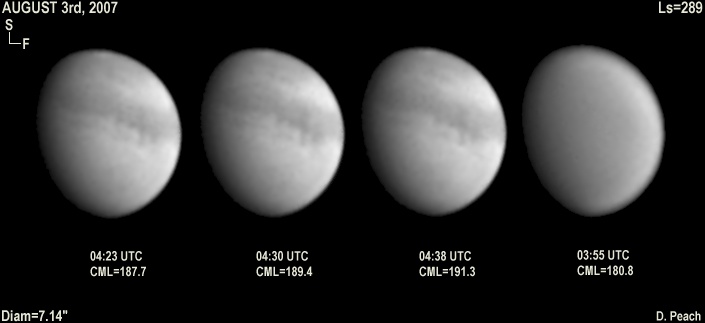
Mars on August 3rd, 2007. Dia=7.14". Mare Cimmerium is seen. Airborne dust significantly reducing transparency.
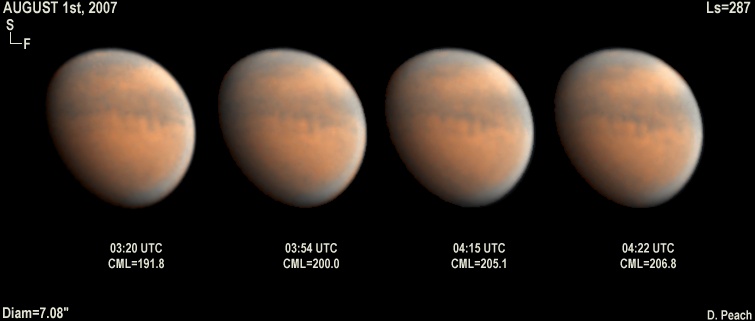
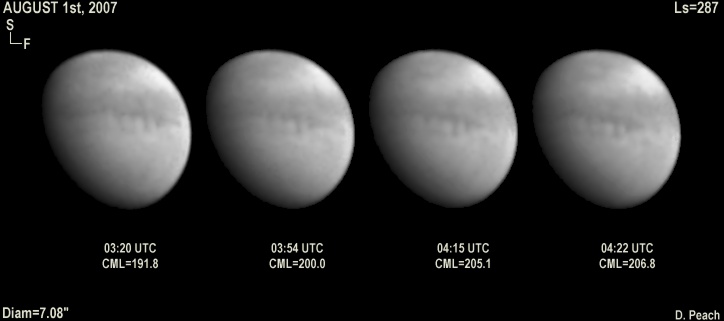
Mars on August 1st, 2007. Dia=7.08". Mare Cimmerium is seen. Note the projections at Gomer Sinus despite D=7". Airborne dust significantly reducing transparency.
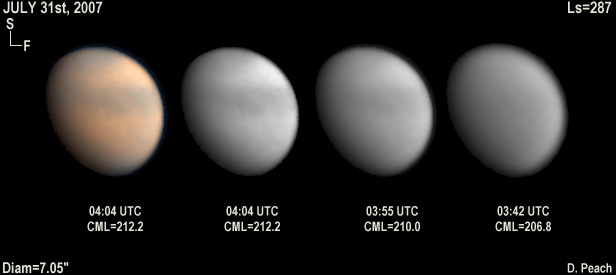
Mars on July 31st, 2007. Dia=7.05". Mare Tyrrhenum/ Mare Cimmerium are seen. Airborne dust significantly reducing transparency.
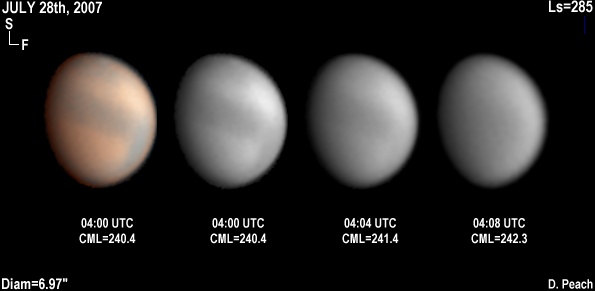
Mars on July 28th, 2007. Dia=6.97". Mare Tyrrhenum/ Syrtis Major weakly seen. Airborne dust significantly reducing global transparency.
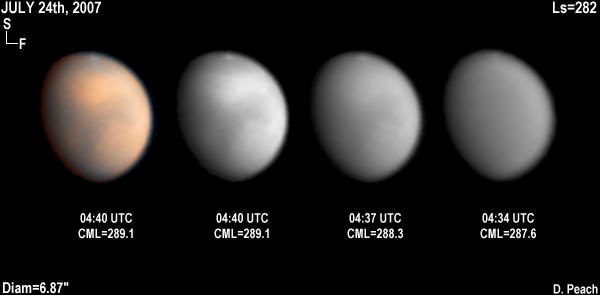
Mars on July 24th, 2007. Dia=6.87". Syrtis Major weakly seen. Hellas/Noachis very dusty.
Click for full size images.
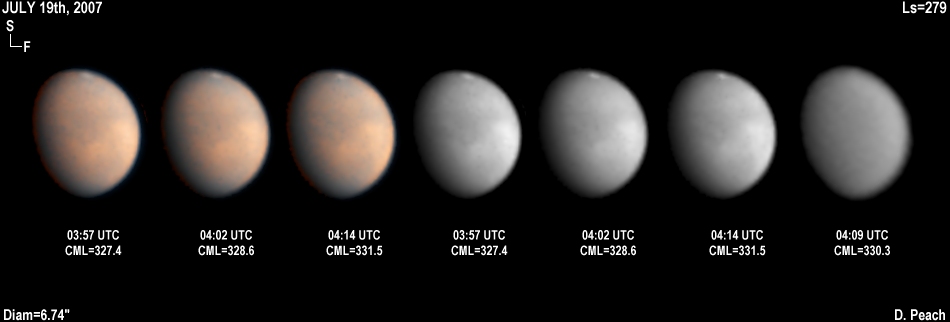
Mars on July 19th, 2007. Dia=6.74". Major dust clouds over Chryse. Mare Erythraeum obscured. Mare Acidalium obscured. Sinus Meridiani obscured.
Click for full size images.
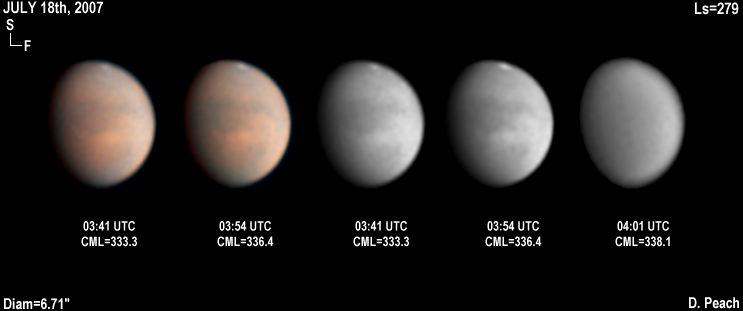
Mars on July 18th, 2007. Dia=6.71". Major dust clouds over Chryse. Mare Erythraeum obscured. Mare Acidalium obscured.
Click for full size images.
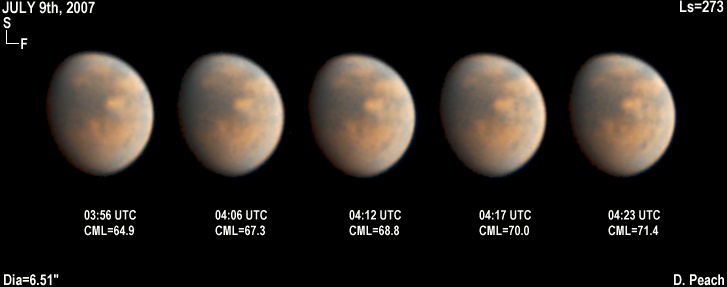
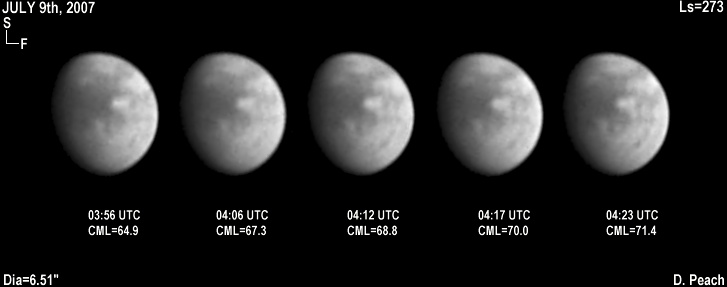
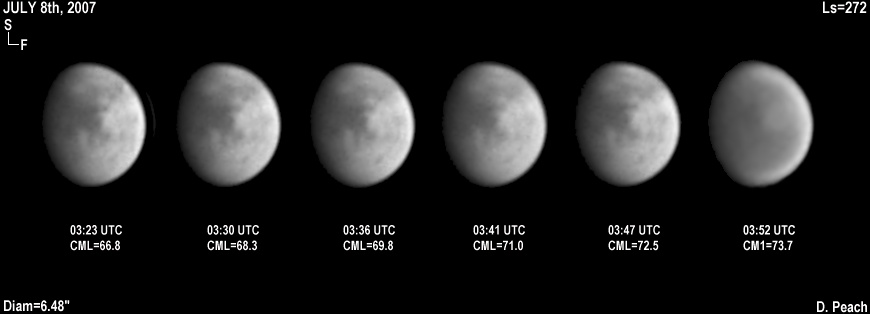
Mars on July 9th, 2007. Dia=6.51". Major dust clouds over Solis Lacus. Note changes from previous day.

Click for full size images.
Mars on July 8th, 2007. Dia=6.48". Major dust clouds over Solis Lacus.
PRE-STORM MARS IN 2007
Click for full size images.
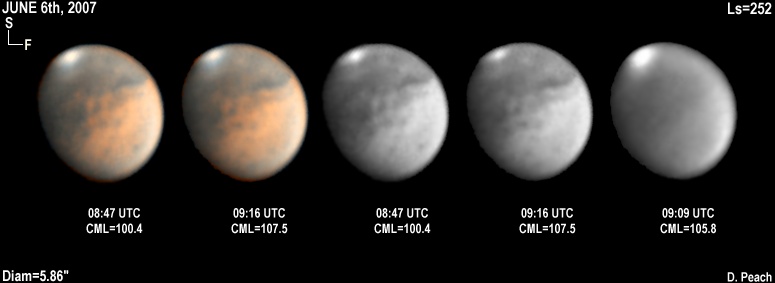
Mars on June 6th, 2007. Dia=5.86"

Click for full size images.
Mars on June 5th, 2007. Dia=5.84"
Click for full size images.
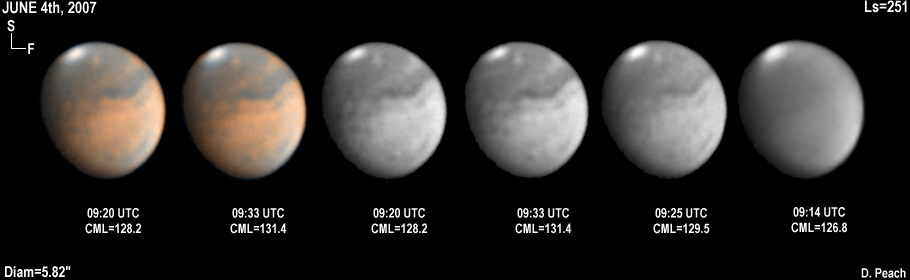
Mars on June 4th, 2007. Dia=5.82"
Click for full size images.
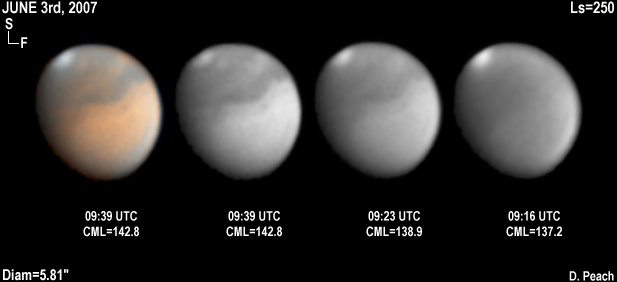
Mars on June 3rd, 2007. Dia=5.81"
Click for full size images.
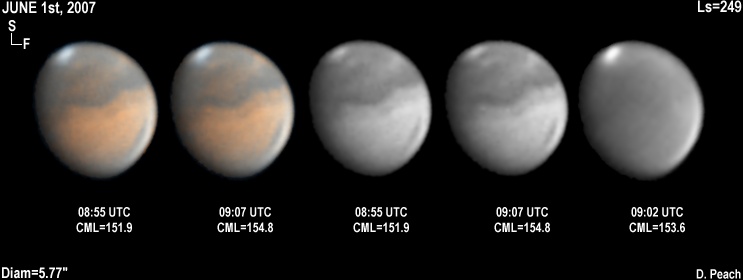
Mars on June 1st, 2007. Dia=5.77"
Click for full size images.
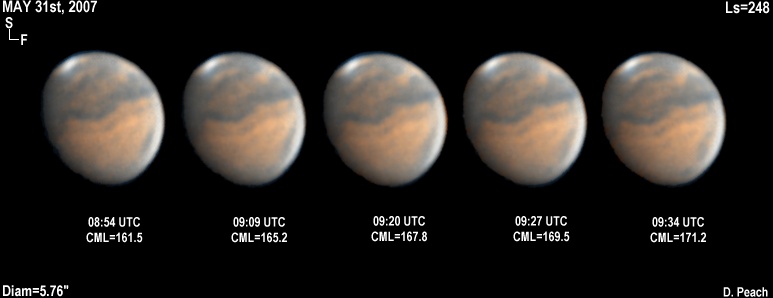
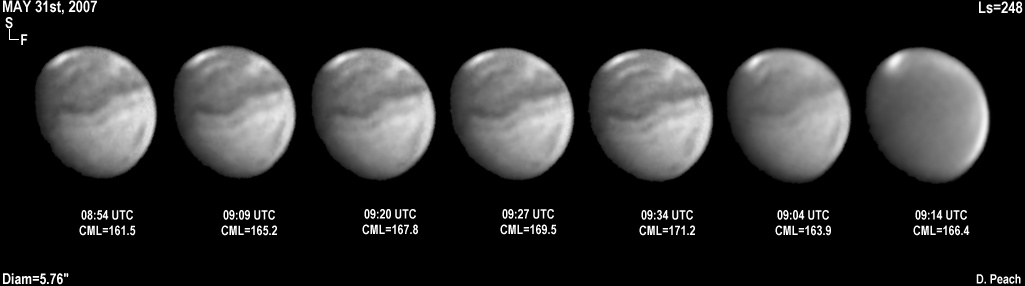
Mars on May 31st, 2007. Dia=5.75"
Click for full size images.
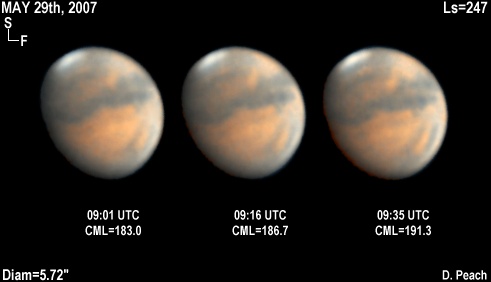
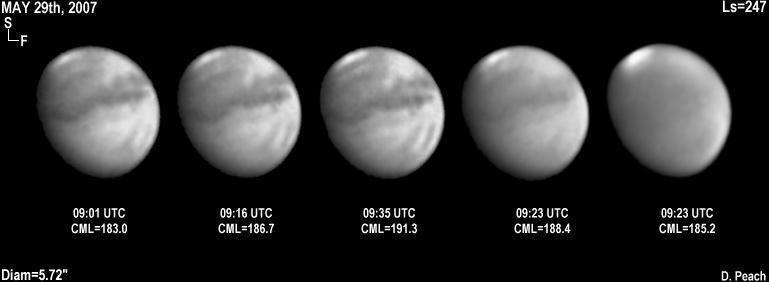
Mars on May 29th, 2007. Dia=5.72"
Click for full size images.
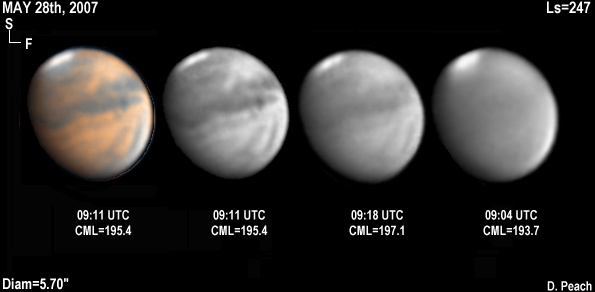
Mars on May 28th, 2007. Diam=5.70"
Click for full size images.
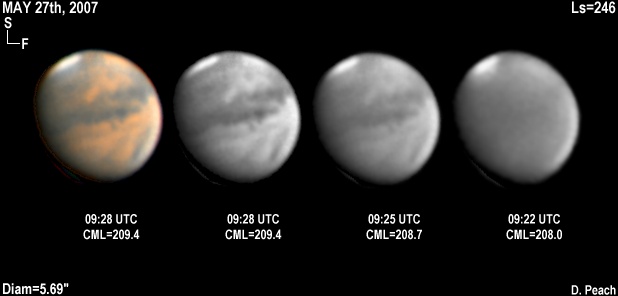
Mars on May 27th, 2007. Diam=5.69"
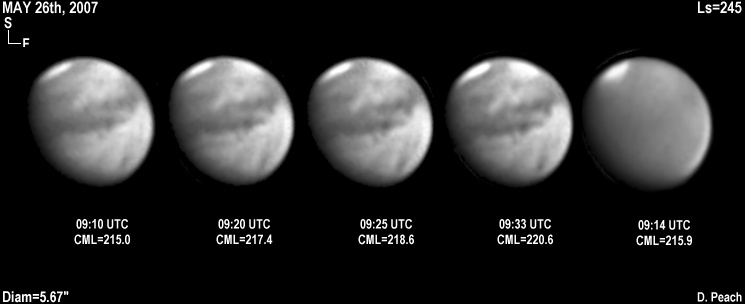
Click for full size images.
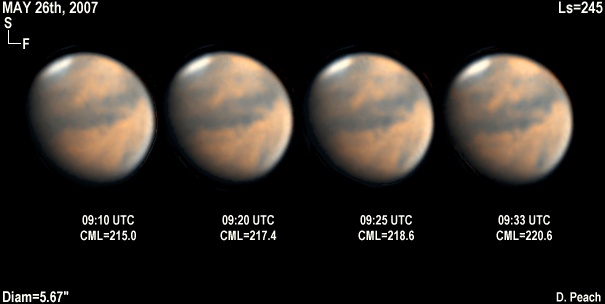
Mars on May 26th, 2007. Diam=5.67"
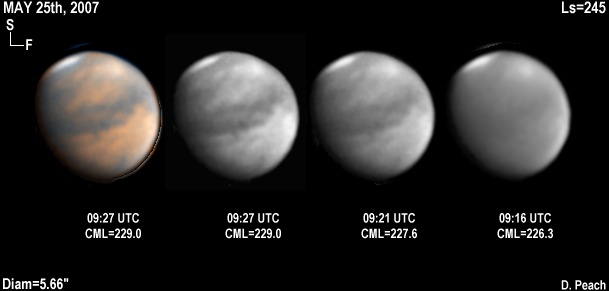
Click for full size images.
Mars on May 25th, 2007. Diam=5.66"
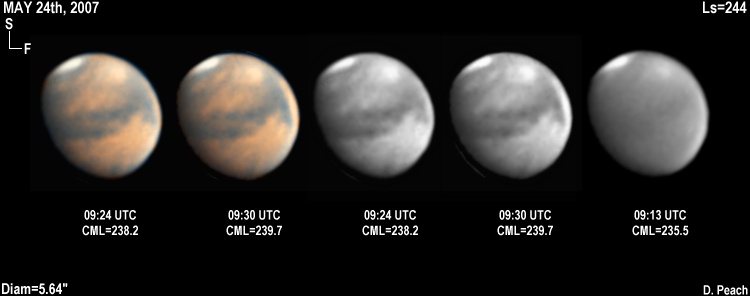
Click for full size images.
Mars on May 24th, 2007. Diam=5.64"
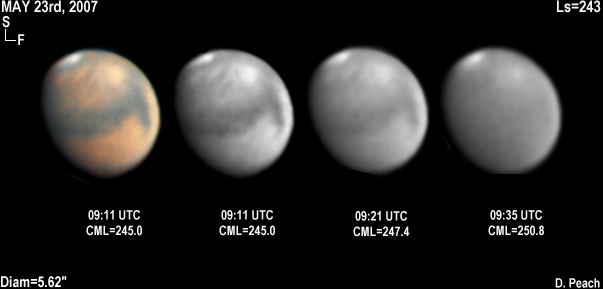
Click for full size images.
Mars on May 23rd, 2007. Diam=5.62"

Copyright © 2003-2004. www.damianpeach.com. No material used within this website may be used, amended or distributed without the consent of the webmaster.